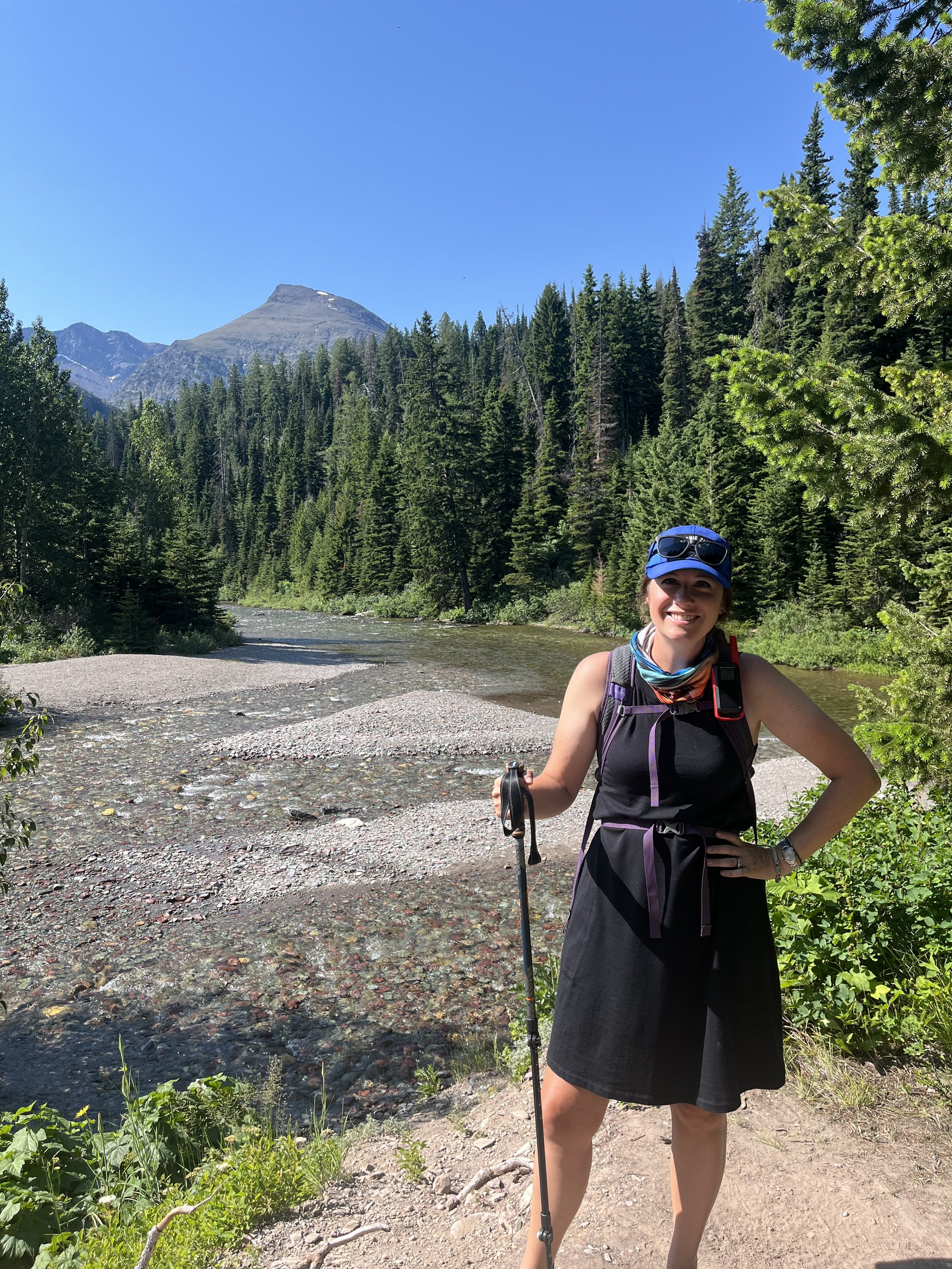
24 Best Things to Do in Acadia National Park
You won’t miss a single thing with this incredible list of the best things to do in Acadia National Park!
This beautiful national park in coastal Maine is one of the most popular in the entire U.S. national parks system, and it’s easy to understand why.
The park offers up craggy cliffs, lighthouses, hiking for all levels, pond-side dining, a deep history, miles of bike paths, and much more.
Despite Acadia only covering about 49,000 acres (which is only about 5% of Glacier National Park’s acreage!), there are so many things to see and do that it might be hard to know exactly what you should make a priority when you come to visit.
In the guide below, you’ll learn about all of the best tours, activities, hikes, and destinations that are key to fully exploring Acadia National Park on your next visit.
As with all of my guides, everything here is family friendly, and was greatly enjoyed by my kids and me, but would also be fantastic for any visitor to the park.
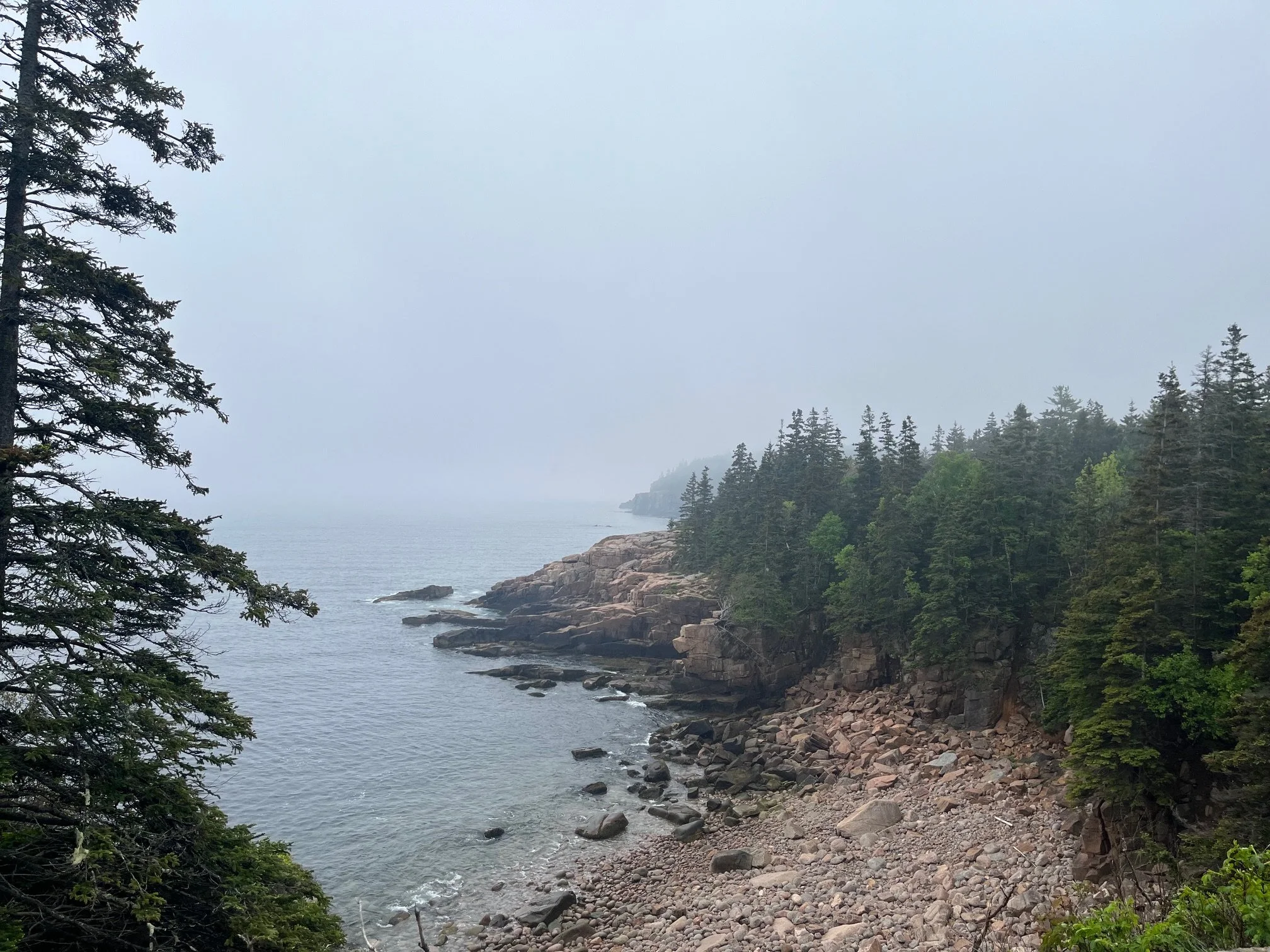
A foggy day at Acadia National Park
This post contains affiliates. If you purchase through the links below, I will receive a commission at no charge to you.
Acadia National Park: An Overview
Why visit Acadia National Park?
Acadia National Park, founded in 1916, is located on the Maine coast about 2.5 hours north of Portland.
Once the playground of the rich and famous during the Gilded Age, guests today can walk in the footsteps of the Vanderbilts, Carnegies, and Astors at places like Jordan Pond and the carriage roads, and in the “cottages” of Bar Harbor.
The sons of Frederick Law Olmsted, a landscape architect best known for his design of New York’s Central Park, worked with John D. Rockefeller to create what is now the Park Loop Road through the heart of Mt. Desert Island.
(Rockefeller is tied into other national parks properties, including Grand Teton National Park in Wyoming, which was preserved largely because of his and his brother’s efforts.)
If history isn’t your thing, there’s still plenty of reason to visit here.
It’s an outdoor adventurer’s paradise, with hiking trails and kayaking tours during the summer, and crosscountry skiing in the winter.
If you’re planning a family vacation here, the park has plenty of options for younger visitors like a natural blowhole in the shore that can send up 40+ feet high water blasts, educational programs, easy hikes, and ponds for splashing in.
>> Be sure to read my complete guide to visiting Acadia National Park with kids here! <<
Areas of the Park
PIN ME!
Acadia National Park has several different sections, and it’s important to understand where each of the following activities is within the larger park map.
Bar Harbor
This cute town is surrounded by the park’s borders, and to visit Acadia National Park is to also visit Bar Harbor.
While the town itself isn’t in the park, there are several parts of Acadia that are very close to the town, including the Hulls Cove visitors center, the Compass Harbor Trail, and Bar Island.
Definitely plan some time to explore Bar Harbor between your national parks adventures as there are many shops and restaurants here.
Western Mt. Desert Island
The western half of Mt. Desert Island is the busiest part of the park.
This is where you’ll find Bar Harbor, the main visitors center (Hulls Cove), the Park Loop road scenic drive, Jordan Pond, and Cadillac Mountain.
Eastern Mt. Desert Island
Just a 20 minute drive from Bar Harbor is the park’s forgotten side, but one that’s still worth visiting!
Here, you’ll find some wonderful hikes like Pretty Marsh, the Carroll Homestead, Echo Lake Beach, Bass Harbor Head Lighthouse, and the Seawall Campground.
Isle au Haut
This section of the park is only accessible by a ferry that departs from Stonington, Maine, southwest of Mt. Desert Island.
Getting here takes some planning, but you’ll get a beautiful island nearly all to yourself for your troubles.
Schoodic Peninsula
Another quiet part of the park, the Schoodic Peninsula is about 45 minutes northeast of Bar Harbor.
There’s another scenic loop road here, an educational center, hiking, and plenty of tidepooling.
Below, I’m covering all of these activities so you can pick the ones that fit the best within your Acadia National Park itinerary.
You’ll find details on exactly where each is located in the park, an approximate time outlay, and topics of interest.
What to Do in Acadia National Park: Best Activities and Tours
Stop by the visitors center.
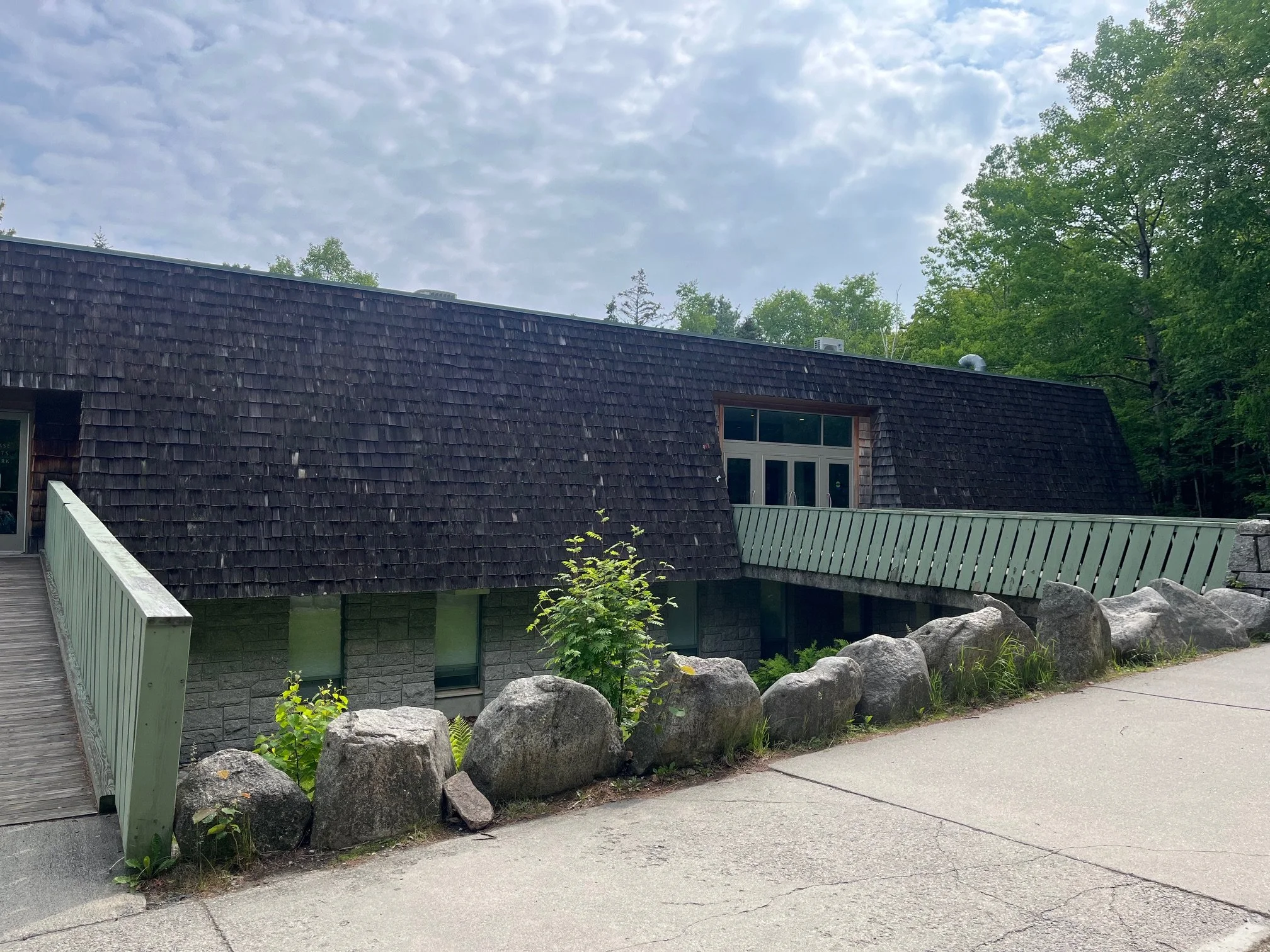
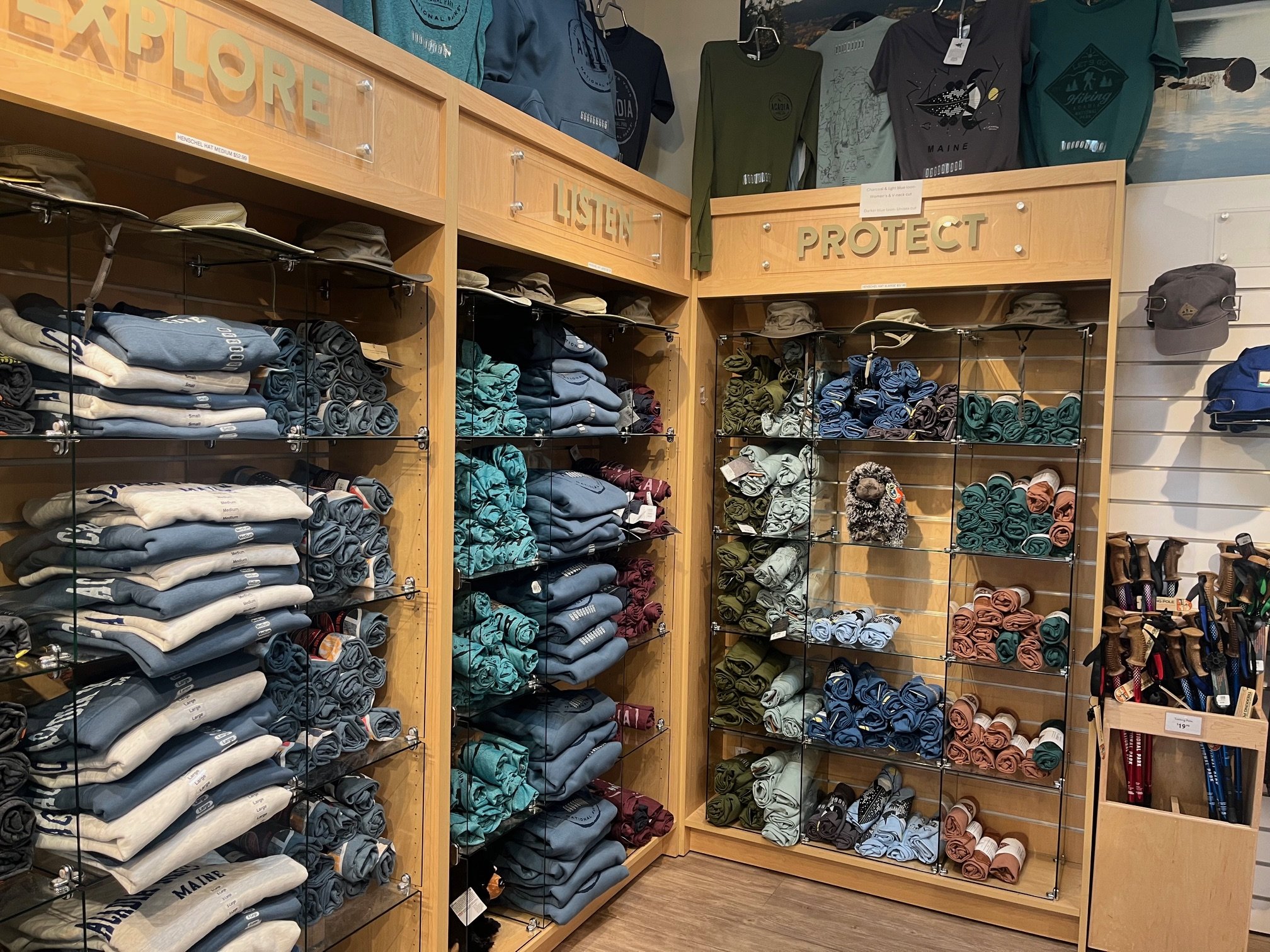
There is one main visitors center, Hulls Cove, that is on the side of the park nearest Bar Harbor.
It’s a smaller visitors center, but you will find souvenirs, t-shirts, books, postcards, and bags for sale here.
The national parks passport cancellation stamp can be found by the gift shop registers.
On the other side of the visitors center is the ranger information desk where you can get maps, ask questions of the rangers about your visit, and learn more about the park.
I found the large maps hanging on the walls of the visitors center near the ranger desk to be very helpful as we planned our biking trips on the carriage roads as well as our scenic drives around the park.
From the visitors center, you can also take one of the Island Explorer buses to all points in the park and beyond. Look for the small bus shelter in the parking lot.
While they’re not full visitors centers, the Nature Center at Sieur de Monts and Rockefeller Hall are also where you can also find souvenirs and passport cancellations




Go hiking.
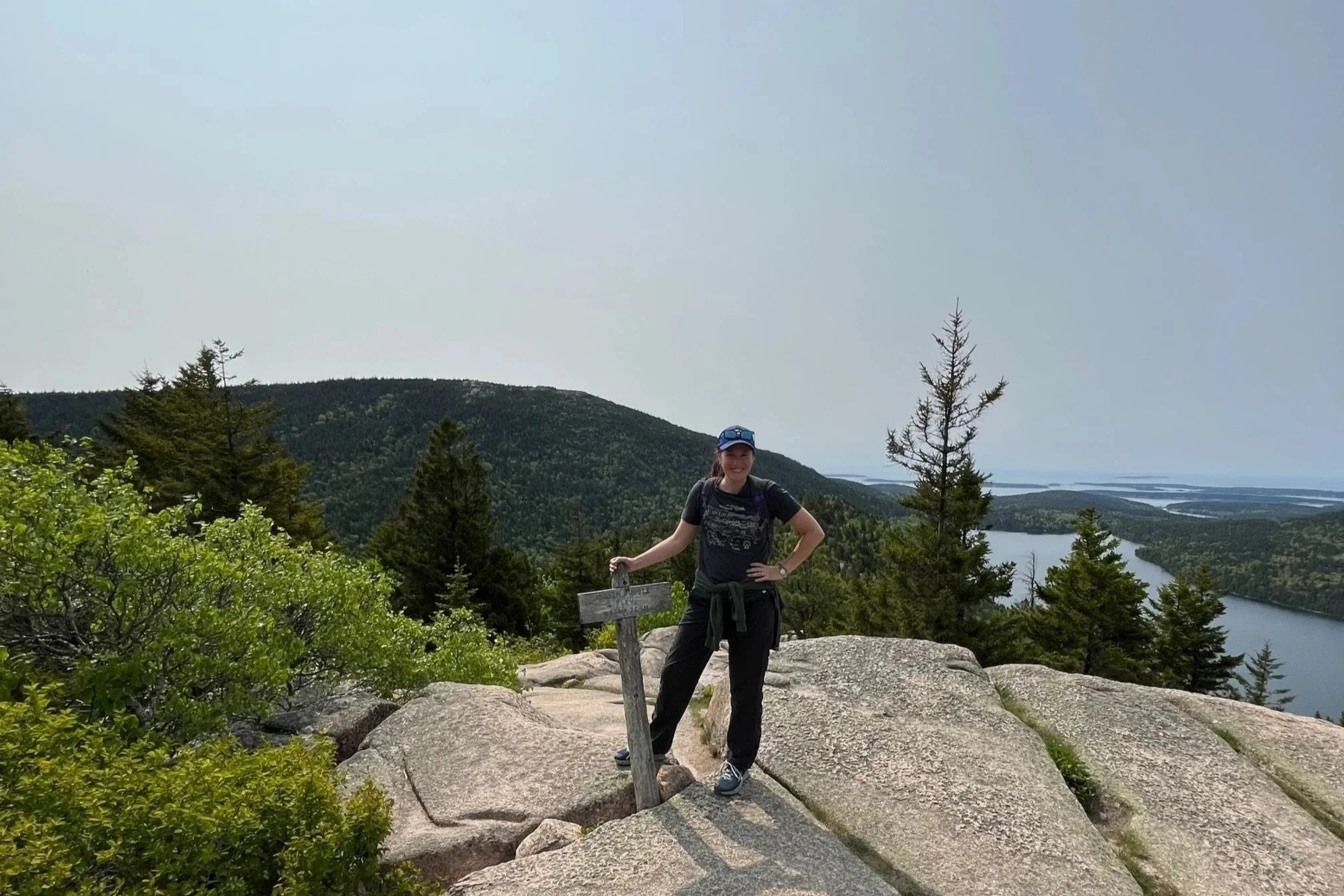
Yours truly at the top of North Bubble Trail
No matter your fitness level, there is a trail for you in Acadia National Park!
Acadia has spectacular hiking options, from easy, level walks along the ocean to rock scrambling and climbing iron rung ladders high up on the mountains.
Of all of the ways that you can get out and explore Acadia, hiking is one of my family’s favorites.
Here is a selection of some of the best hikes in the park:
Beehive Trail
The Beehive Trail is one of Acadia’s most famous, or perhaps infamous, hikes. It’s also one of the most challenging in the park, so you’ll want to seriously consider if you and your kids are up for the experience.
While it is a more difficult hike, it can be a lot of fun, but keep in mind that it’s not for the faint of heart or those with a fear of heights.
For this reason, I wouldn’t take very young children on the trail, but older kids who don’t mind heights might enjoy it.
Much of the hike is scrambling up rocks and using iron rung ladders and handholds to get you up the mountain, making it a unique hike among Acadia’s trails.
You can access the trailhead to the Beehive off of the Park Loop Road in the eastern Mt. Desert Island section of the park.
Gorham Mountain Trail
This trail, which is just south of the Beehive on Park Loop Road, takes you up to a stunning view over Acadia National Park’s craggy shores and the sprawling Atlantic Ocean beyond.
You can combine this trail with the Beehive Trail (above) and part of the Ocean Path (below) to make a loop.
While Gorham Mountain Trail isn’t as challenging as the Beehive or the Precipice Trail, it’s a 3-mile trail that does require some rock scrambling over its 525 feet of elevation gain.
Look for the trailhead and parking area past the Thunder Hole store.
Ocean Path Trail
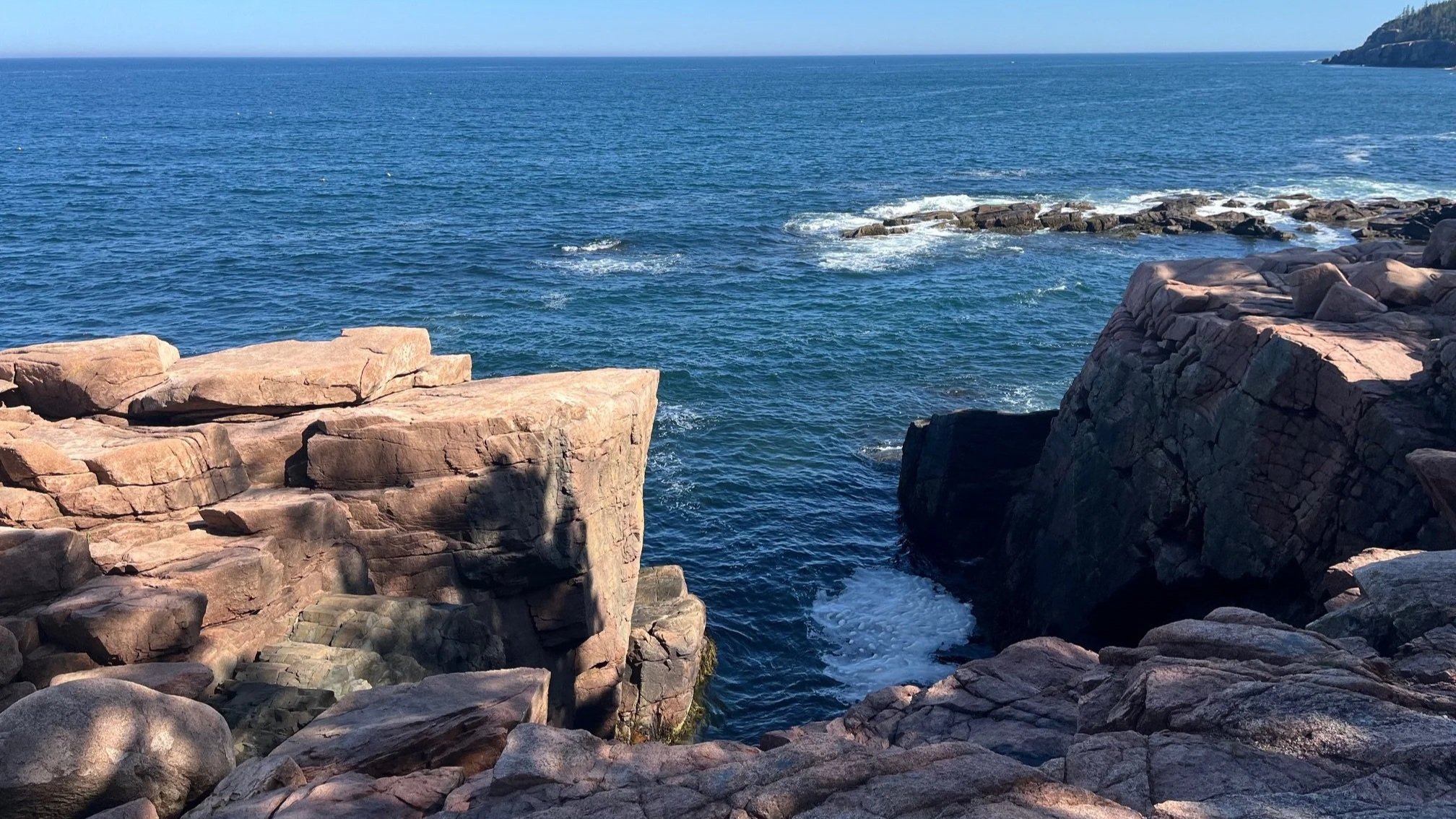
The rocky cliffs along the Ocean Path Trail near Thunder Hole
This is an easy and scenic walk along the ocean and Park Loop Road.
You can do the whole thing, which is about 4.5 miles out and back from the trailheads at Sand beach or Otter Point, or you can just walk the sections that appeal to you. There are several access points along the path, including near the parking area for the Gorham Mountain Trail.
This trail takes you right past the famous Thunder Hole, stunning views of the craggy coast, and through portions of pine forest.
It’s highly recommended for families with younger children or visitors looking for an easy hike.
For an added layer to your experience here, get the self-guided audio tour of the Ocean Path, which will teach you about shipwrecks, history, and wildlife along this beautiful trail.
Precipice Trail
This famous trail is probably one of the most difficult in the park (and on the entire East Coast). It has rungs, ladders, and narrow ledges—and it is not for the faint of heart.
For these reasons, I only recommend this trail to experienced hikers. This isn’t the trail I’d like to do if I’d never been hiking before!
This trail is not open from spring through mid-summer because of the peregrine falcon nests, so keep that in mind if you’re visiting during that period.
The Precipice Trail is located off of Park Loop Road about halfway between the turn-off for Sieur de Monts and the fee station.
Jordan Pond Trail
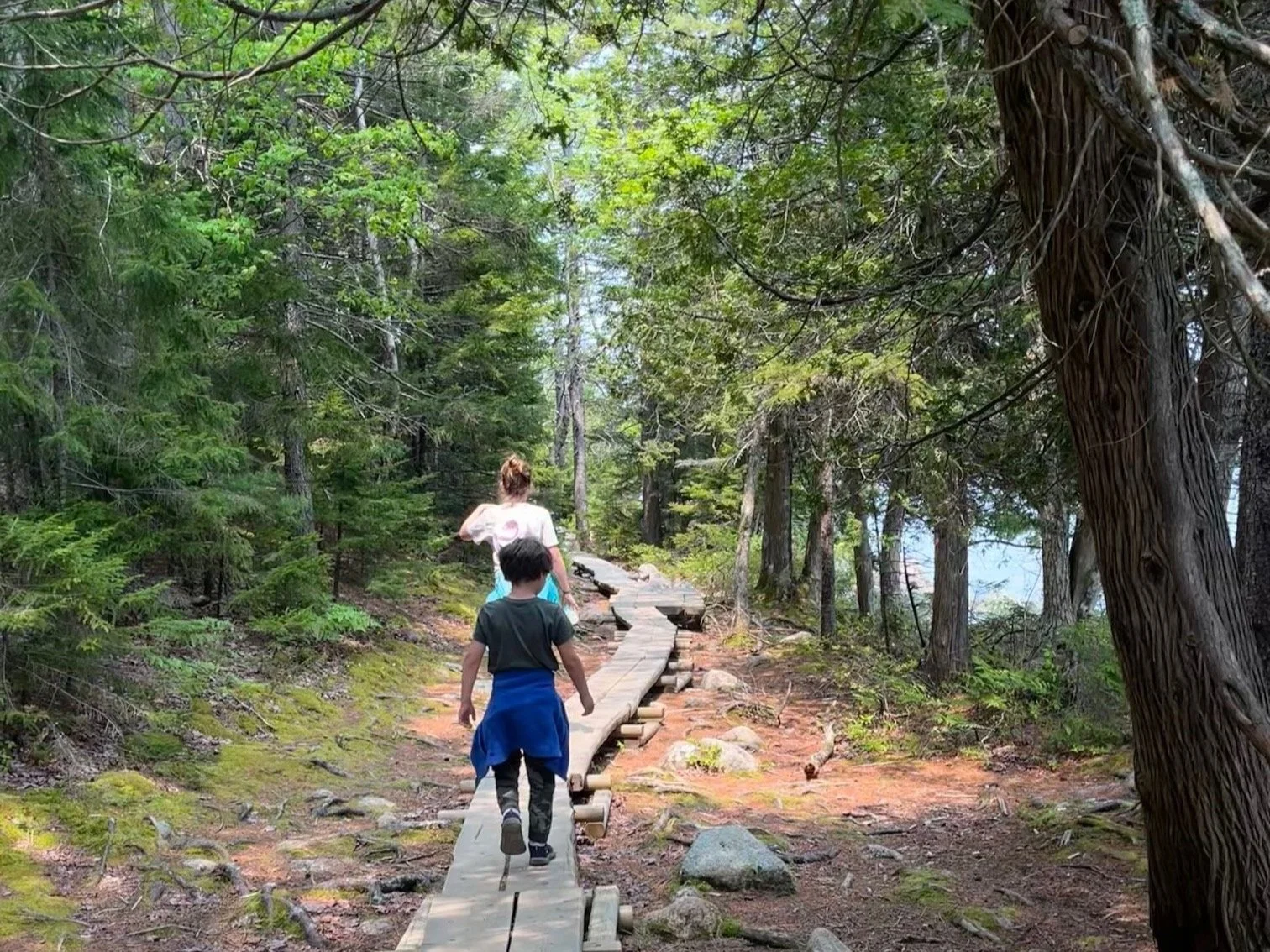
The author’s children on the Jordan Pond Trail
This easy 3 mile loop around Jordan Pond offers picturesque views, and it is an excellent one for families or visitors who want a low key scenic hike.
It’s also a great way to walk off the famous Jordan Pond House Restaurant popovers.
To access this hike, follow the path to the back of Jordan Pond House down to the edge of the pond. You’ll be able to join the trail near the carriage road.
South and North Bubble Trail
The hike up to South Bubble to see the precariously positioned Bubble Rock is another visitor favorite and also offers amazing views down to Jordan Pond and beyond to the Cranberry Islands.
These two trails share a trailhead, but split about 3/4ths of a mile in. If you go to the right, you’ll ascend to North Bubble, while taking the left carries you to South Bubble.
The trails aren’t particularly difficult as they don’t have any parts near the edge of a mountain or with rungs and ladders (like Precipice Trail). However, both parts of this trail do have rocky steps and elevation gain.
My kids loved their time hiking here, and my 8 year old even tried to speed run it. I was getting over a cold at the time, and was definitely the one holding us back!
Access the Bubble Trailhead on the Park Loop Road above Jordan Pond.
>> Learn more about the North and South Bubble Trails here. <<
Beech Cliff Loop
This 1.5 mile loop is more challenging than the Bubble Trails, but not quite as intense as the Beehive or Precipice Trails.
It’s located on the western side of Mt. Desert Island, making it far less crowded than either of the other aforementioned trails.
It’s a short but steep hike with a few ladders to climb, so if you don’t feel confident enough to do either Beehive or Precipice Trails, this might be a good option for you.
From the top of the trail, you can see the Echo Beach swimming area and sweeping views of the interior of the island.
This trail does have some steep drop offs on sections, as well as a portion where you’ll need to navigate a ladder, so I don’t recommend it for younger hikers, those with a fear of heights, or anyone baby wearing.
If you want more suggestions, check out my guide to the best easy hikes in Acadia, which are perfect for any hiking level or age!
Wander through Bar Harbor.
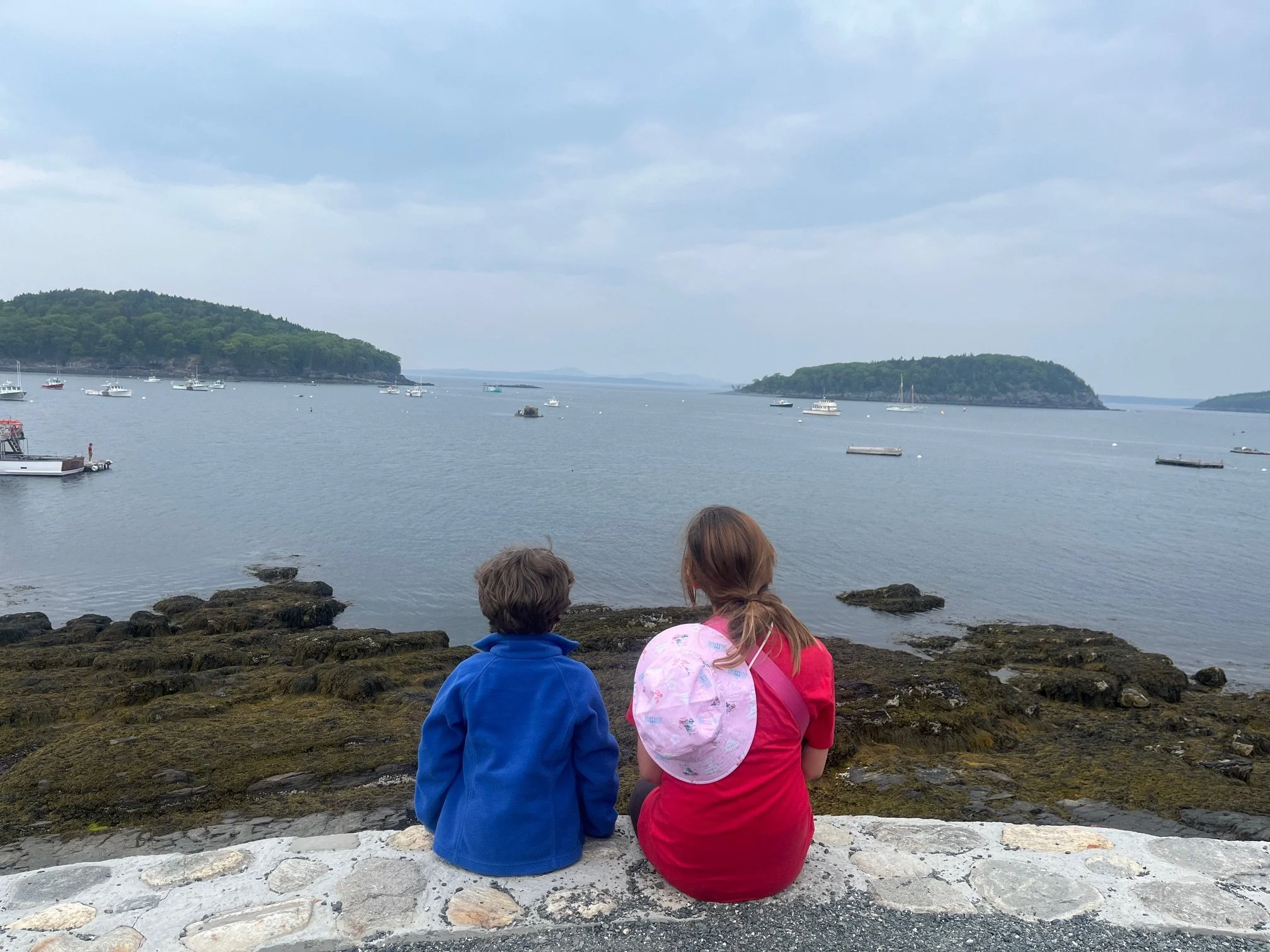
The Camping Kiddos in beautiful Bar Harbor
Bar Harbor is the town right outside of Acadia that has tons of shopping, hotels, and restaurants.
As the biggest town in this area of coastal Maine, it makes for a good base for your trip, and it’s where you’ll find everything from (very overpriced) ice cream to the departure point for whale watching tours.
Walk along the Shore Path for beautiful views of the Mount Desert Narrows. The Shore Path starts at Ells Pier, runs past the Bar Harbor Inn and Spa and Grant Park before ending at the corner of Barberry Lane and Wayman Lane.
Look for the huge glacial erratic known as Balance Rock as you walk.
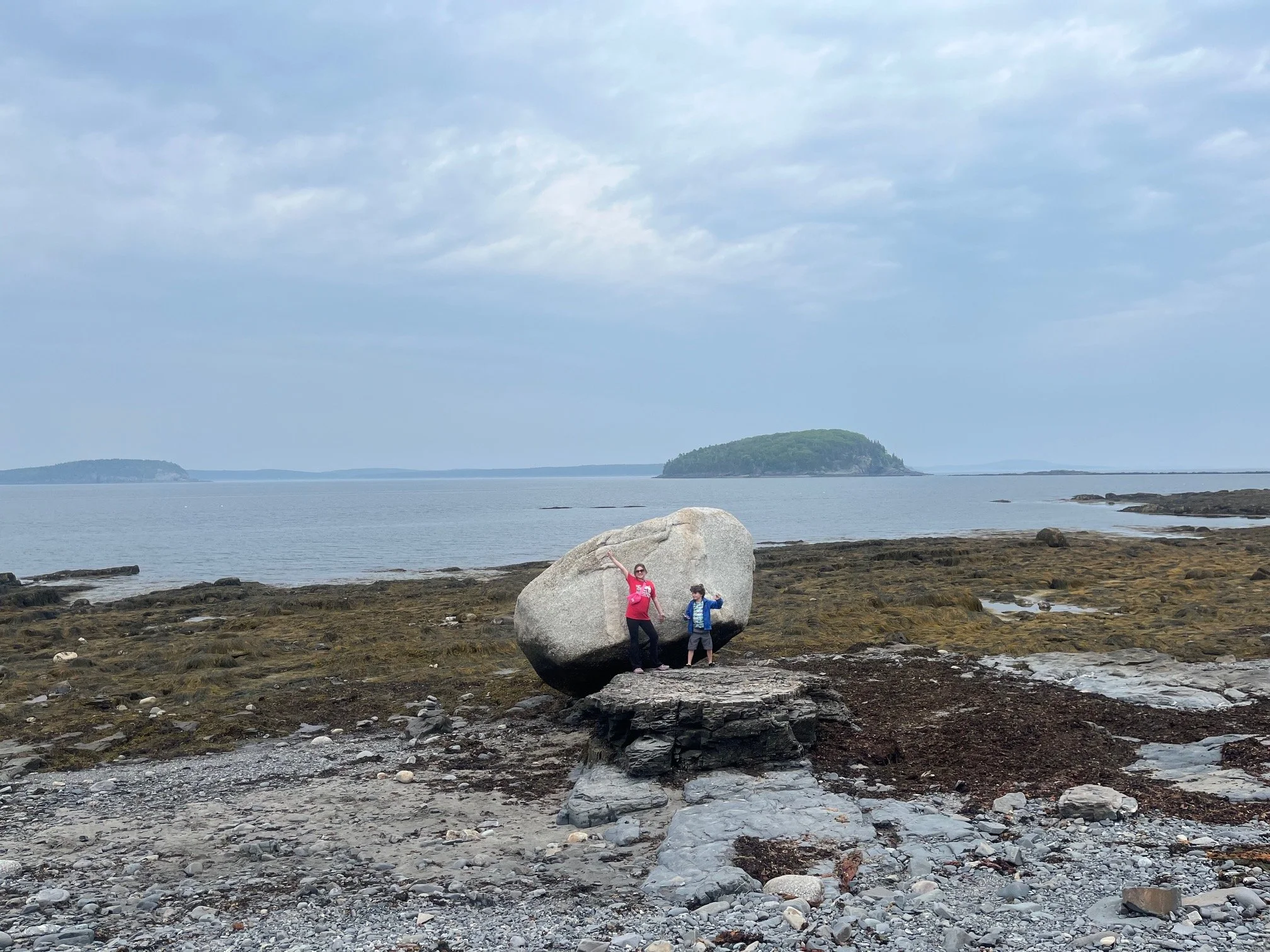
Balancing Rock in Bar Harbor
During low tide, you can also walk across the land bridge to Bar Island which is a fun activity. More on that below.
There’s also the only grocery store in the area here, the Hannaford on Cottage Street, so be sure to stock up on water, snacks, and other necessities here before you head into the park.

Let’s plan.
Get all of my family friendly vacation planning resources for Acadia National Park here!
They’re free and will help you with everything from where to camp to how to organize your itineraries.
Take in the views at Cadillac Mountain.

Incredible long range views from the top of Cadillac Summit
Visiting Cadillac Mountain Summit is a memorable experience, and I highly recommend it as part of your time at Acadia National Park.
The sunrise is the most popular time to visit, and those are the times that go the fastest in the reservation system. Even if you don’t want to get up that early, taking a trip up the winding road to the top is worth it for the stunning views.
NOTE: From late May to late October, you need a reservation to drive up Cadillac Mountain.
You can find details for the Cadillac Mountain reservations on the Acadia NPS website here.
For those a little more adventurous, you can also hike up Cadillac Mountain via several different trail options. Check out AllTrails+ for all the details.
There’s also a very easy loop trail at the top of the mountain called Cadillac Mountain Summit Loop, and it is an excellent choice for families, those using wheelchairs or strollers, and visitors short on time.
You’ll get views of the Schoodic Peninsula, Cranberry Islands, Bar Harbor, and beyond.
If you get hungry or need to use the restroom, there’s a small convenience store at the summit. Here, you can find some basic souvenirs, soft drinks, coffee, postcards, and stickers.
Relax on Sand Beach.
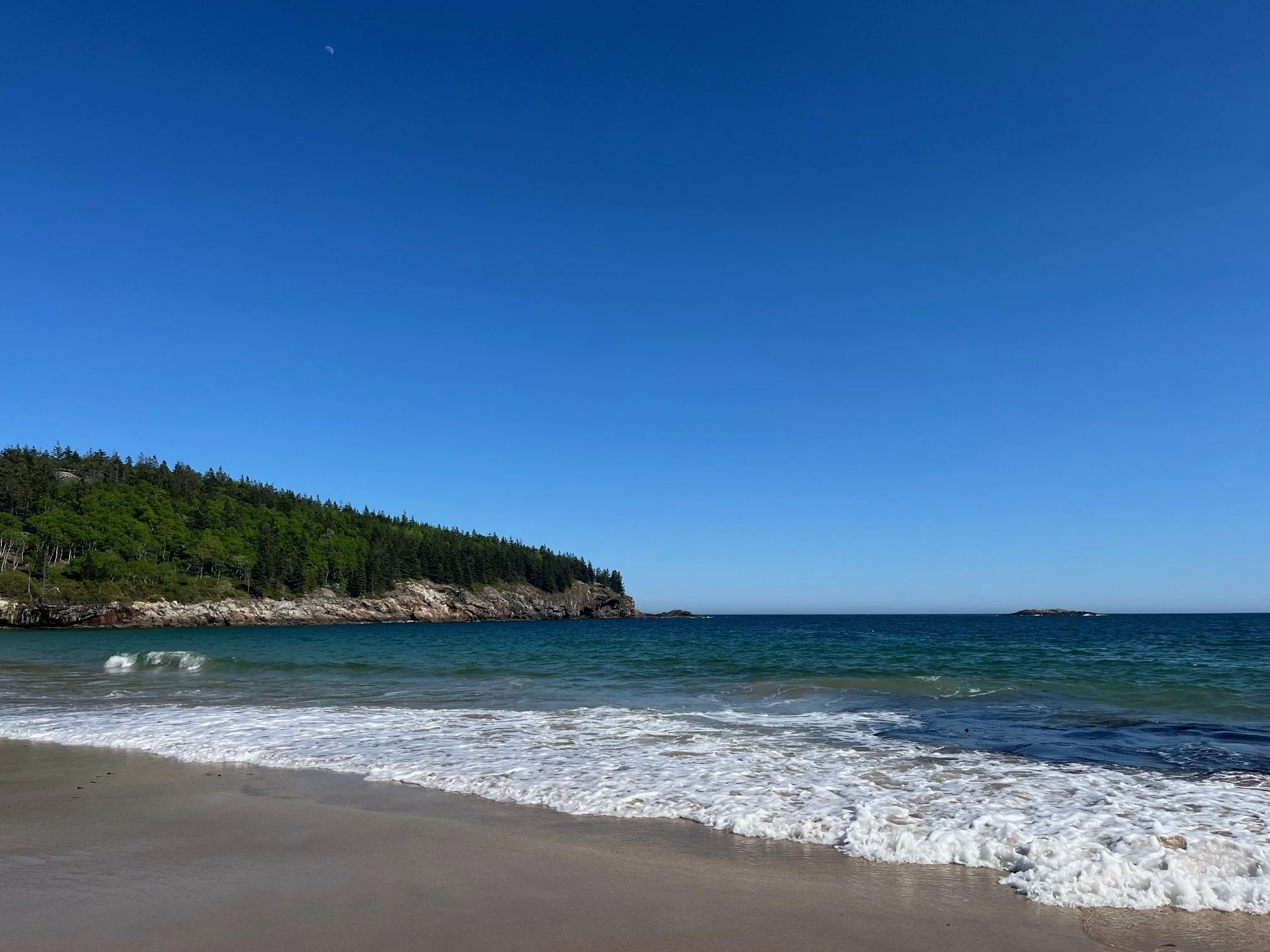
A beautiful (but chilly) day at Sand Beach
When we visited Acadia, the name of this beach confused me. I grew up in Charleston, and so, every beach is a sandy beach to me!
Here in coastal Maine, however, a sandy beach is the exception rather than the rule, and you’ll find pebbles, boulders, or rocky cliffs at the other beach areas.
While not a very original name, Sand Beach is a nice place to take a break and swim in the warmer summer months, or even just spend some time relaxing between other stops in the park.
It’s also a great place to rest your legs after walking along the Ocean Path, which truncates at its northern end here.
Parking can be difficult here since Sand Beach is such a popular stop, but people do seem to cycle in and out quickly. Don’t be afraid to circle the parking lot a few times, and a spot will open up.
Explore the park after dark.
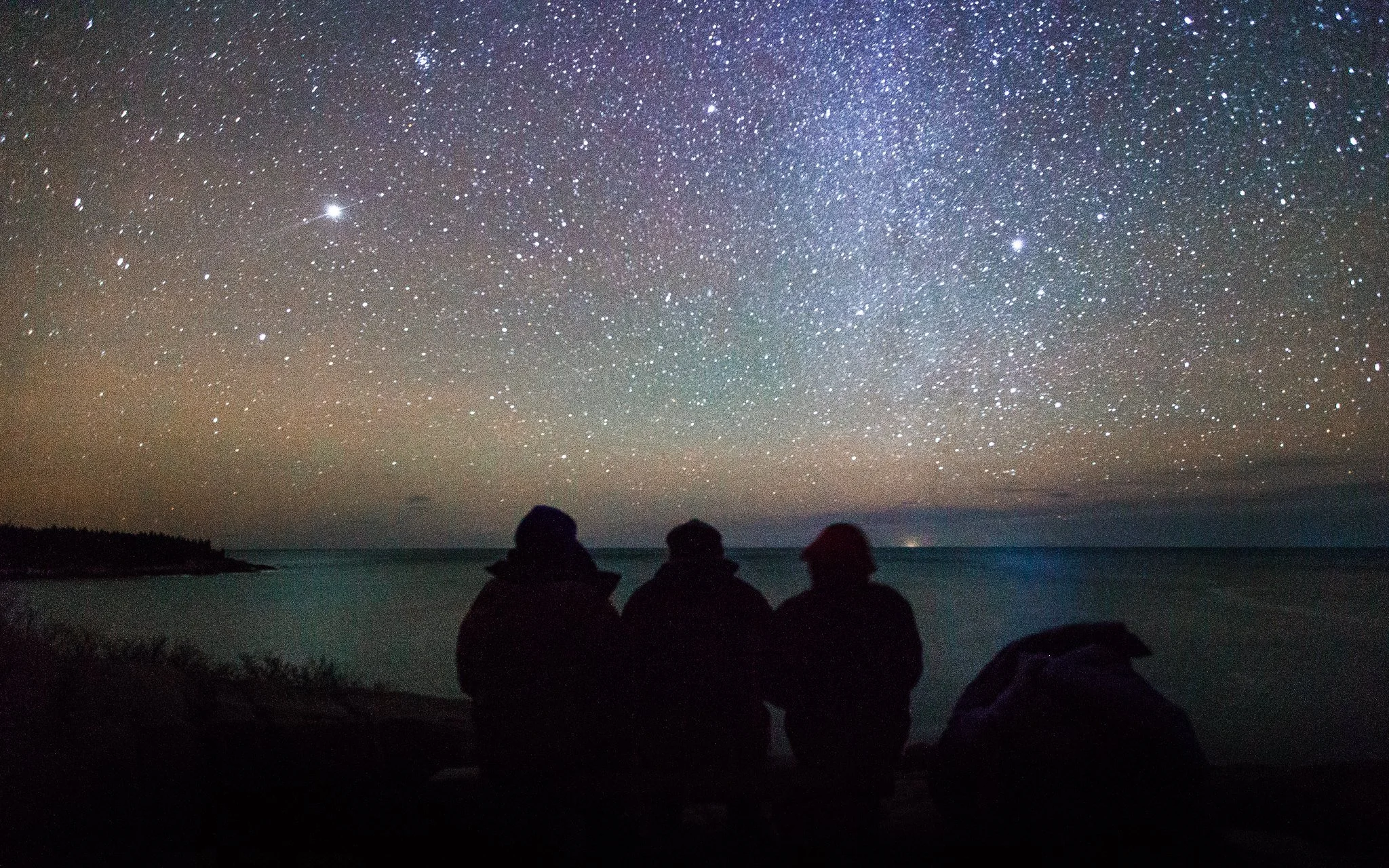
Learn how to take long exposure photography of the beautiful Acadia night sky. | source
Did you know that national parks never close?
While the rangers close up the visitors centers and shops each day, the national park stays open 24 hours a day for visitors to explore.
This is an excellent time to explore Acadia, as its much quieter at night. You might even have the park to yourself!
Although Acadia isn’t officially designated a Dark Sky Park like Arches National Park, Bryce Canyon National Park, Glacier National Park, and Grand Canyon National Park (among others) are, it still has some of the most pristine skies available on the East Coast.
This makes Acadia perfect for some late night stargazing. Bring a picnic and some snacks and watch the stars on Sand Beach or the Jordan Pond lawn.
If you want a guided experience, I recommend the night sky photography tour in Acadia, where you’ll learn how to take incredible photos.
Watch Thunder Hole.
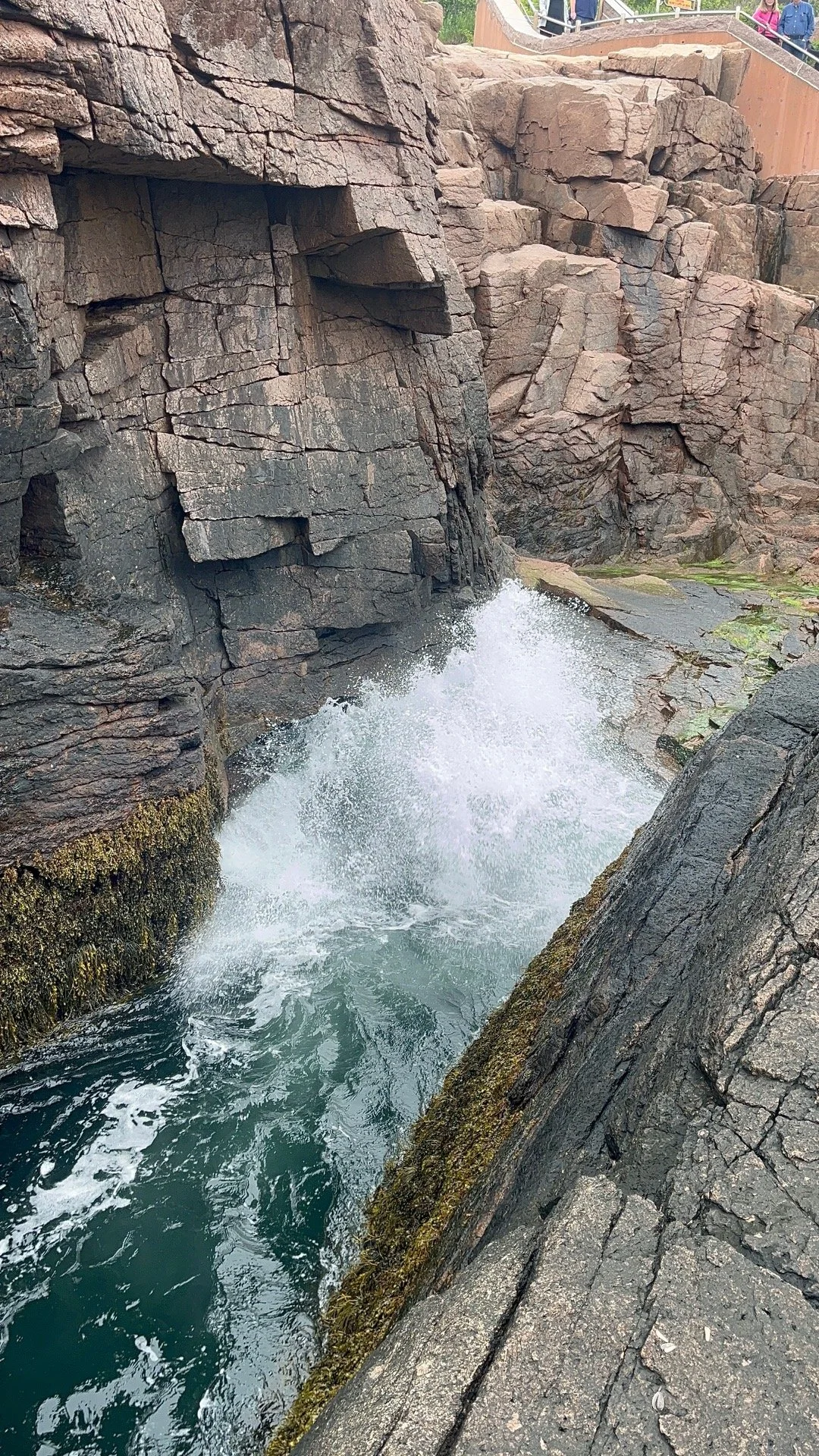
A smaller splash in Thunder Hole
Thunder Hole is a fascinating feature where the waves crash into an inlet with a cavern underneath which creates a sound like thunder and can create up to a 40ft water splash!
You have to time your visit to Thunder Hole just right in order to see and hear this phenomenon.
The force of the rising tide being pushed into a deep crevice carved into the cliff causes a loud noise and a huge spray of water.
When we first stopped by, it was low tide and not very impressive.
We tried several more times during our time in Acadia to see when the biggest splashes were available.
We realized that if you are able to get there about 1-2 hours before high tide, that is when you have the best chance to witness the spectacle.
There are stairs down to Thunder Hole, but you are likely to get splashed if you’re down here!
You can still see the big splashes and hear the noise of Thunder Hole from the top of the stairs, but it is more distinctive the further down you go.
Walk on the disappearing land bridge to Bar Island.
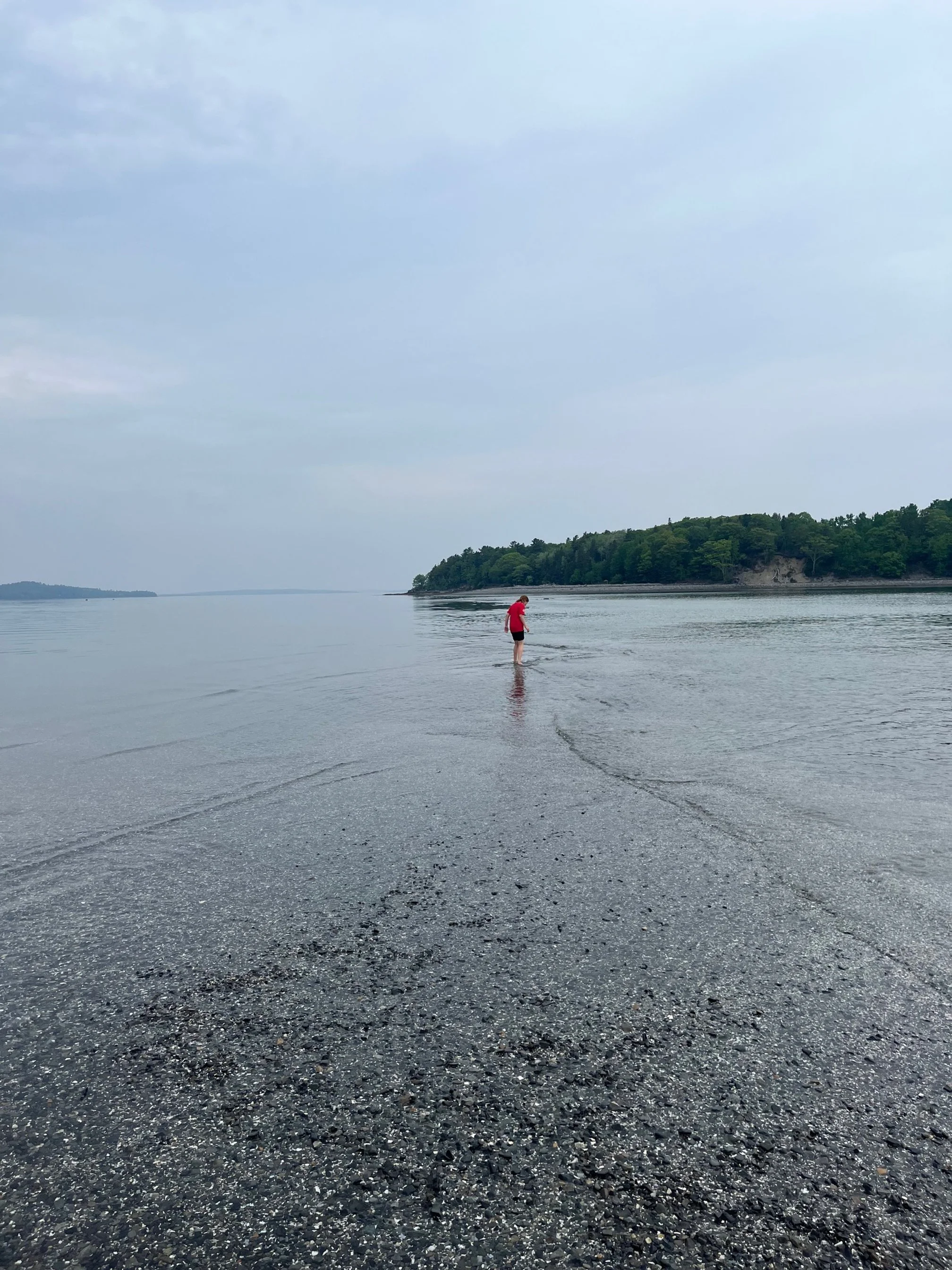
Waiting (not so patiently) for the complete sand bar to be exposed
Have you ever taken a hike that sometimes disappears?
It’s not a magic trick—it’s the land bridge between Bar Harbor and Bar Island.
Twice a day, every day, a large sand bar appears in the harbor, and you can walk across it to a small island.
This is one of the most interesting easy hikes we’ve ever done, and it provides a memorable view over to the town of Bar Harbor.
You can continue your hike once you’re on Bar Island, but watch the time. The land bridge is only accessible by foot for a few hours, and, once it’s been covered over by more than 12 feet of water, the only thing you can do is wait for another 9 hours to the next low tide.
Bar Island is part of Acadia National Park, so you’ll see signage reflecting that once you’re across the land bridge. However, there aren’t any visitors centers or amenities on the island, so bring water and snacks.
To get to the land bridge, go to the end of Bridge Street. You’ll walk out onto a small gravel beach area, and the sand bar will appear slowly at the end of it as low tide starts.
Listen to the singing stones at Little Hunters Beach.
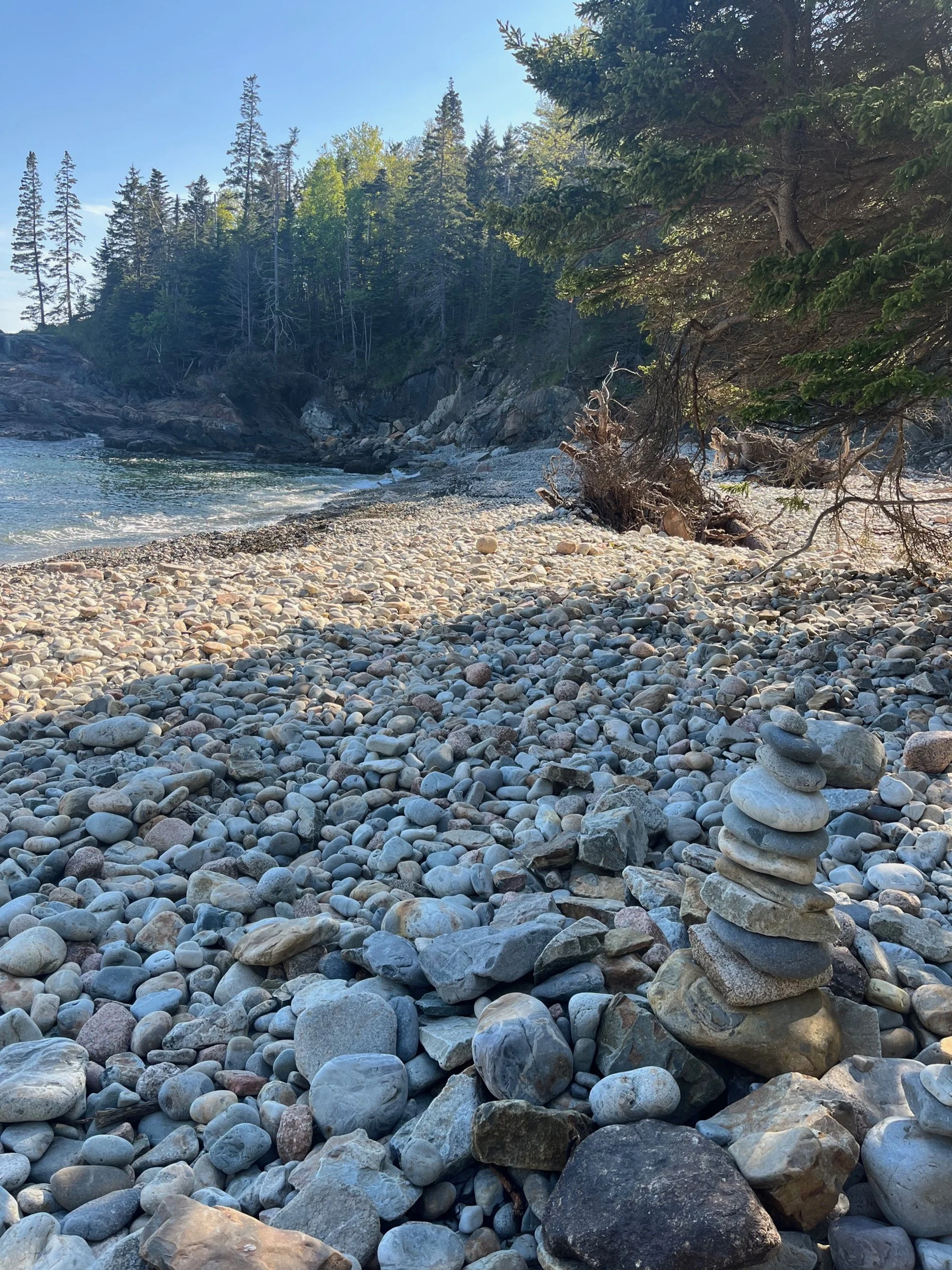
The pebbles of Little Hunters Beach
This beach is a hidden gem along the coastline in eastern Mount Desert Island.
While everyone flocks to nearby Sand Beach, Little Hunters Beach is much quieter.
The official Acadia National Park map does have a designation on it for Little Hunters Beach, but, other than that, there’s not much fanfare about it. There’s not even a sign for it on Park Loop Road.
The only indication that you might want to stop on the road for something is the parking area on the right side of Park Loop Road.
You’ll need to pay careful attention to find the entrance to this beach. Look for a low stone wall on the left of the road. You will see it 4.8 miles after you pass the sign for Fabbri.
There’s a wooden staircase at the edge of that stone wall which will take you to the beach.
Little Hunters Beach is home to highly polished stones piled along the water’s edge. As the tide rolls over the stones, they will “sing” and clatter.
It’s so peaceful to listen to!
Eat at Jordan Pond.
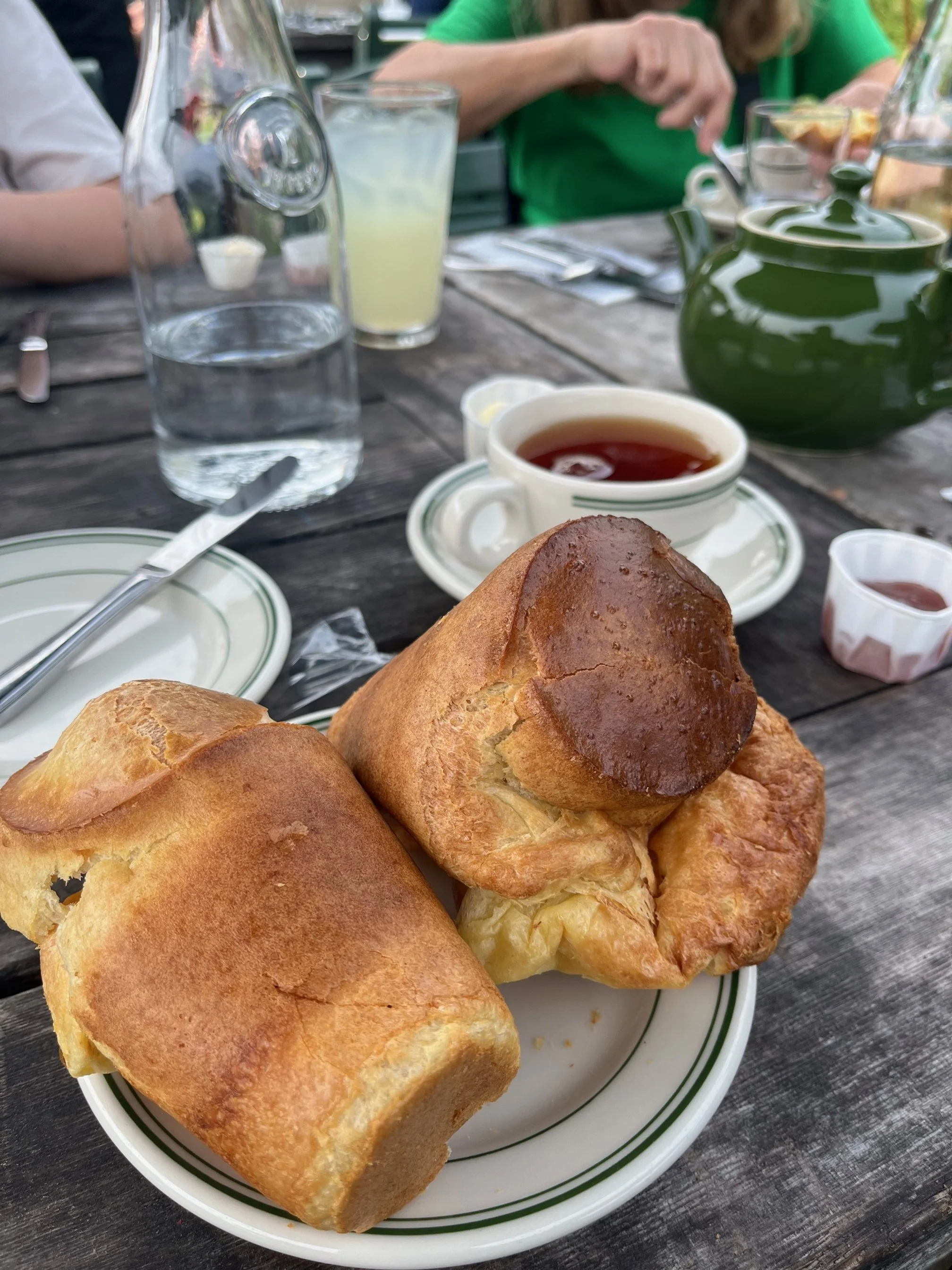
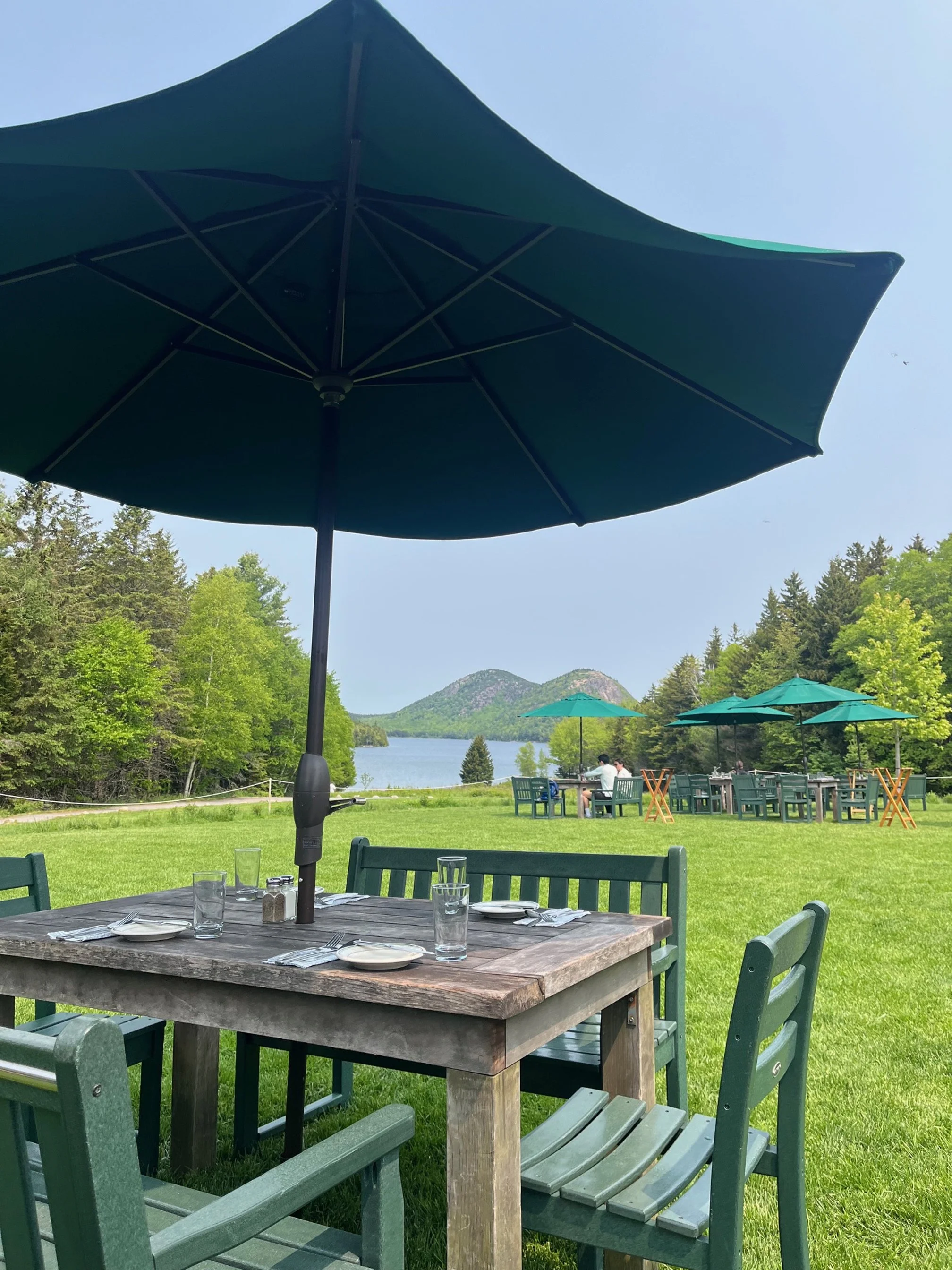
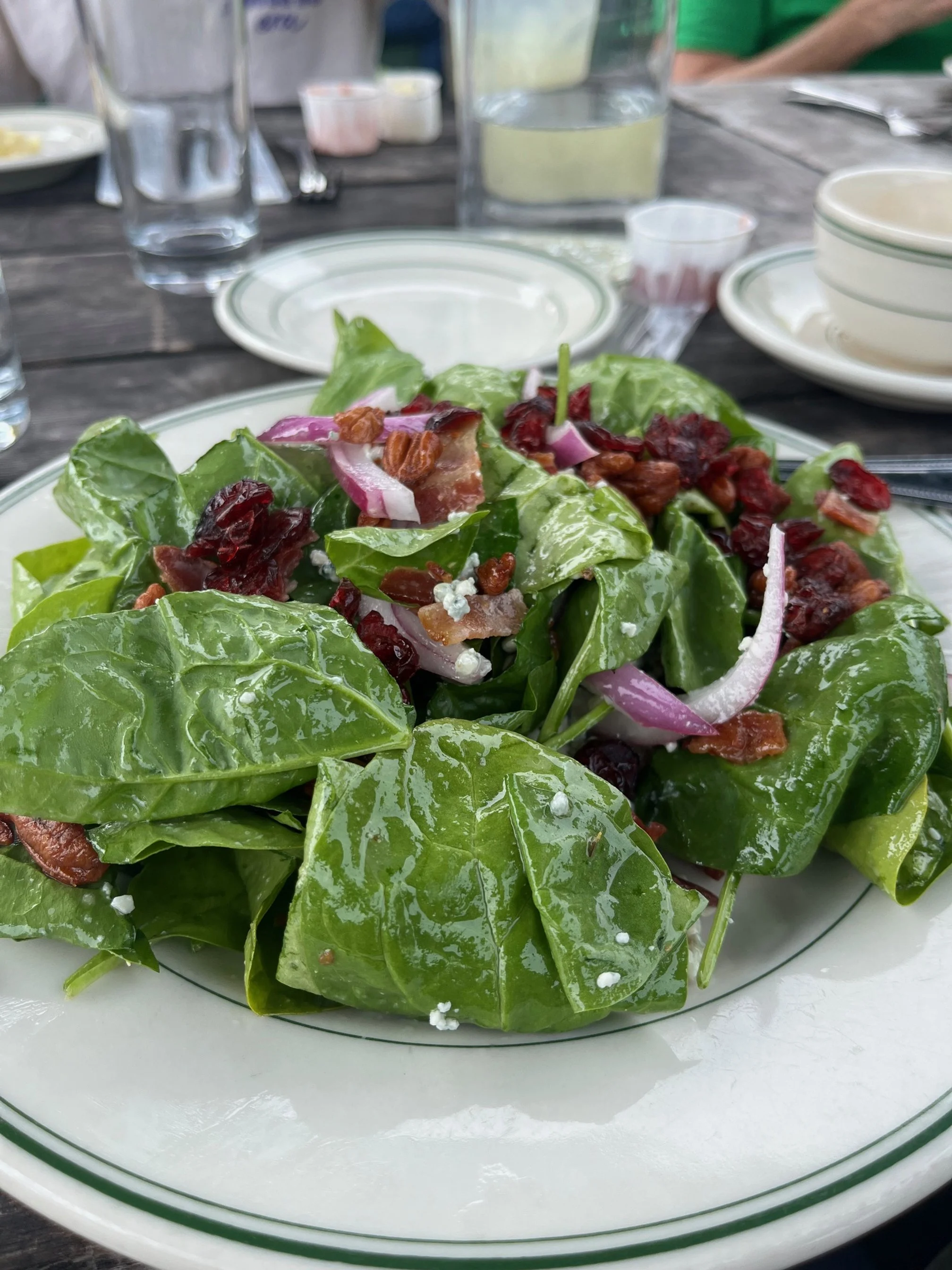
Jordan Pond is a beautiful area with gorgeous scenery and some fun hiking.
It’s also where the famous Jordan Pond House Restaurant resides, which serves the tourist-favorite popovers and tea.
Popovers are essentially light, fluffy pastries made from an eggy batter and are served warm with butter and jam. If a muffin and a crepe had a baby, you might get fairly close to a popover.
The restaurant needs to be on your itinerary since it is such an iconic part of Acadia. People have been dining on the shores of Jordan Pond since the summer rusticators of the Gilded Age!
The main restaurant can get very busy during the summer and fall, and I recommend reservations if you’re coming during that time. You can get by without a reservation the rest of the year, but you may still have to wait a bit.
We did stand by during our visit in early June, and, since we got in line before the restaurant opened, we were able to be seated less than 15 minutes after the restaurant opened.
If the line is just too much for you, you can always do a grab and go meal from the quick service cafe on the second floor. They don’t have the original popovers, but they do have several breakfast-inspired twists on them, as well as coffee, tea and pastries.
>> Learn more in my complete guide to eating at Jordan Pond House here.
See the iconic Bass Harbor Head Lighthouse.
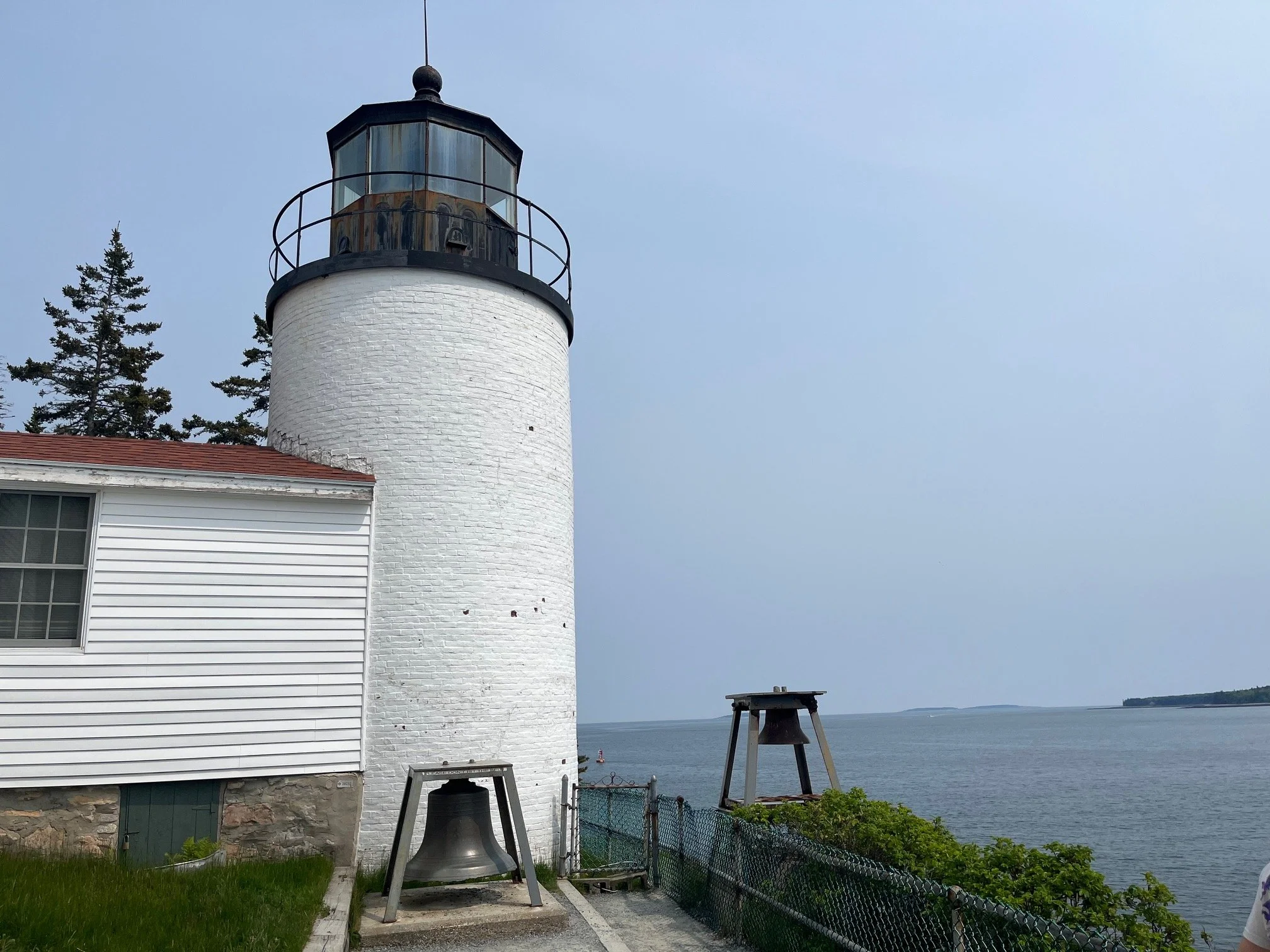
The Bass Harbor Head Lighthouse
Bass Harbor Head Lighthouse is one of three lighthouses managed by Acadia National Park and is the only one on Mount Desert Island.
This spot is extremely popular at sunset, and as the parking lot is very small, if this is something you want to do, you might have to arrive up to 3 hours early to get a spot.
That being said, I’m not sure that it’s worth it since there are so many other great places to see the sunset around the park, but you’ll have to make the decision for your family.
At other times of the day, it is less crowded and you’ll have a better chance of snagging a parking space.
If it is full when you’re there, just be patient as people tend to move in and out of here quickly during the day.
While you’re there, you can see the lighthouse in one of two ways.
You can walk to the right of the parking lot down to the lighthouse directly, or you can take the steep wooden stairs to the left of the parking lot.
The second option then requires you to walk out onto uneven boulders to get far enough out to see the lighthouse up above you on the cliff.
This is a famous perspective of the lighthouse, but I found it difficult to get to with my kids.
Explore the Schoodic Peninsula.
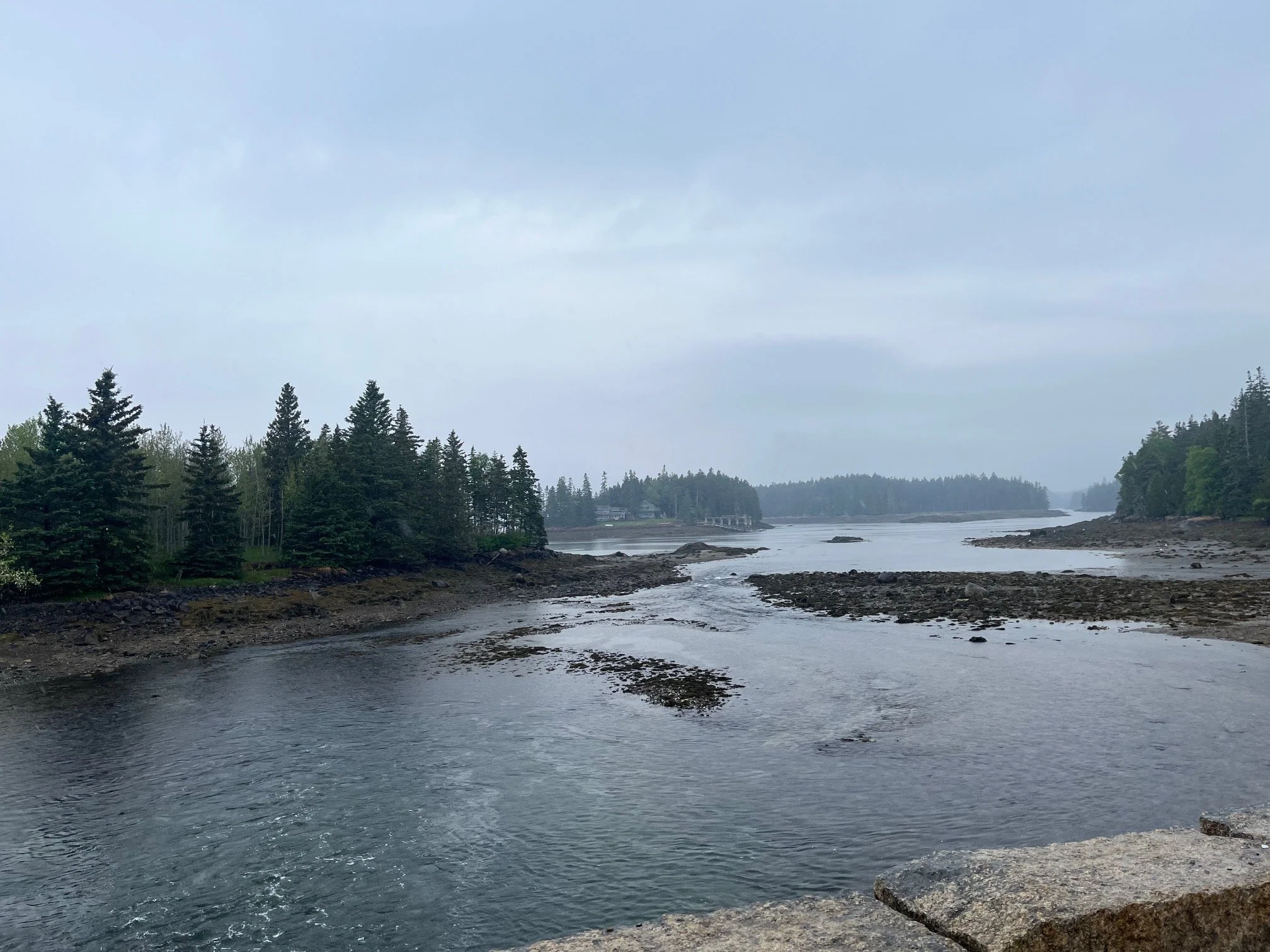
The rocky shores and inlets of the Schoodic Peninsula on a foggy day
Schoodic Peninsula is a less-visited section of Acadia National Park and is well worth the 45-60 minute drive from Bar Harbor.
On the peninsula, Schoodic Point is a stunning area with lots of rocks to climb on, which makes it a fun spot to wander around and explore.
You can also hike on the Sundew and Pitcher Plant trails, both of which are easy enough for any visitor to do.
If you’re camping while at Acadia, there is a large campground in this area of the park.
Stop by the Schoodic Institute at Rockefeller Hall for souvenirs and a great learning experience (but more on that below).
When you’re done exploring the Schoodic Peninsula, stop by the Wrinkled Pickle for dinner in Winter Harbor, or go to Me and Ben’s for some ice cream.
Splash around at Echo Lake Beach.
While Sand Beach is a good choice for a fun day by the water, it can also be very crowded during the summer.
Consider Echo Lake Beach on the western side of Mount Desert Island for a less busy option.
Echo Lake Beach is at the end of Echo Lake near Acadia Mountain and Beech Mountain.
Access the sandy beach at the southern end of Echo Lake off of Route 102. There’s also a parking area, bathrooms, and an Island Explorer stop here.
Walk through the Wild Gardens of Acadia.
These beautiful gardens and walking trails are a part of the Sieur de Monts area of the park.
Start at the Nature Center to get your Acadia passport stamp, and then head out onto one of the trails.
This entire area is very kid-friendly, and your kids will love looking for the many different kinds of wildflowers that pop up around the gardens.
The gardens are located along Park Loop Road on the one-way section near the Hulls Cove Visitor Center.
Learn at Rockefeller Hall.

The exterior of Rockefeller Hall
The Schoodic Institute sounds imposing (and I’m saying this as someone who taught at the college level for over a decade!).
The building that it is housed in—inspired by the half timbered houses in England—is more striking than imposing, however. And once you’re inside, the incredibly friendly rangers will banish any thoughts you had about the institute being stuffy or unwelcoming.
The Schoodic Institute is a part of the park’s education outreach program, and it is located in the beautiful Rockefeller Hall.
I highly recommend that you stop by the Hall while you’re on the Schoodic Peninsula for a couple of reasons.
First, the educational materials on the first floor are free and absolutely captivating. You’ll learn about the wildlife and wildflowers found in the park, and about radar and Morse Code from the property’s World War II history.
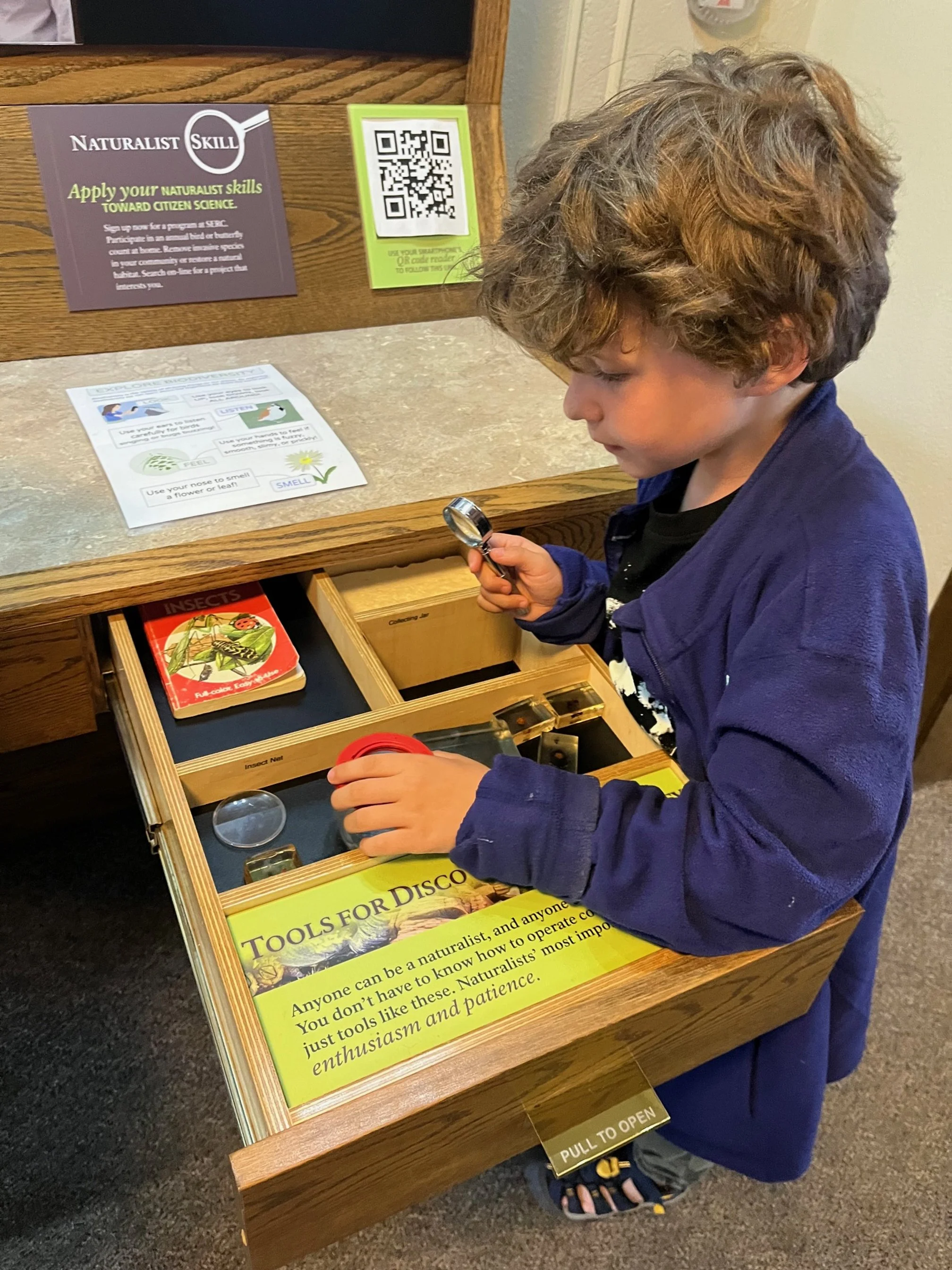
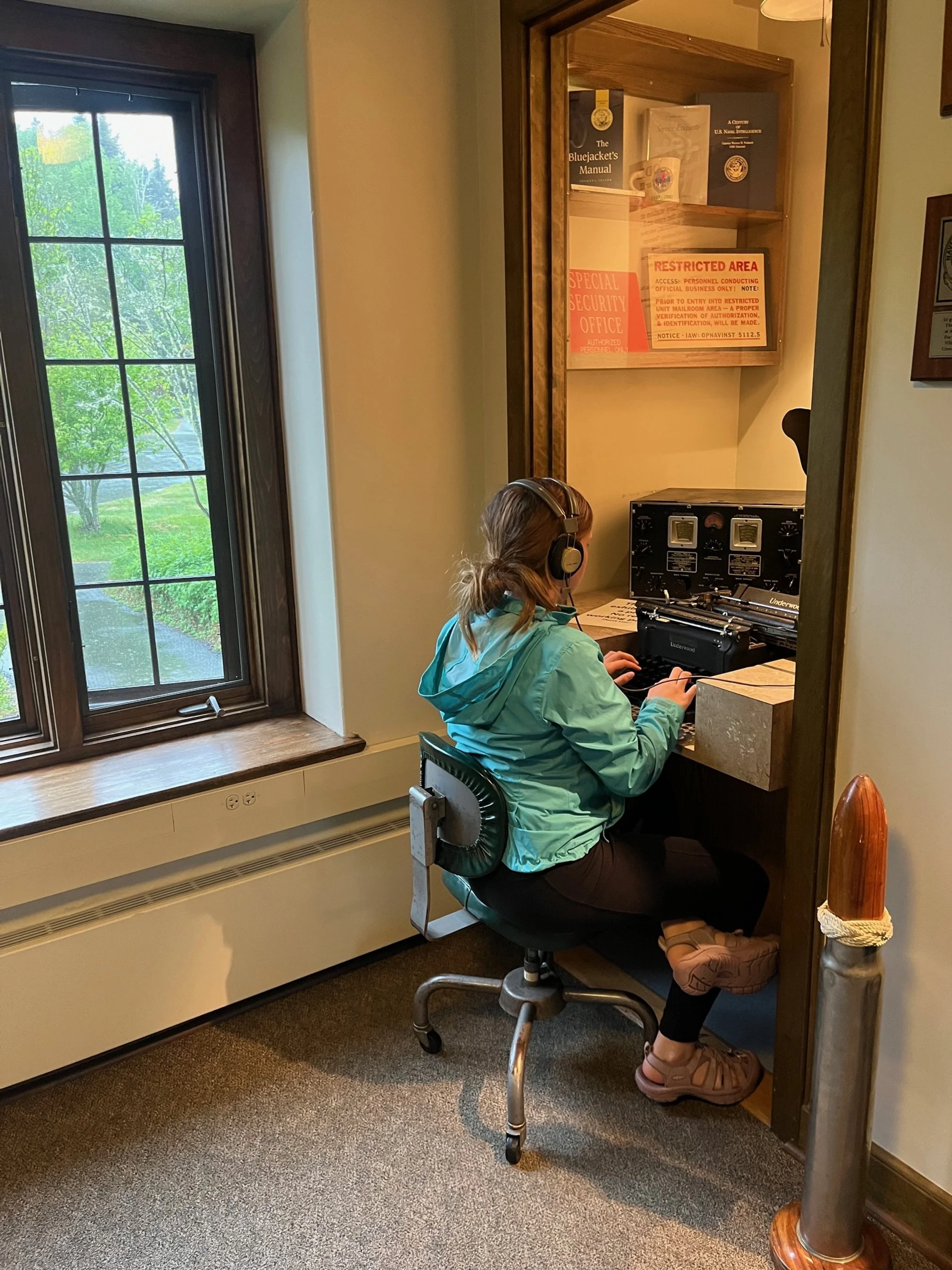
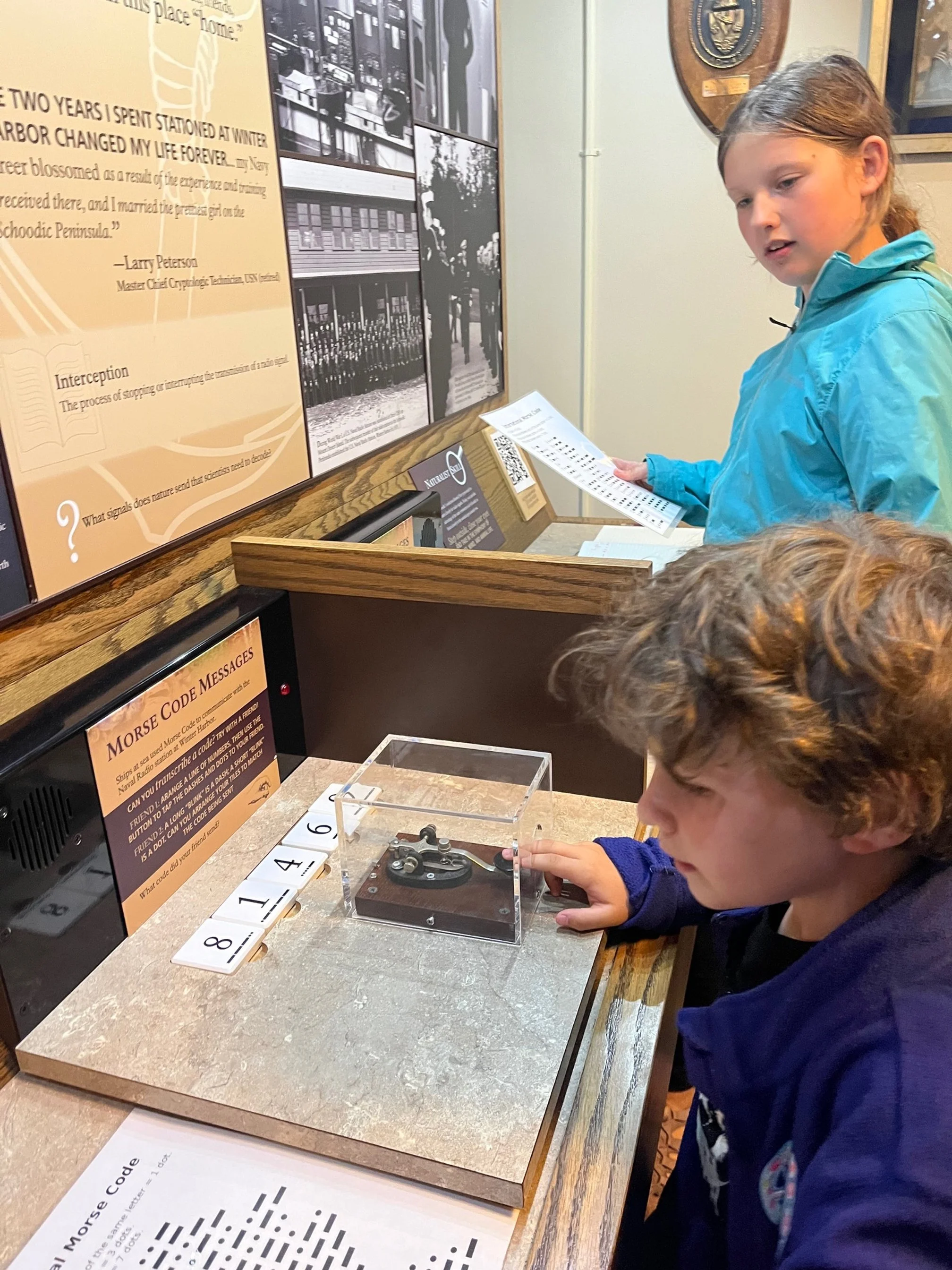
Second, the Institute’s free programs are held upstairs. These are offered on a rotating basis and can cover everything from the ecosystems of tidepools to the carnivorous plants that you can find in this part of Maine.
Third, there is a small souvenir shop and passport stamp location.
Finally, we loved chatting with the rangers and volunteer staff here!
You’ll find plenty of parking and clean restrooms to use as well.
Go whale and seal watching.
The land part of Acadia National Park and Mount Desert Island is only part of the story.
The wide range of animals that call this place home are a vital and fascinating part of the park, and I loved learning more about them on a boat tour.
There are several different kinds of water-based tours in and around Acadia National Park, so you’ll want to pick the one that fits your family’s budget and time outlay.
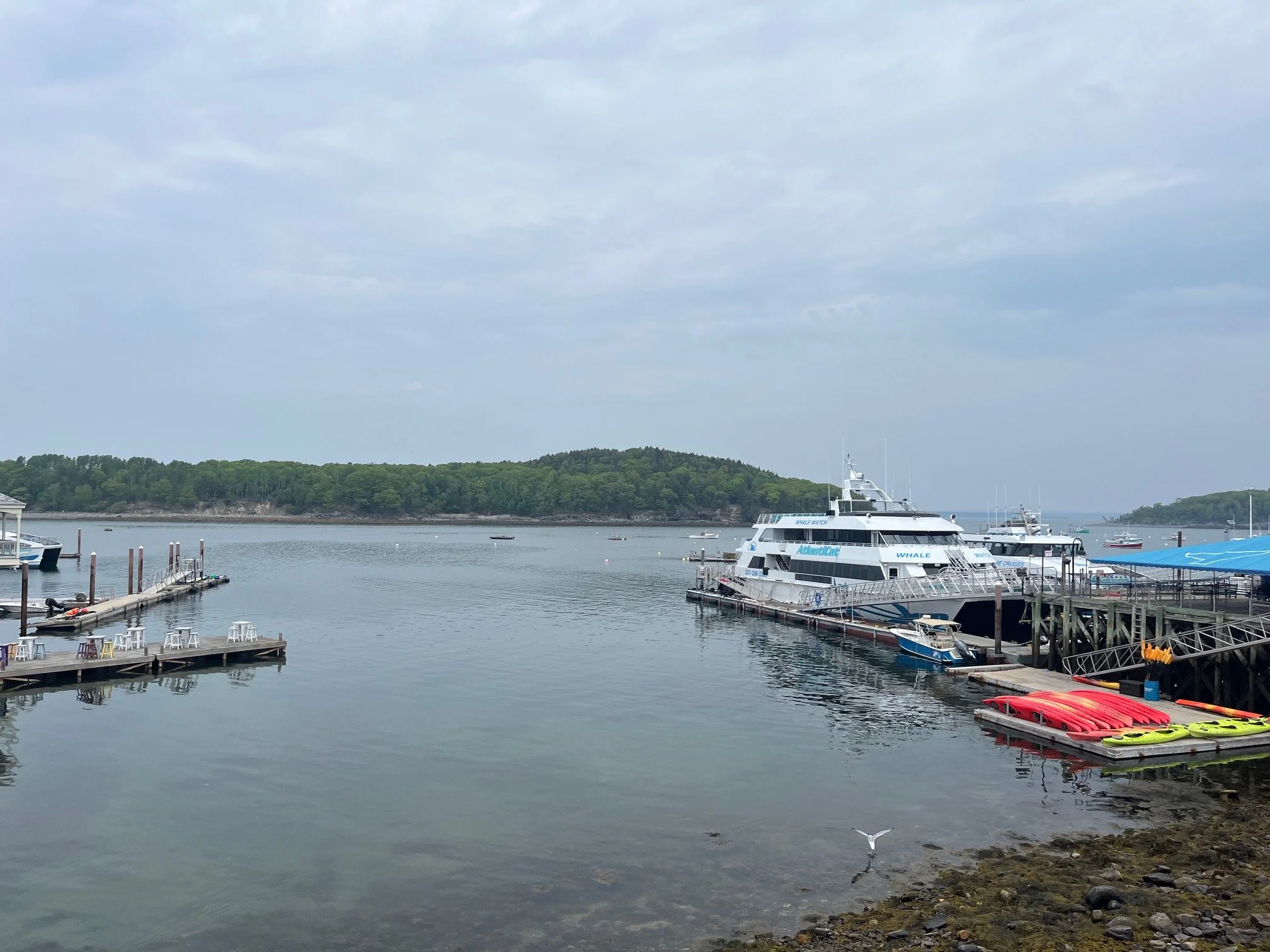
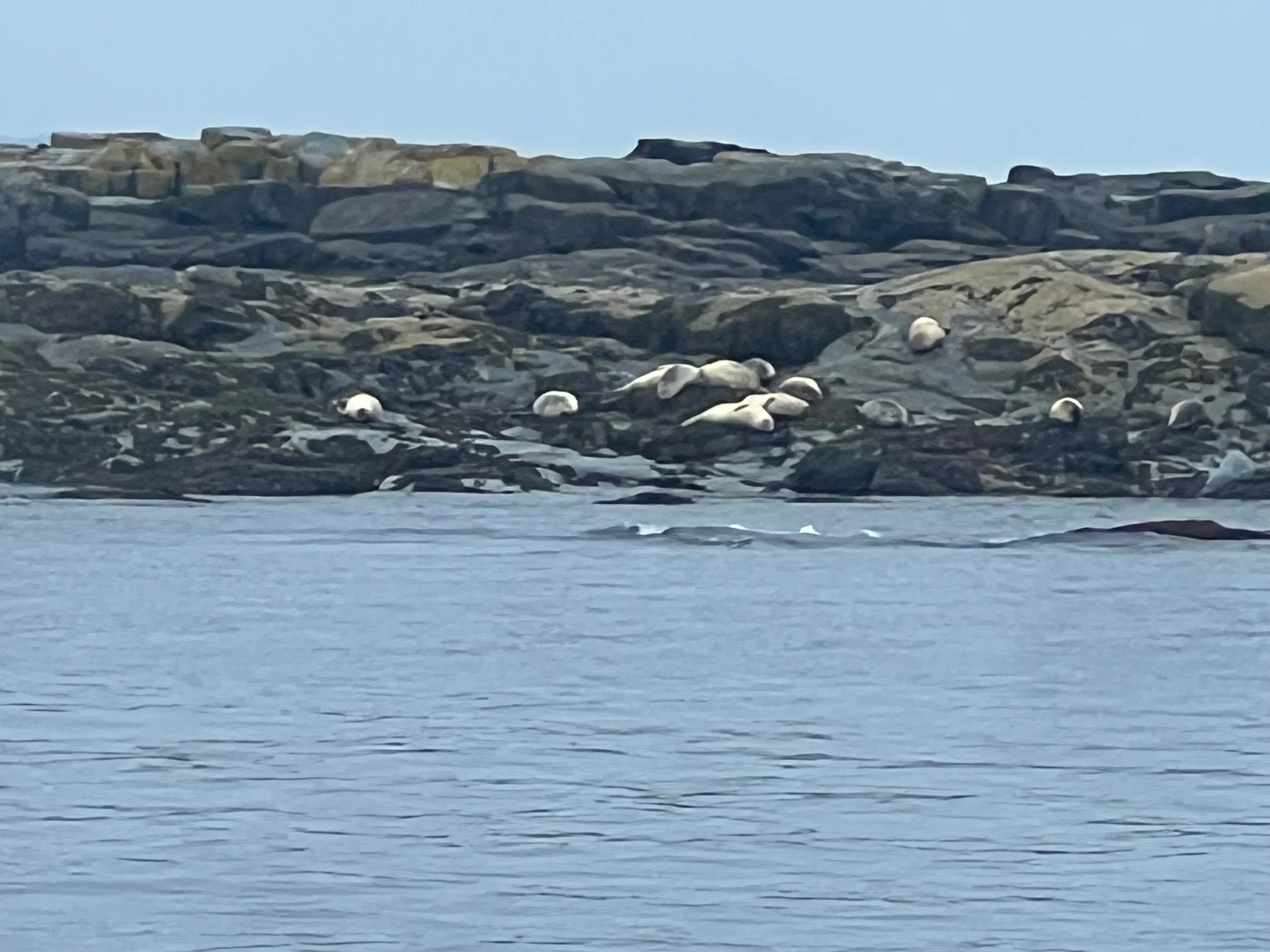
You can do one of the longer whale watching tours from the private companies in Bar Harbor, a shorter seal and lighthouse tour (also from the private companies), or a ranger led boat tour along the coast of Acadia.
The latter takes visitors to the town of Islesford on the Cranberry Islands south of Mount Desert Island.
These do fill up quickly, so you’ll need to plan ahead if you want to join that tour.
If you’re unable to nab a spot on the ranger led boat tours, the ones run by Bar Harbor Whale Watch Company are great, too.
We did a shorter seal and lighthouse tour with them, and it carried us along the coast of Acadia so we could see Sand Beach and parts of the Park Loop Road from the water.
Tour the park by carriage.
Explore the park as the Gilded Age "summer rusticators” did via horse and buggy!
At the Wildwood Stables, you can take a horse-drawn carriage tour along the park’s carriage roads.
Your guide will narrate the journey, so you’ll come away with a new appreciation of the park’s history.
Take a scenic drive.
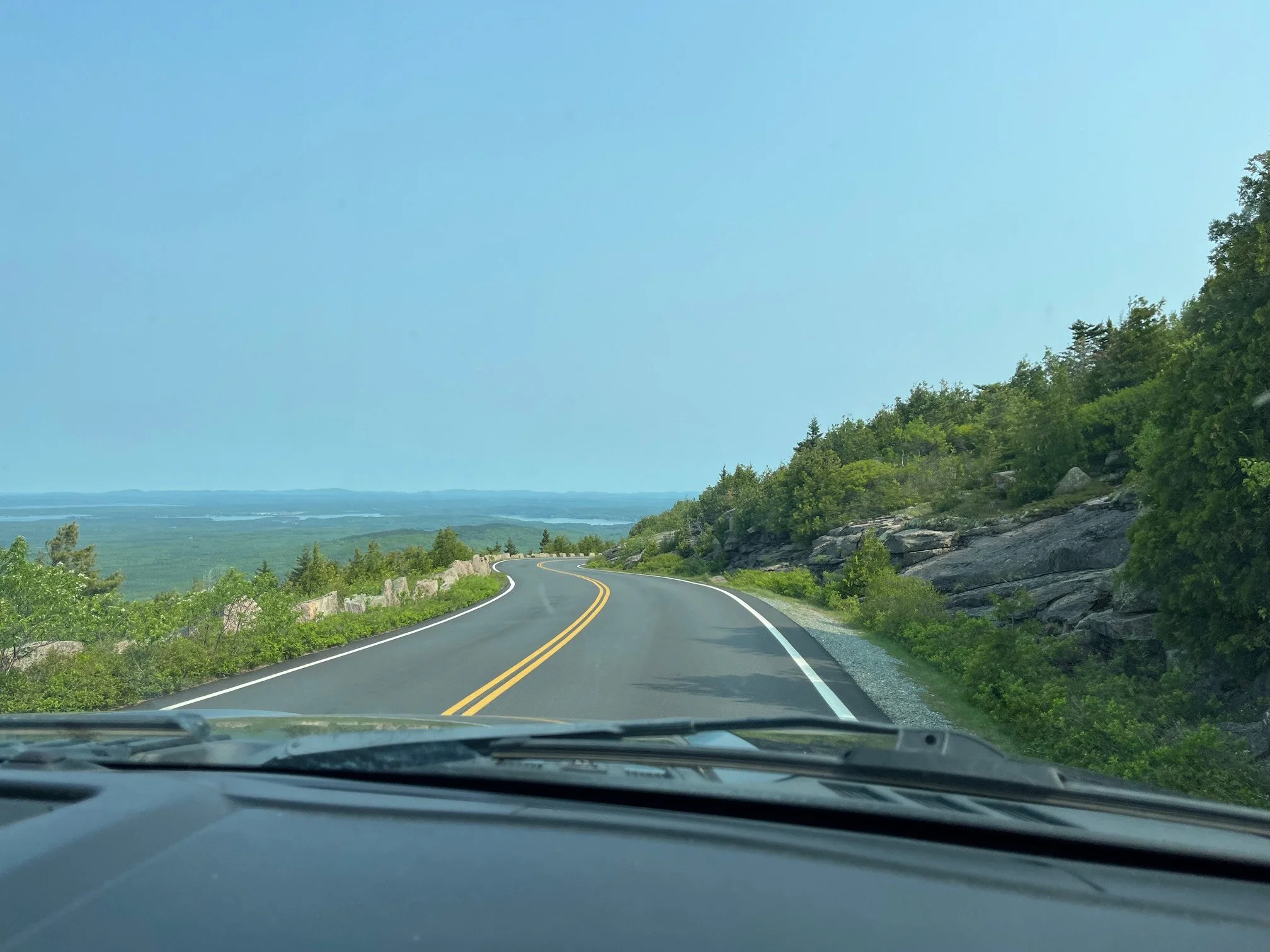
Driving along the Cadillac Summit Road
The park has several scenic drives, and I think they’re all worth your time.
While you’re driving these beautiful roads, have the GuideAlong audio tour for Acadia National Park playing.
We love these audio guides, which don’t need wifi or cell service once they’re downloaded to your phone. For the price of lunch, you can get hours of fascinating commentary on the park’s unique geological structures, hiking opportunities, points of interest, wildlife, and important historical figures.
You can start and stop the commentary, or let it play automatically as you reach points of interest.
The most popular is Park Loop Road, a 27 mile drive on the eastern side of Mount Desert Island. From this road, you can access many popular trailheads and attractions, including Thunder Hole, Jordan Pond, the Beehive, Precipice Trail, Sand Beach, Little Hunters Beach, and Cadillac Mountain.
There is a portion of the road that’s one way, so keep that in mind when allocating your time.
A less traveled, but still beautiful loop drive is nearby on the western side of Mount Desert Island.
Take Route 102 past Echo Lake Beach and the Carroll Homestead to the Bass Harbor Head Lighthouse, then pick up Tremont Road north to Pretty Marsh. From there, take Pretty Marsh Road until it connects back to 102.
This loop is a little over 30 miles in total, and carries you through the cute towns of Southwest Harbor and Bernard, and past the non-touristy areas of coastal Maine.
You’ll see lots of lobstermen and their traps, pine forests, and the trailheads for Bernard Mountain and Acadia Mountain.
The final scenic drive that I recommend is the Schoodic Peninsula Loop Road. This 7 mile, one way road takes visitors along rocky beaches that are perfect for tidepooling and bird watching.
Don’t forget to stop by the Schoodic Institute at Rockefeller Hall (more on that above).
Bike the Carriage Roads.
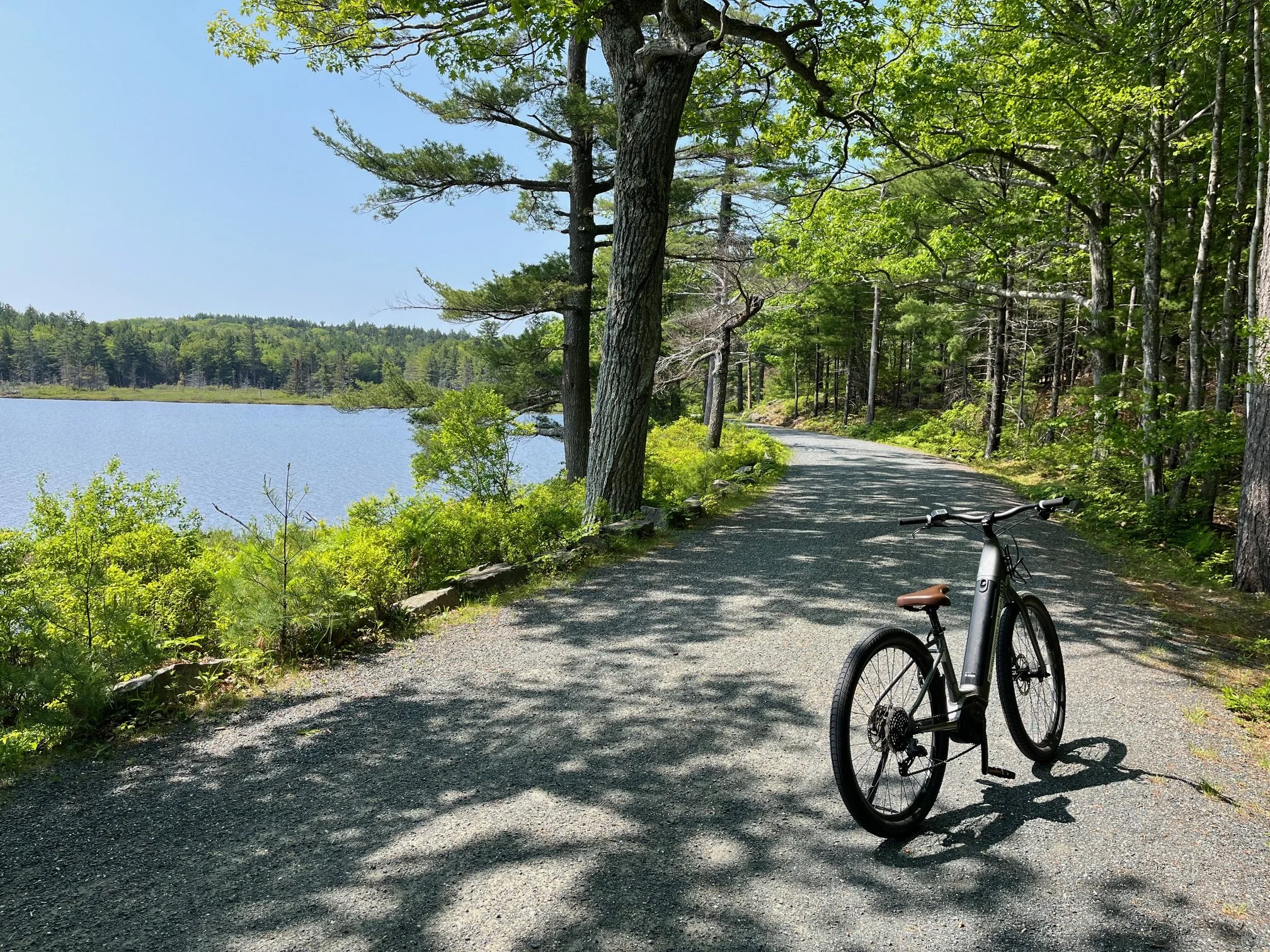
My e-bike parked near Witch Hole Pond in Acadia National Park
Acadia National Park has 45 miles of carriage roads, which are vehicle-free roads that were created for walkers, bikers, horseback riding, and horse-drawn carriage rides.
No matter how you want to experience the carriage roads, there are so many routes to choose from. Check out the National Park Service website for maps and additional information.
We rented e-bikes while we were visiting Acadia National Park for the sole purpose of getting out on to the carriage roads.
>> Rent an e-bike to explore Acadia here. <<
Unlike our experience biking in Zion National Park, where there is really only one route to explore, you’ll be spoiled for choice on the Acadia carriage roads, which sprawl over much of the eastern side of Mt. Desert Island.
If you’d rather not DIY your carriage road biking experience, I recommend joining a guided e-bike tour. Doing so demystifies where to go and how to navigate around the park’s carriage roads, which can be confusing for a first timer.
Ride the ferry to Isle Au Haut.
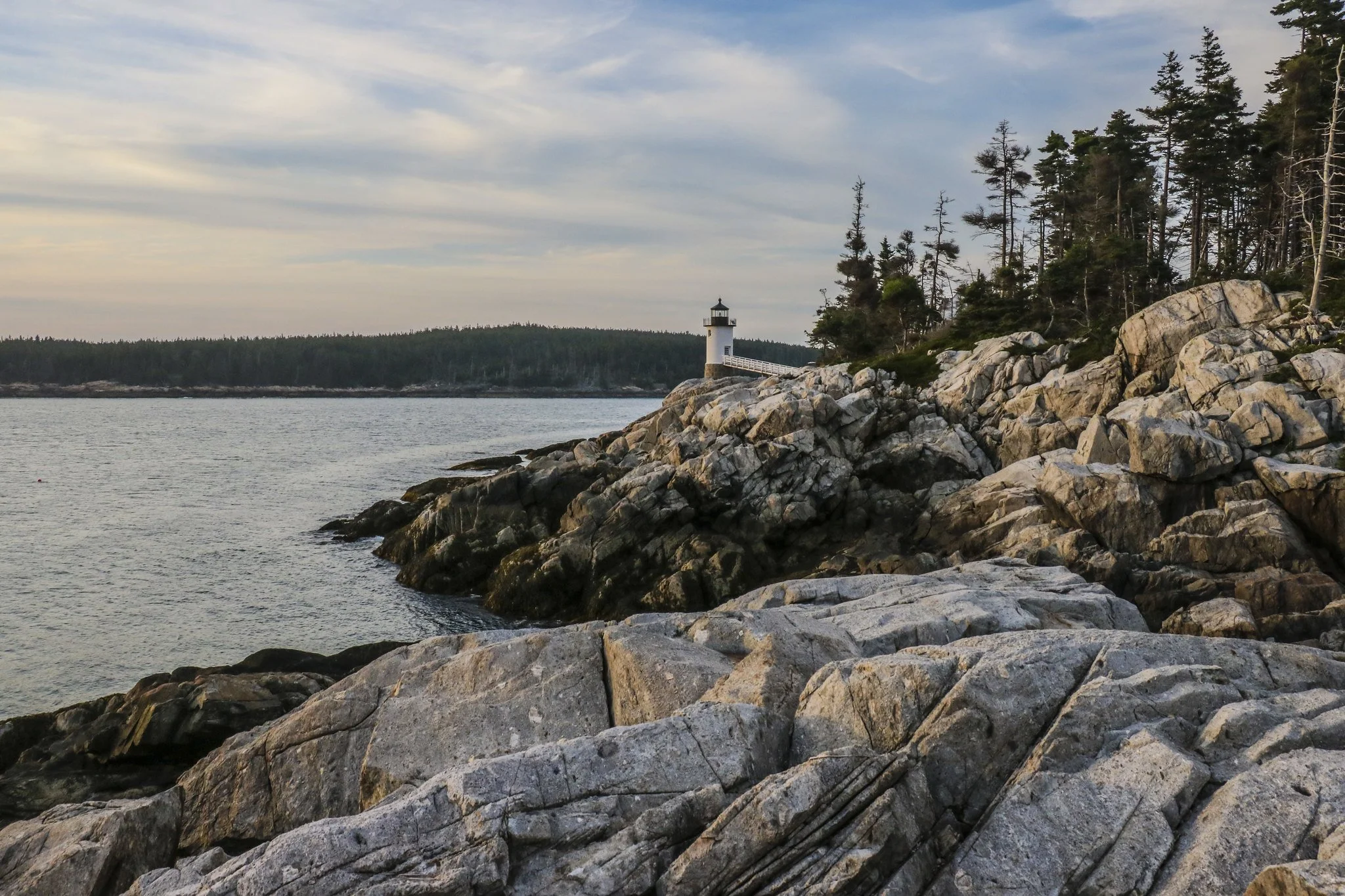
The small lighthouse on Isle au Haut | source
The least-visited section of Acadia National Park, many guests don’t even know this island exists.
Visitors can take a ferry from Stonington to get out to the Isle, where you can then explore on foot or on a bike. Cars are not permitted on the ferry, so you’ll feel as if you’re stepping back in time.
There are 18 miles of trails around the island, so you’ll have more hiking to do than you could possibly fit into one visit.
Isle Au Haut does take some time and some planning to get to, but it can be an incredible experience few visitors get to have! Learn more about the Isle au Haut ferry service here.
NOTE: Stonington, Maine, is about 1.5 hours south by car from Bar Harbor. Be sure to leave in plenty of time to catch your ferry.
Attend a ranger talk.
We love a good ranger talk, and we haven’t been to a bad one yet!
Ask at the Hulls Cove visitors center, the Sieur de Monts Nature Center, the Schoodic Institute or at the fee station on Park Loop Road for more information.
These ranger programs are usually free or very low cost (I think the most we’ve ever paid was about $15 a person to go on the excellent ranger-led boat tour of Lake Yellowstone, something that should be on your list of things to do if you visit Yellowstone National Park with kids).
You could learn about anything from why Acadia has so many tide pools to the different constellations that can be seen in the night sky during your visit.
Go tidepooling.
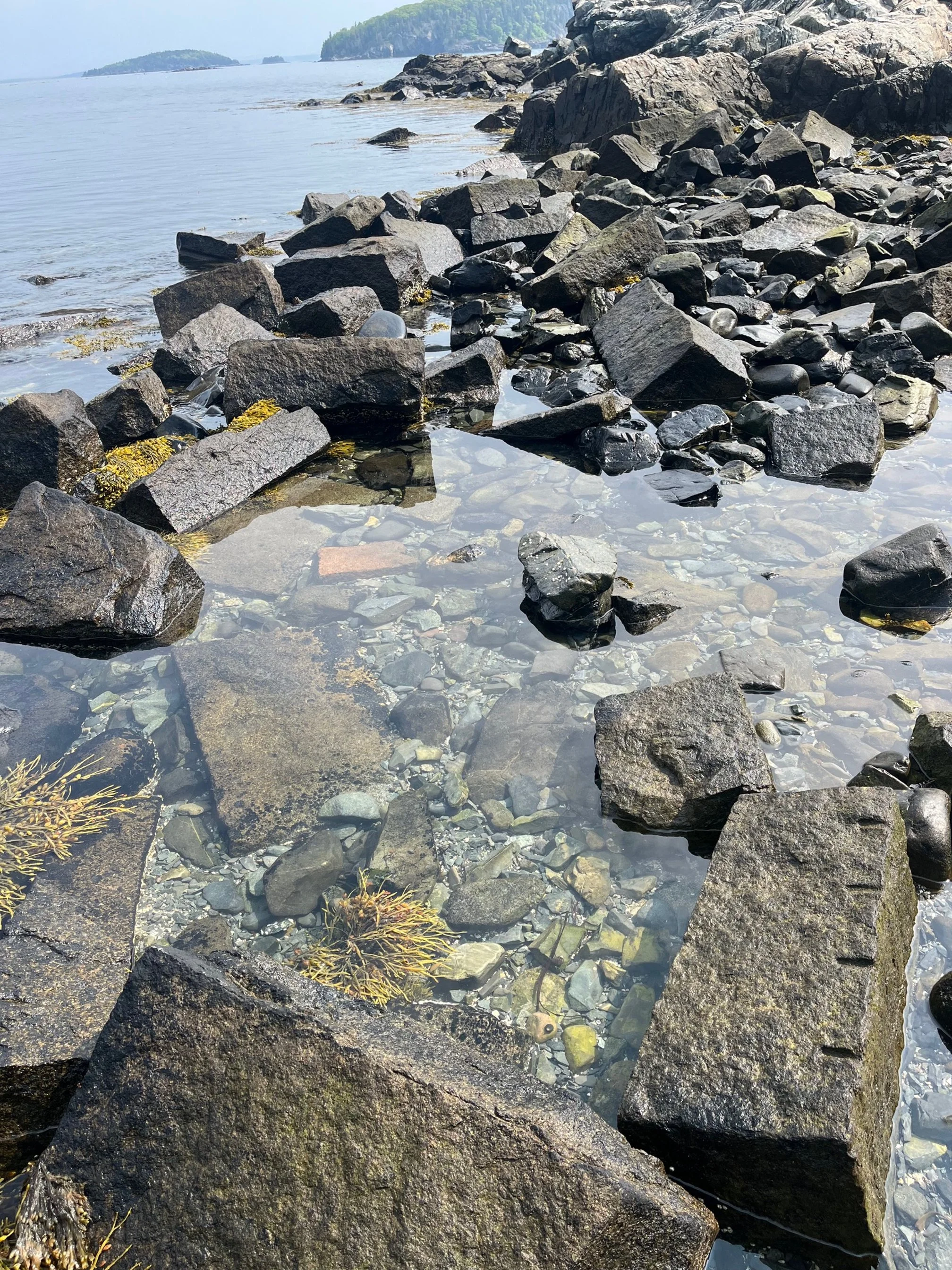
A tidepool on the Compass Harbor Trail in Acadia National Park
Exploring the rocky coast of Acadia is far more exciting that you might think.
The tide pools that occur at low tide are teeming with life, and you might find everything from starfish and barnacles to crabs and sea urchins.
Be sure to observe rather than touch, both for your safety and that of the creatures who live in the pools.
There are several places that are great for tidepooling in Acadia, including on the Compass Harbor Trail (see below), along the Schoodic Peninsula Loop Road, at Pretty Marsh, and near Thunder Hole.
You’ll want to be careful as the rocks can be slippery and unforgiving.
I recommend wearing water shoes or hiking sandals for better grip on the rocks.
Learn about the park’s founder.
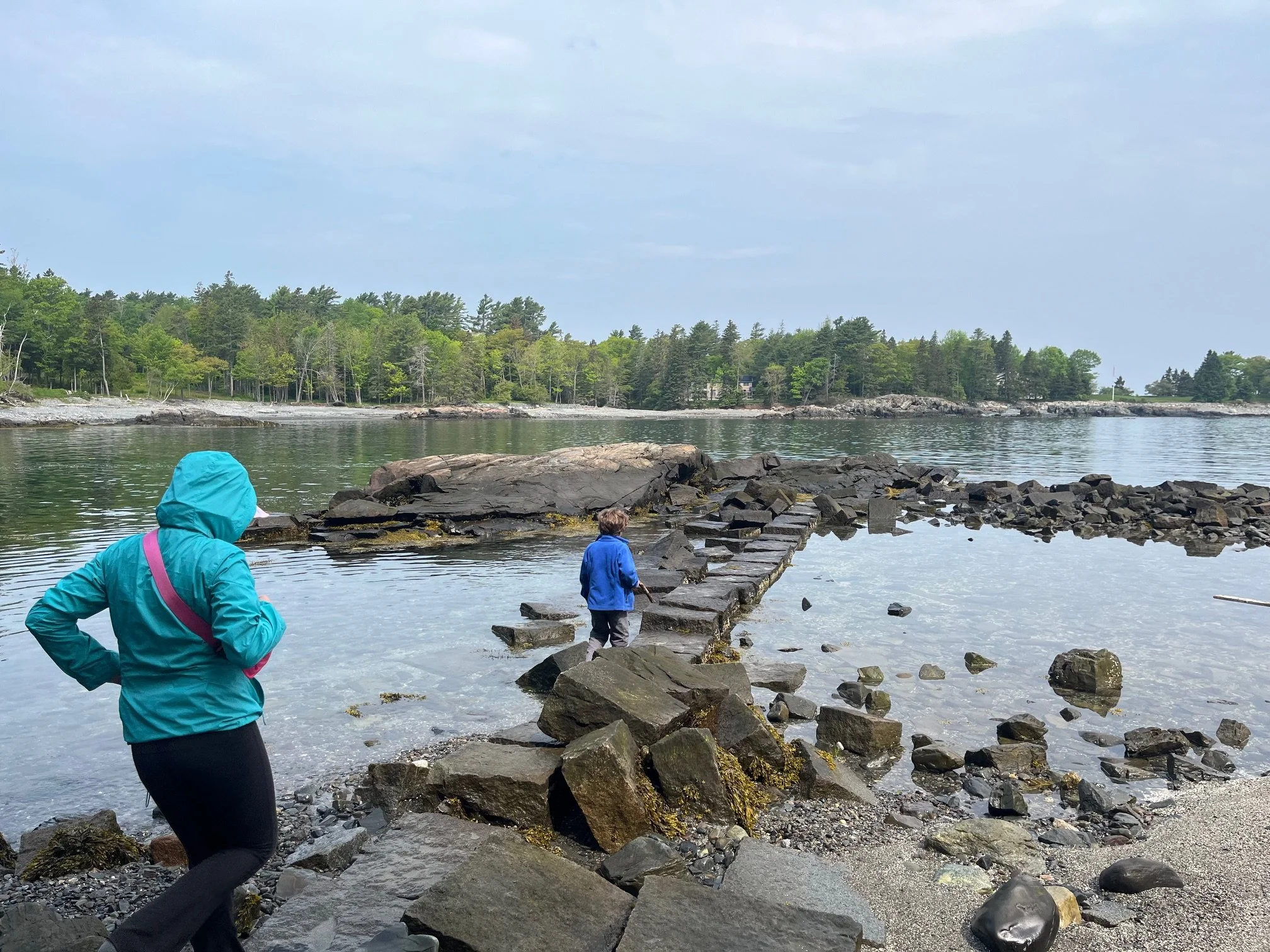
If it wasn’t for George Bucknam Dorr, we likely wouldn’t not have Acadia National Park in the form we see it today.
A wealthy philanthropist, Dorr devoted much of his life to advocating for federal protections for Mount Desert Island and the surrounding areas.
He’s known as “the father of Acadia National Park” for his lobbying and funding for the park, and you can visit the ruins of his old estate on the Compass Harbor Trail.
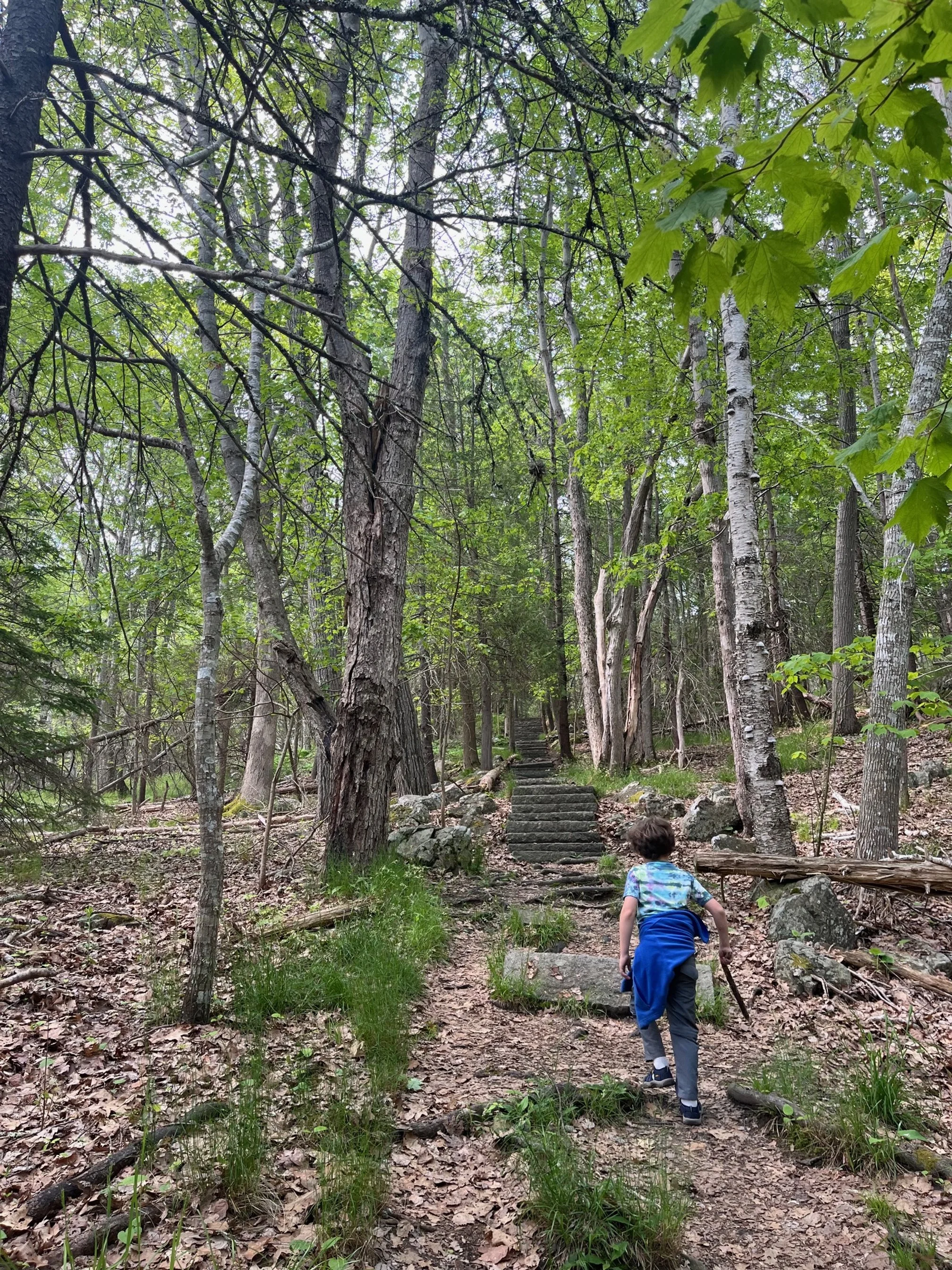
This short, 1 mile loop trail carries you around the Oldfarm property where Dorr lived with his parents and then as a confirmed bachelor.
Read my complete hiking guide to the Compass Harbor Trail here.
You can see the remains of his swimming area in the cove, the long brick staircase to the home, and the footprint of his sprawling home.
Dorr’s final wish was that the property and home be used by the park in perpetuity, possibly as a retreat for the U..S. president. He deeded Oldfarm and the rest of this waterfront property to the federal government, but, sadly, the government then tore it down after just a few decades of use.
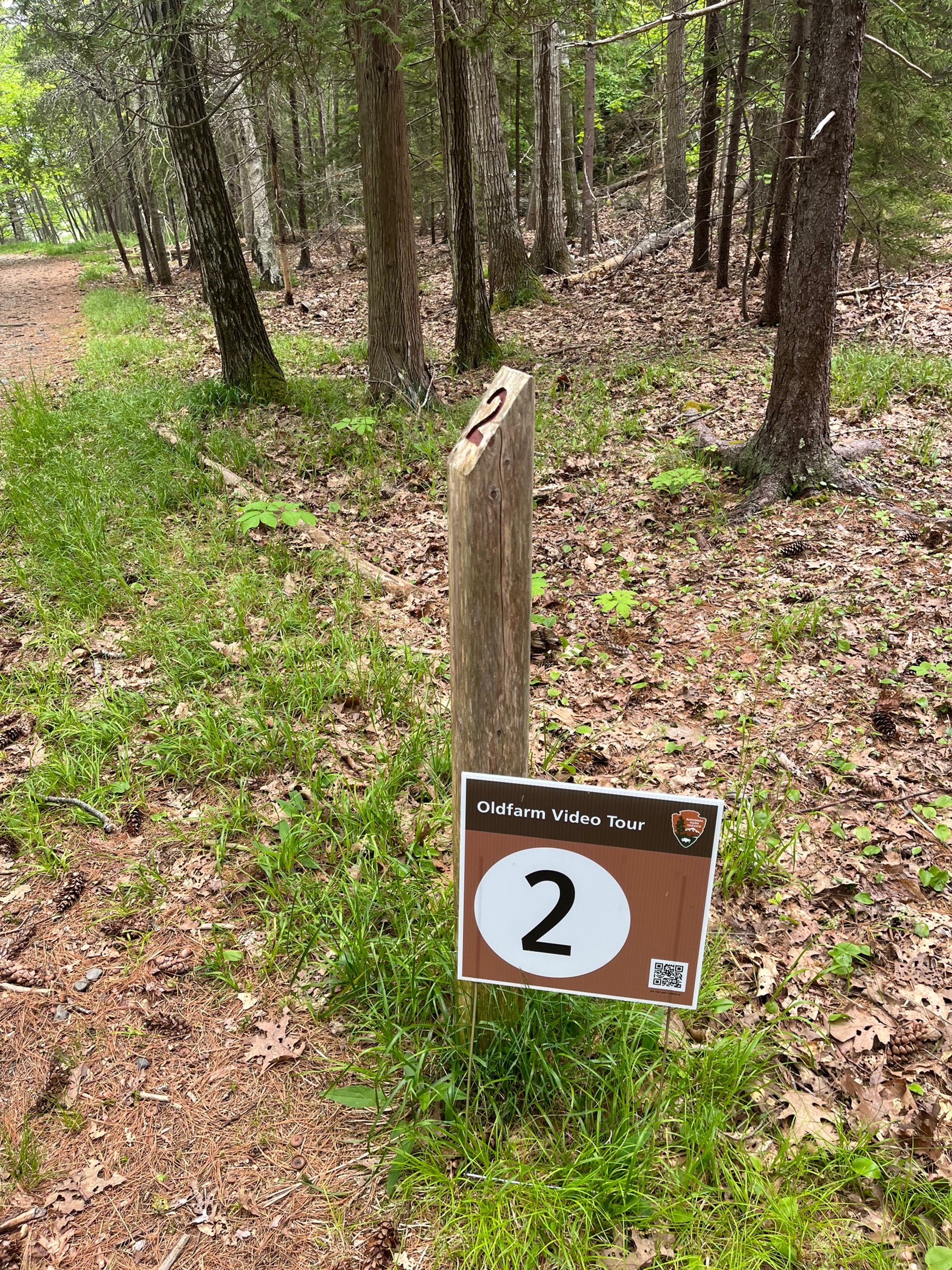
This free audio tour follows signs along the trail and helps you to be understand what you’re seeing at each part of the property.
Complete the Junior Ranger Program.
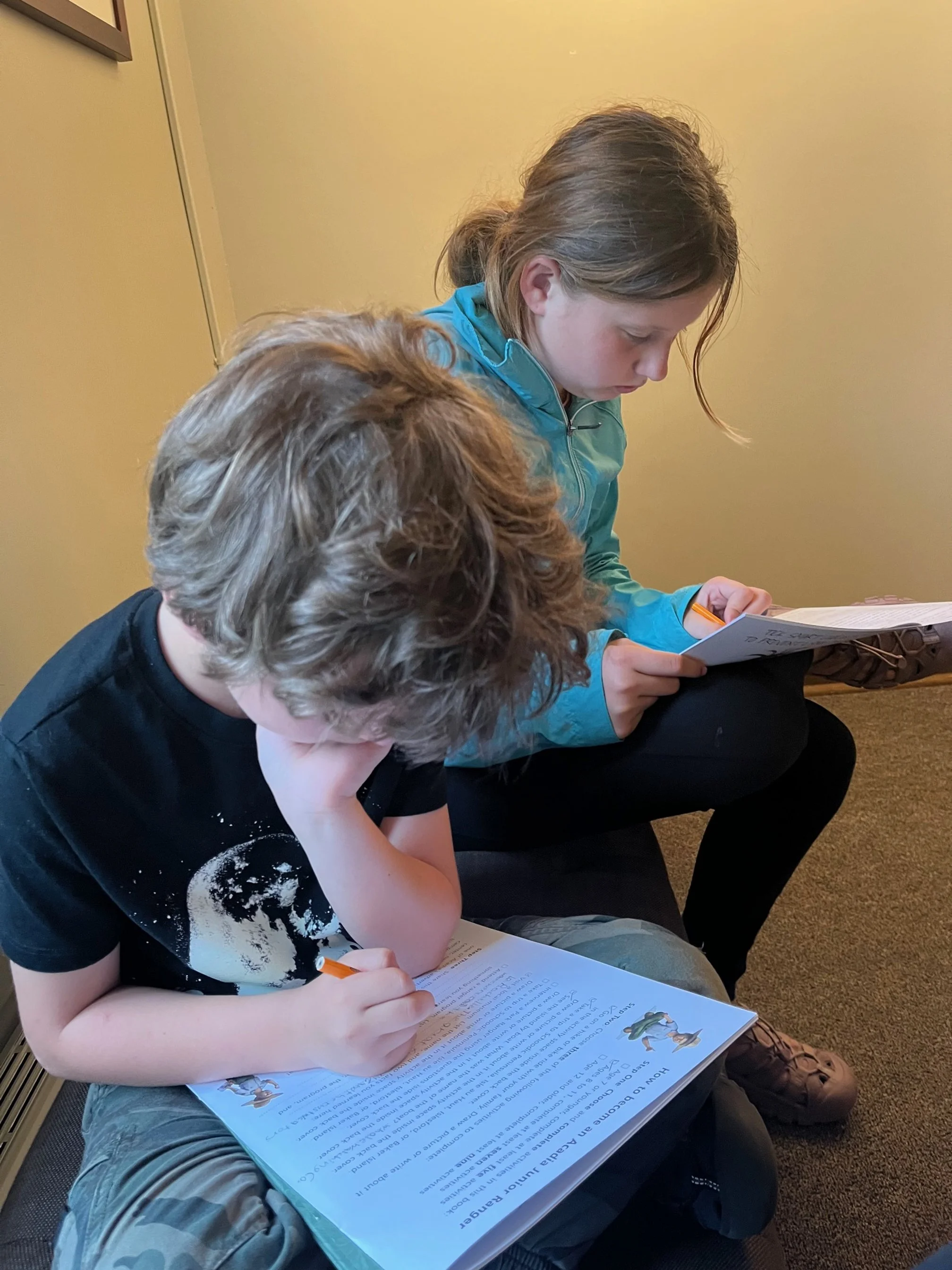
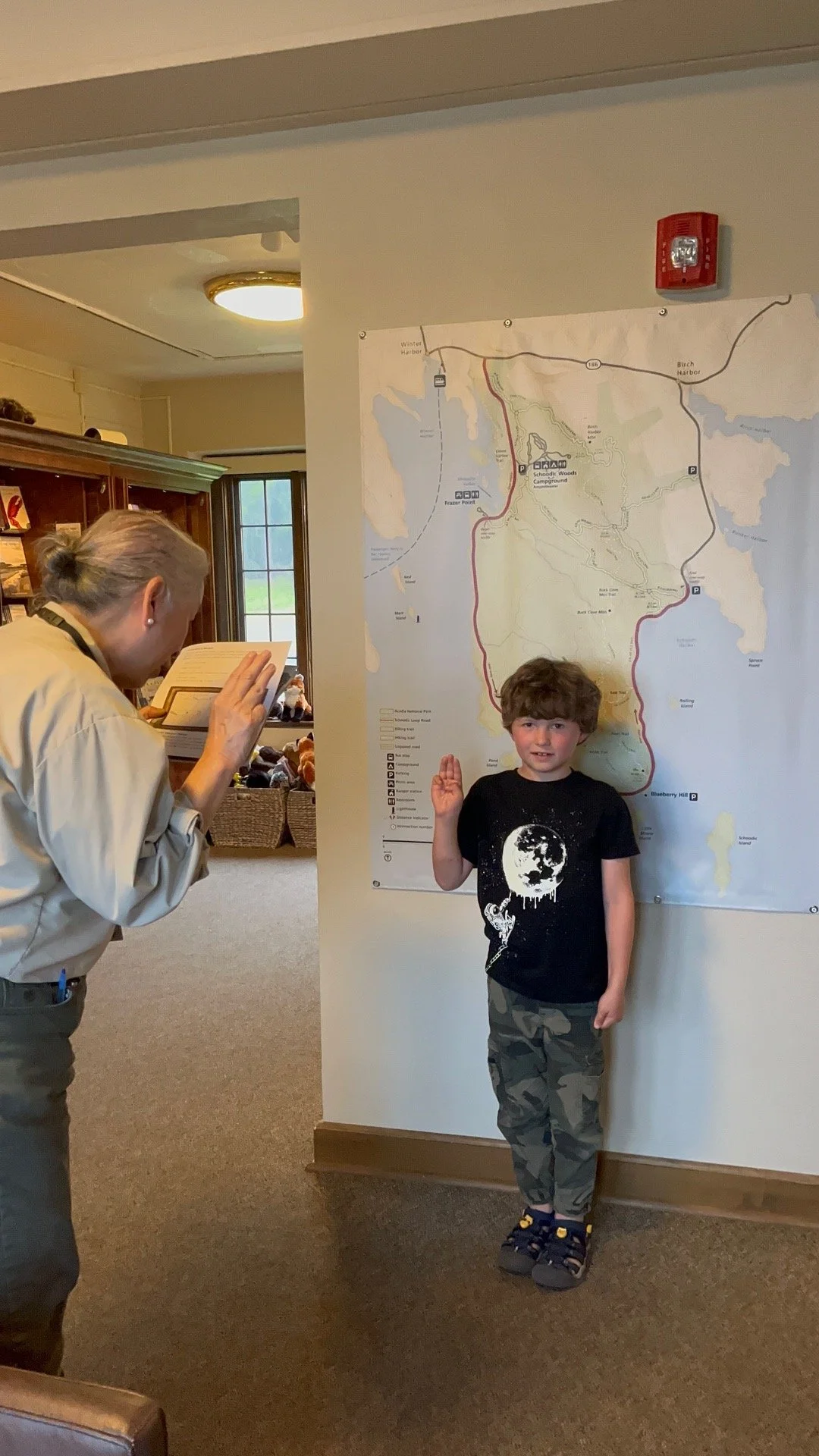
If you’re a kid or a kid at heart, you can complete the Junior Ranger program at Acadia National Park.
This free program is such a fun way to dive more fully into the park, as you’ll fill out puzzles, trivia, coloring pages, and other activity pages.
You can pick up a booklet at the Hulls Cove Visitors Center or Rockefeller Hall on the Schoodic Peninsula.
When you’ve completed the appropriate pages for your age group, head back to either of the locations above and let the ranger or volunteer on duty that you’d like your booklet reviewed.
Once your answers have been checked over, you’ll be officially sworn in as an Acadia Junior Ranger and you’ll receive a special badge for your efforts.
We’ve done dozens of these Junior Ranger booklets as we explore NPS sites, including the national parks, national monuments, national battlefields, and national historic sites.
For more information on the Junior Ranger program and other events in the national parks system, read over my guide to the national parks for beginners.
Ride the Island Explorer.
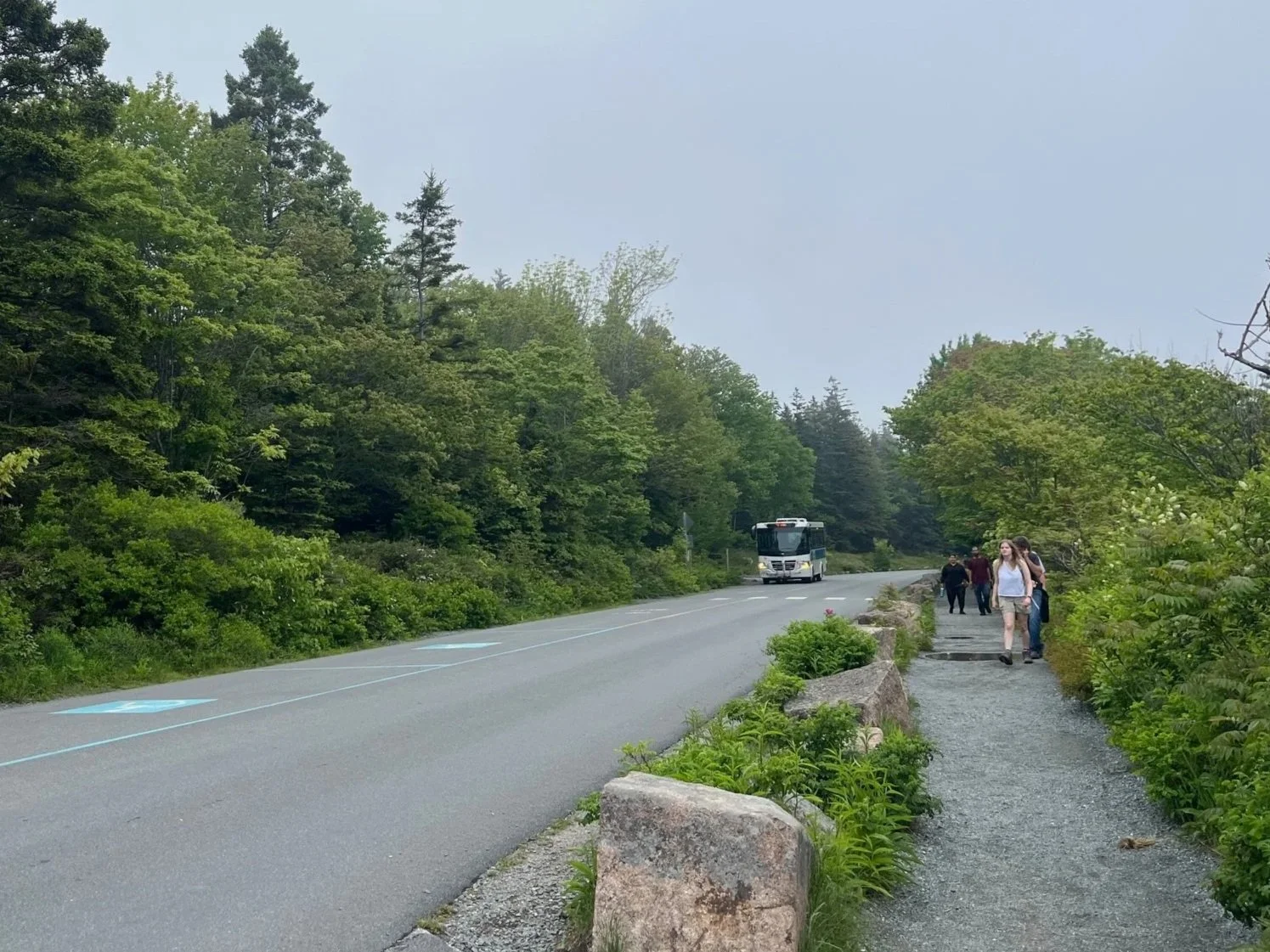
The Island Explorer on the Park Loop Road near Thunder Hole
The Island Explorer is Acadia’a free shuttle system, and it connects the park with Bar Harbor and beyond.
While it serves an important and practical purpose within the park, it is also a great way to skip the crowds and let someone else do the driving.
This particularly comes in handy on the scenic Park Loop Road, which is notoriously crowded in peak seasons. Instead of worrying about parking, you can pick up the Island Explorer at the Hulls Cove Visitors Center (or at one of the many other pick up locations throughout the Bar Harbor area).
Depending on the bus driver you get, you may also get some light commentary on high points around the park.
If you’d prefer the full commentary as you cruise around, consider taking a guided bus tour of Acadia and Bar Harbor in addition to riding the Island Explorer.
Go camping.
Acadia National Park has 5 campgrounds within its borders, and each is worth visiting.
Schoodic Woods Campground is on the Schoodic Peninsula and has both tent and RV camping sites with water and electric.
Blackwoods Campground is on Park Loop Road in eastern Mount Desert Island and is the park’s most popular campground due to its proximity to major points of interest.
Seawall Campground is on western Mount Desert Island with hike-in and RV sites.
Then, there are a handful of lean-to style wooden huts for tent campers on Isle au Haut. There’s potable water on site, but you’ll need to bring everything else.
>> If you want full RV hook-ups and more robust amenities outside of the park, read my review of the Bar Harbor Oceanside KOA Holiday! <<
Kayak the shores of Acadia.
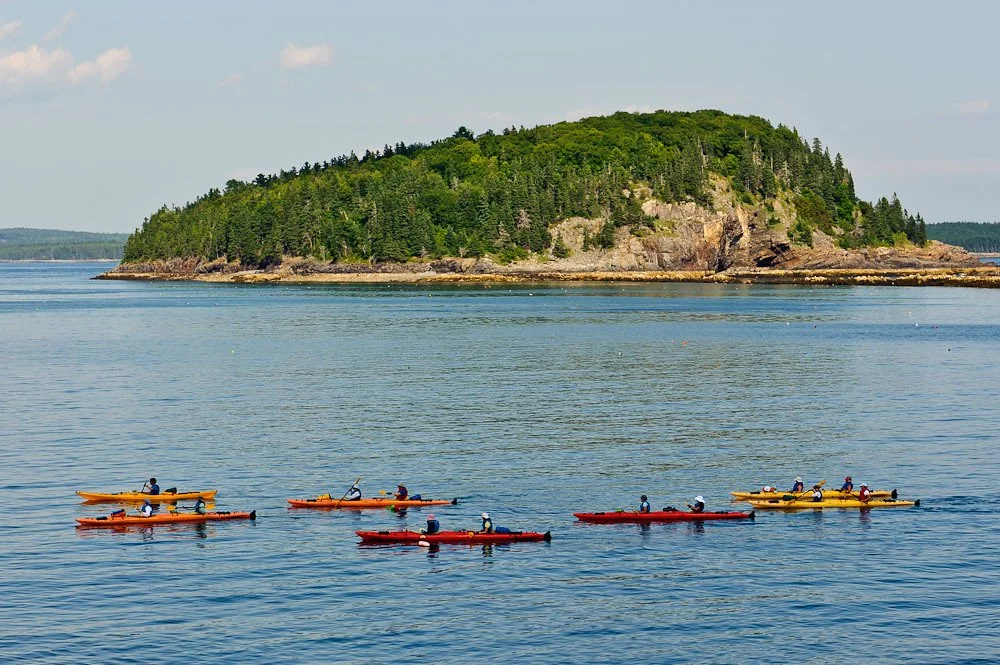
Kayakers in Frenchman’s Bay near Acadia National Park | source
Take a kayaking tour of Acadia and see the park from a new perspective!
These guided tours are great for visitors who want some variety in their itinerary but aren’t quite content to sit back and take a whale watching tour.
Instead, you’ll paddle through Somes Sound between the 2 peninsulas of Mount Desert Island to see sea life up close, have a picnic on a local beach, and learn about the national park from your guide.
Learn about homesteading.
Another reason to explore western Mount Desert Island is the living history museum at Carroll Homestead.
This kid-friendly activity in the park focuses on the simple but often difficult way of life that settlers in the 1800s experienced.
The park purchased the old Carroll farm and continued running it as a living museum as a reminder that the vast majority of what is now the park was once private land.
You can learn about the family who lived here, the toys their kids played with, and what day to day life looked like.
Ask questions of the rangers, play vintage yard games, and explore the property. It’s free, and it’s a great option on Route 102 on the way to the Bass Harbor Head LIghthouse.
Final Thoughts on Visiting Acadia National Park
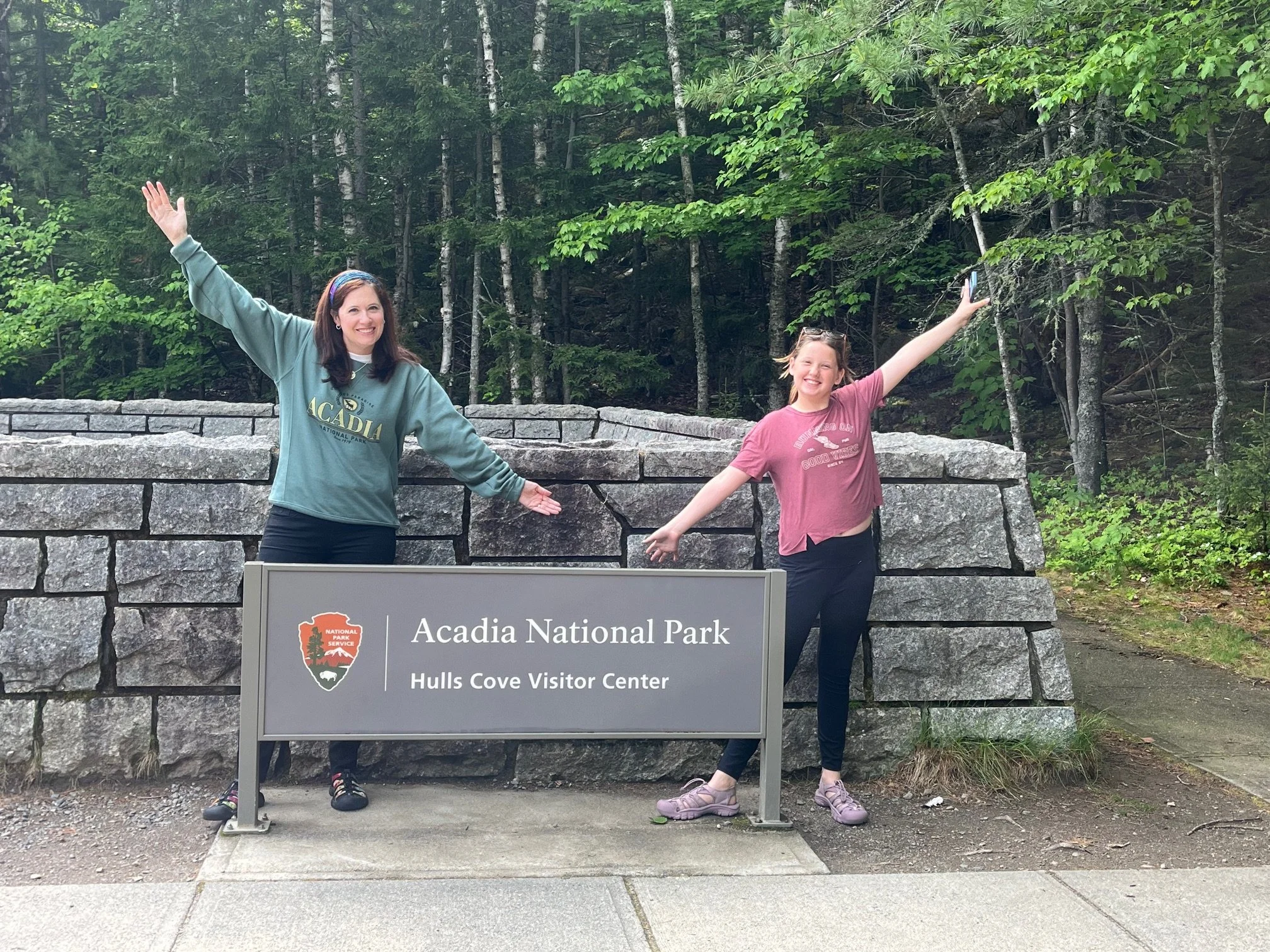
My daughter and I at the main visitors center
Despite being one of the smaller national parks on the East Coast, Acadia is packed with more things than can be done into one short vacation.
Because it covers so many different areas of interest—from history to hiking and watersports to wildlife—there is truly something here for everyone.
Its position next to Bar Harbor also provides diversion for members of your family who might want to relax or shop while others take on a hike or two.
Acadia is surprisingly easy to get around without a car, thanks to the myriad of guided tour options, e-bike rentals, and the free Island Explorer routes.
That built in transportation allows for even more flexibility if different groups within your vacation want to try different things.
So, on your next trip to Acadia, try a little bit of everything. I bet you’ll fall in love with it just as much as we have!