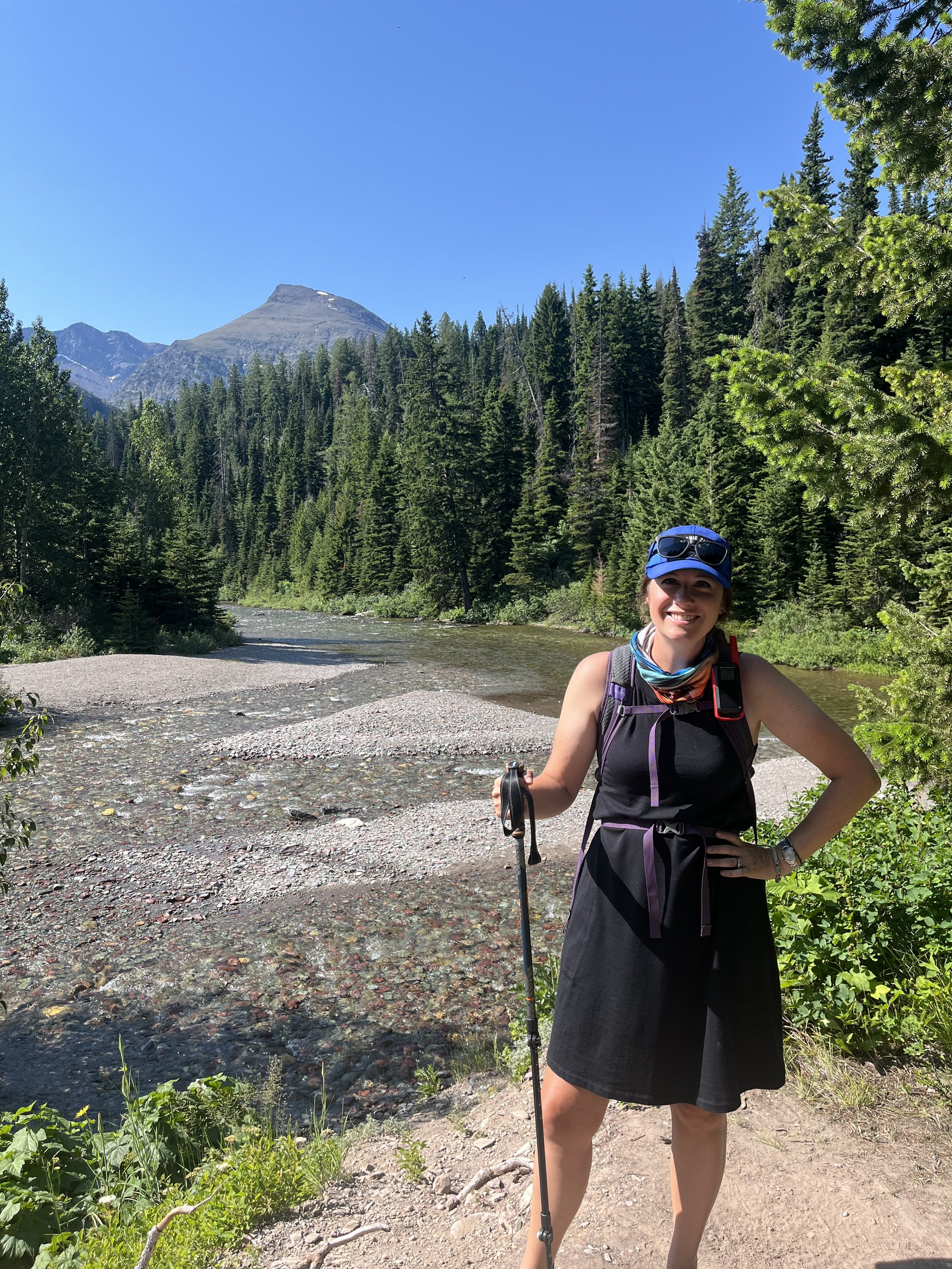
Having the proper footwear can make or break your hiking experience.
But with all of the options out there, which type of hiking footwear is best?
Hiking shoes of all types are an expensive investment, and no one want to make a purchase that causes blisters, foot pain, and muscle aches.
Plus, having the wrong footwear on can mean you’re limping back to the trailhead instead of enjoying those beautiful views.
In the guide below, you’ll learn about each of the three main options: hiking boots, trailer runners, and hiking sandals. I’m breaking down the pros and cons of each, which type of footwear works for specific environments, and how to make sure you’ve found the right option for you.
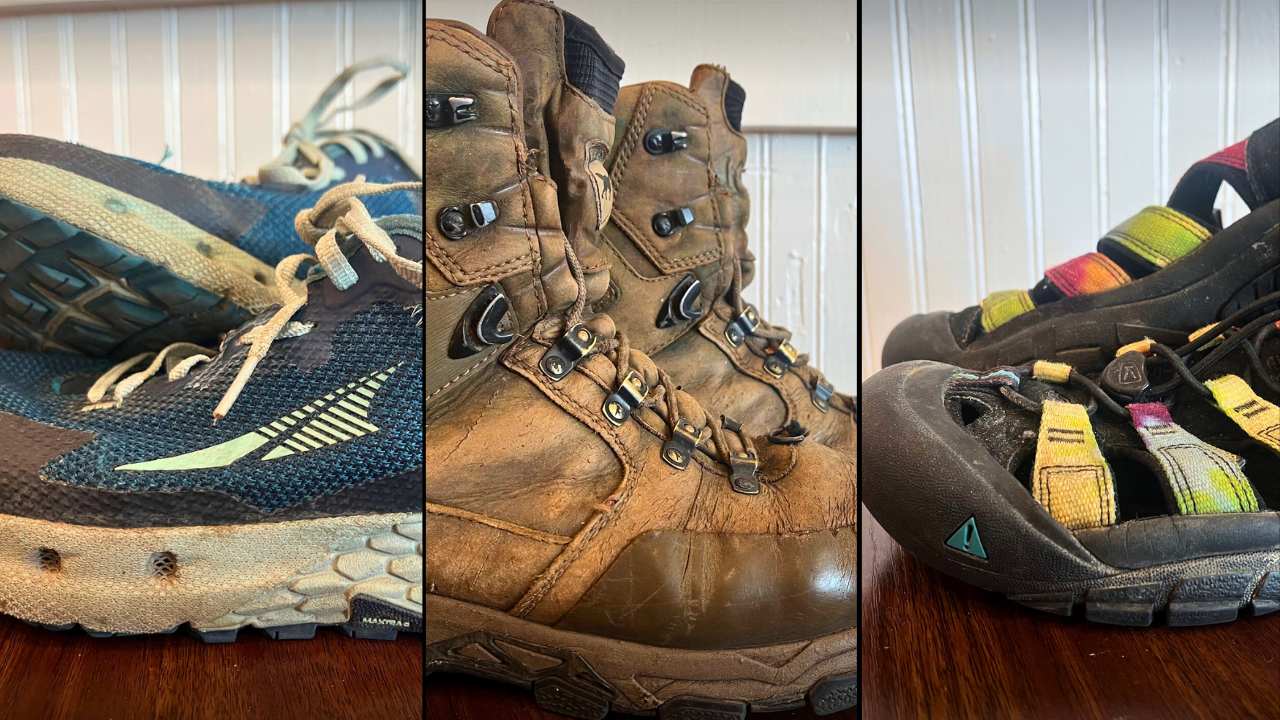
Left to right: trail runners, hiking boots, and hiking sandals
This post contains affiliates. If you purchase through the links below, I will receive a commission at no charge to you.
Types of Hiking Footwear
Hiking Boots
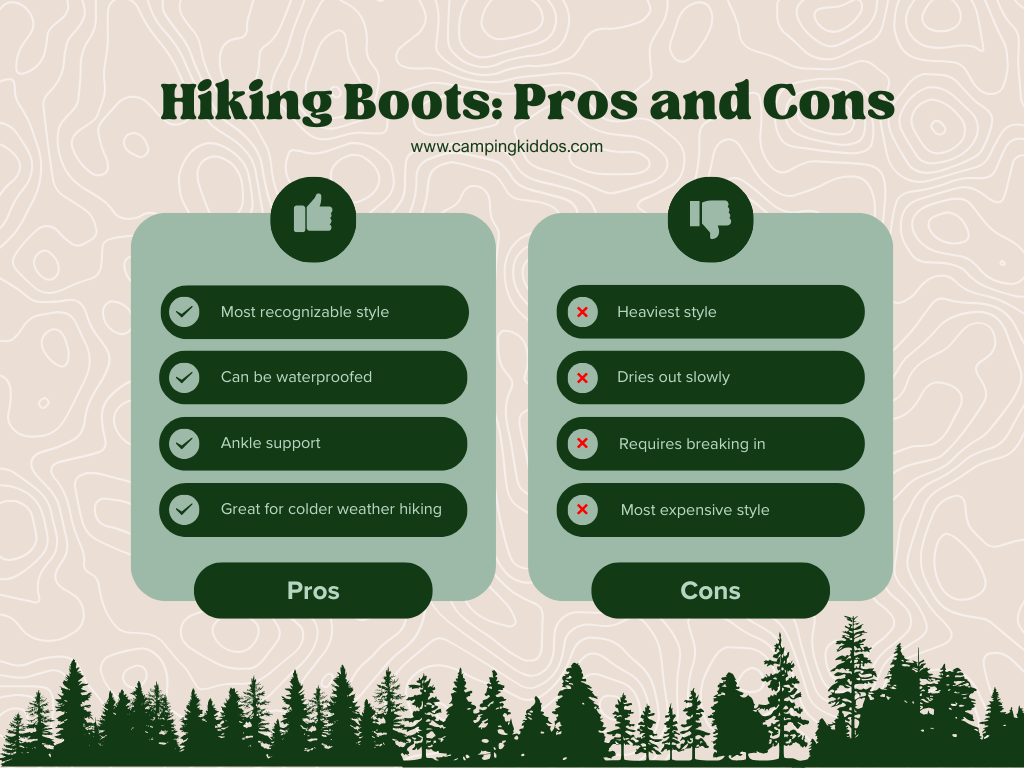
These are the original hiking shoe, and remain many people’s preferred footwear on the trail. Hiking boots come in both ankle and mid-calf options, depending on your own comfort level and support needs.
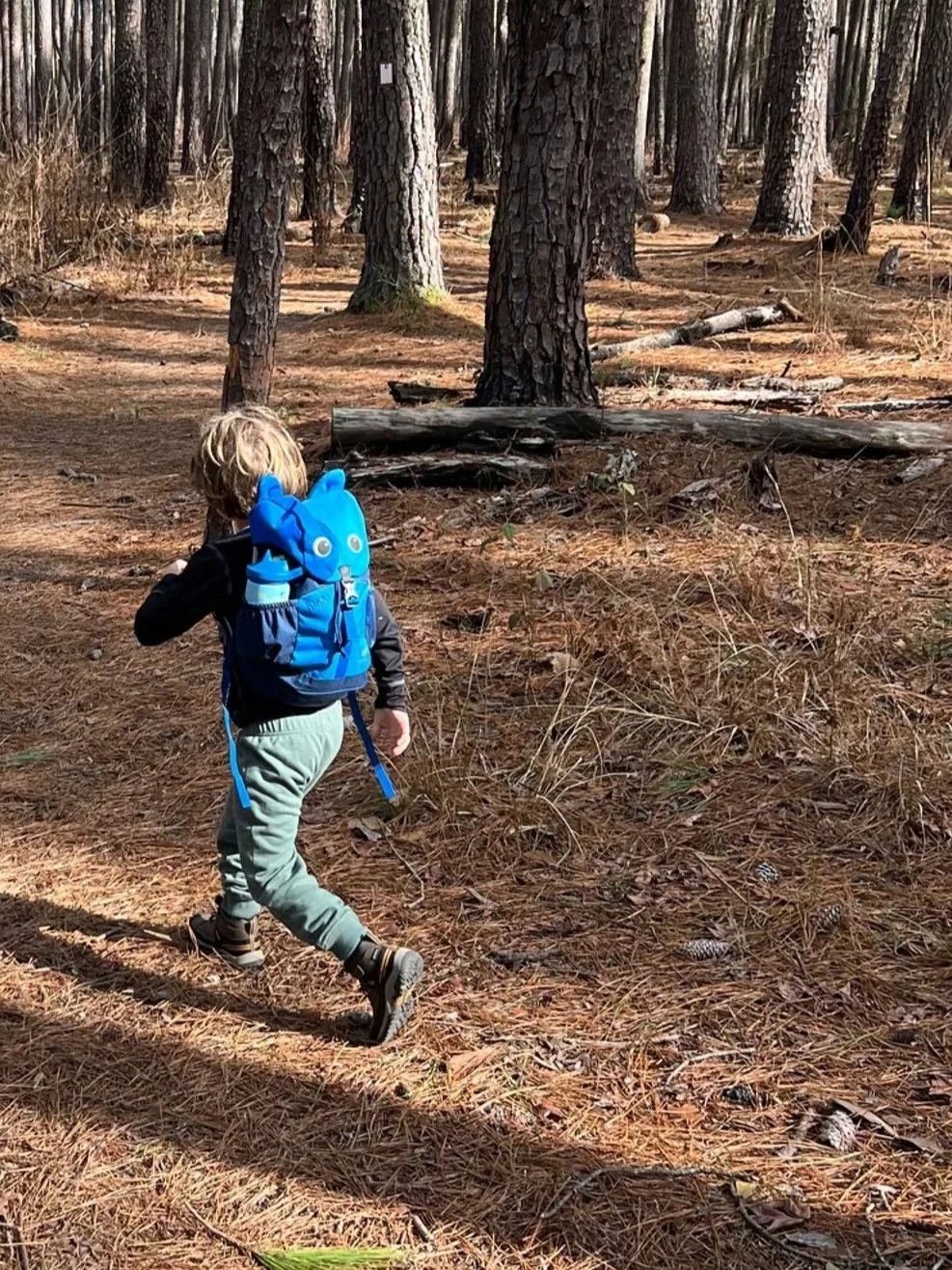
My son in his first pair of hiking boots at Congaree National Park
The major outdoor companies will all have a variety of hiking boots to choose from, including Merrell, Keen, On, Salomon, and Hoka.
All of them will have thick soles with deep treads to help your foot grip on those sections of slick rock or uneven ground that you may encounter on the trail.
The uppers are typically leather or suede, and they can be easily waterproofed.
If you know you’ll be hiking in a place that’s often damp, has a lot of seasonal rainfall, or requires consistent stream crossings, these are a great option.
Once waterproofed, hiking boots can hold up to being briefly submerged into mud, muck, or water, and your foot will stay dry as long as the water or mud doesn’t come up high enough to spill over the top of your boot.
My husband loves his hiking boots and they are the only thing he will wear while he is out on the trail or searching for birds in a national forest.
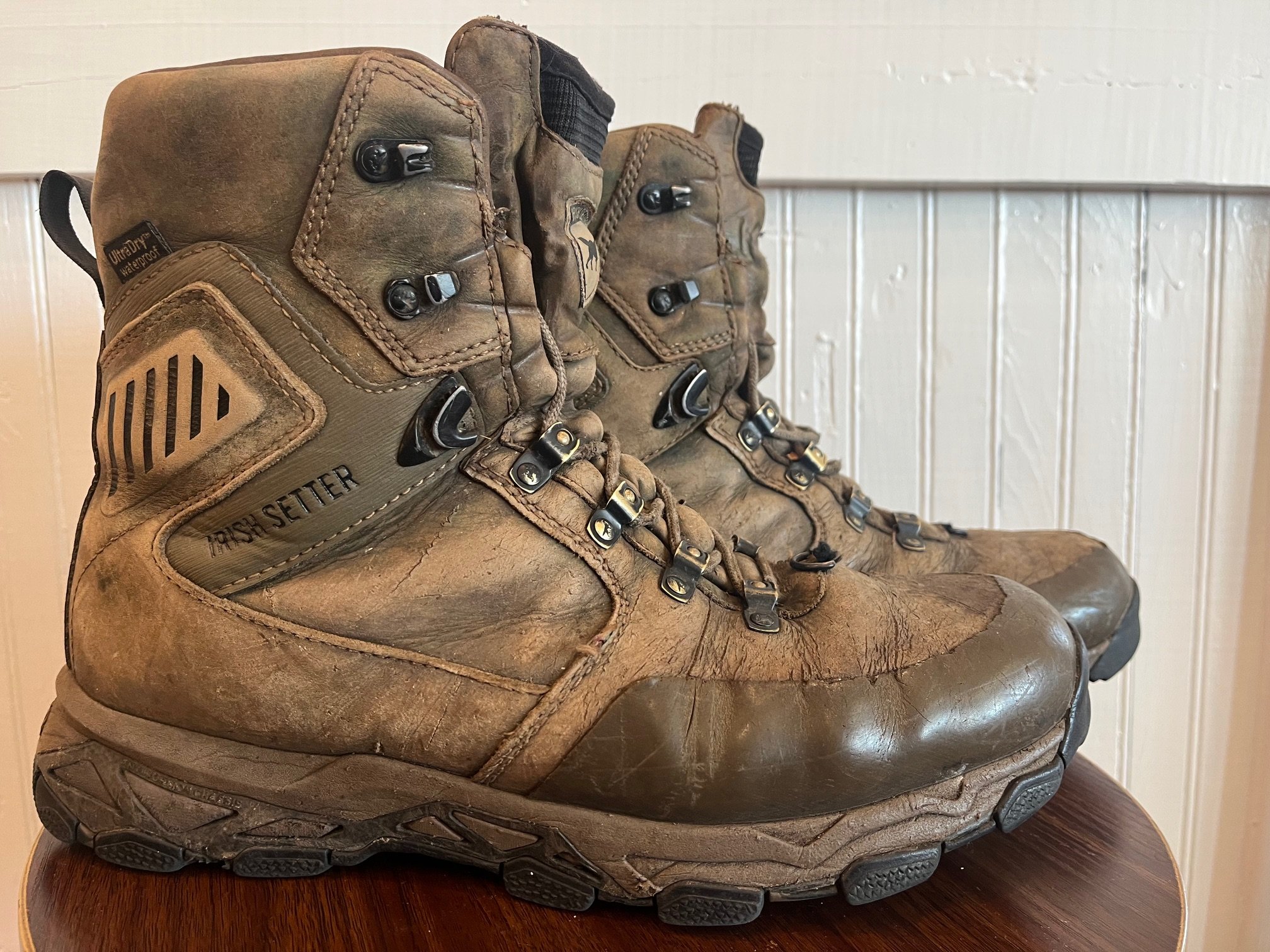
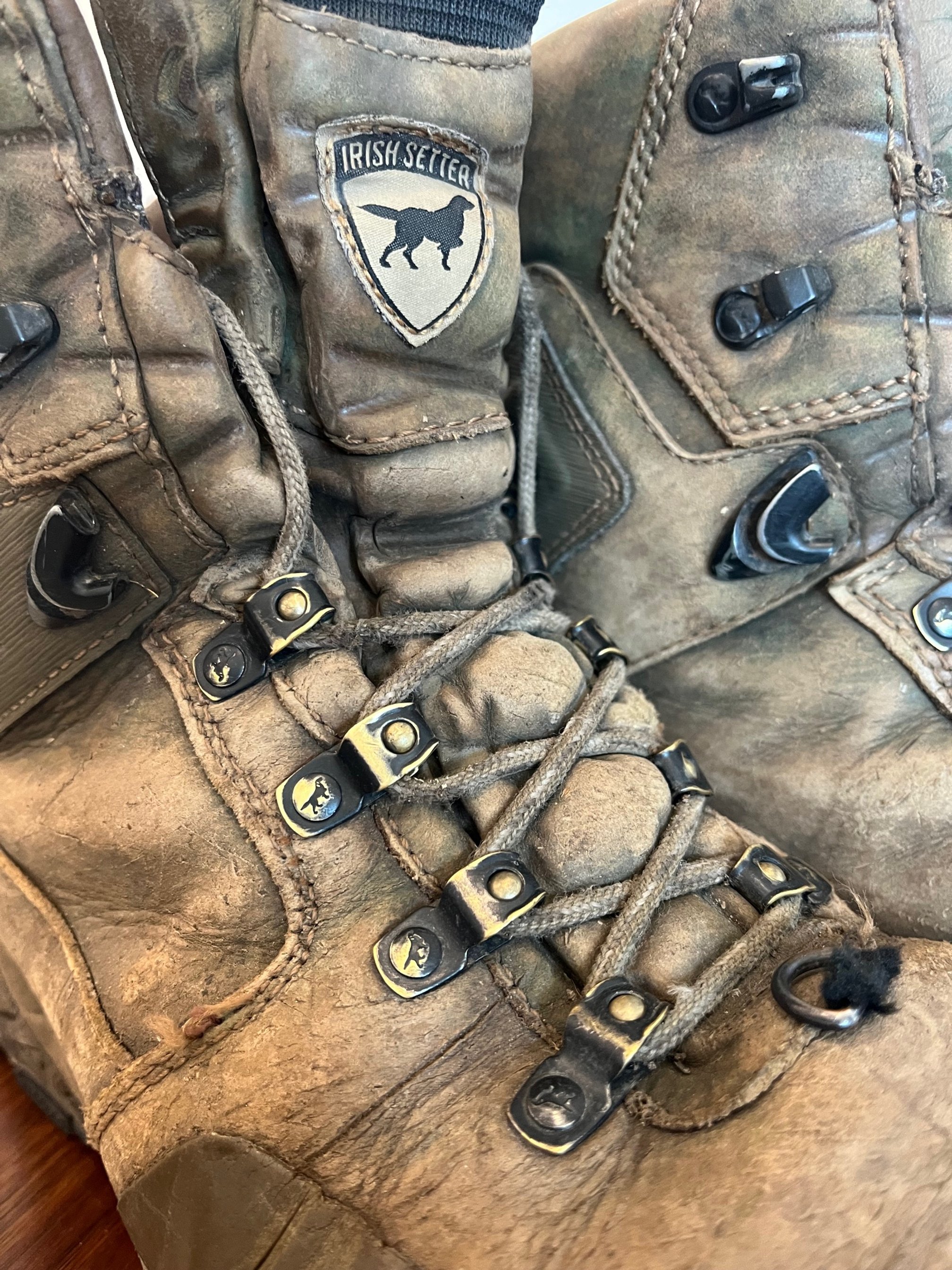
My husband’s well used Irish Setter VaprTrek hunting and hiking boots
On the downside, hiking boots are the heaviest of the three types of footwear, so you will feel the extra weight in your legs, particularly your shins, as you get used to it.
These are also the least flexible because of the structure of the boot, so you’re more likely to get blisters and pain points as you break in the boot.
I’ve found that even the most expensive hiking boot requires some breaking in time for me, so plan ahead! Don’t wear these on a hike right out of the box, or your feet will not be happy.
Instead, break the boots in slowly by wearing them around your house for several days before you put them into practice.
If you do get water or mud into your boot, they take forever to dry out because of the thickness of the materials. Always have an extra pair of socks to help protect your feet if this happens.
Trail Runners
These are the new kids in the hiking footwear game, and they’re definitely having a moment.
Trail runners are made by popular outdoor brands like Altra, Saucony, Brooks, and Keen.
When I went to upgrade my hiking boots a few years ago, the saleswoman at REI asked me if I’d tried out trail runners.
I hadn’t, so she encouraged me to try them on, just for comparison’s sake.
She’d just gotten back from hiking the Pacific Crest Trail in trail runners, and was trying to convert others to them. (She saw me coming, and I was instantly in love.)
I haven’t owned a pair of traditional hiking boots since then.
Trail runners are incredibly lightweight, and fit similarly to a tennis shoe. Unlike a tennis shoe, they tend to have wider toe boxes for less blistering and rubbing.
Trail runners will also have deeper treads than a tennis shoe, which makes them better for navigating those tricky sections.
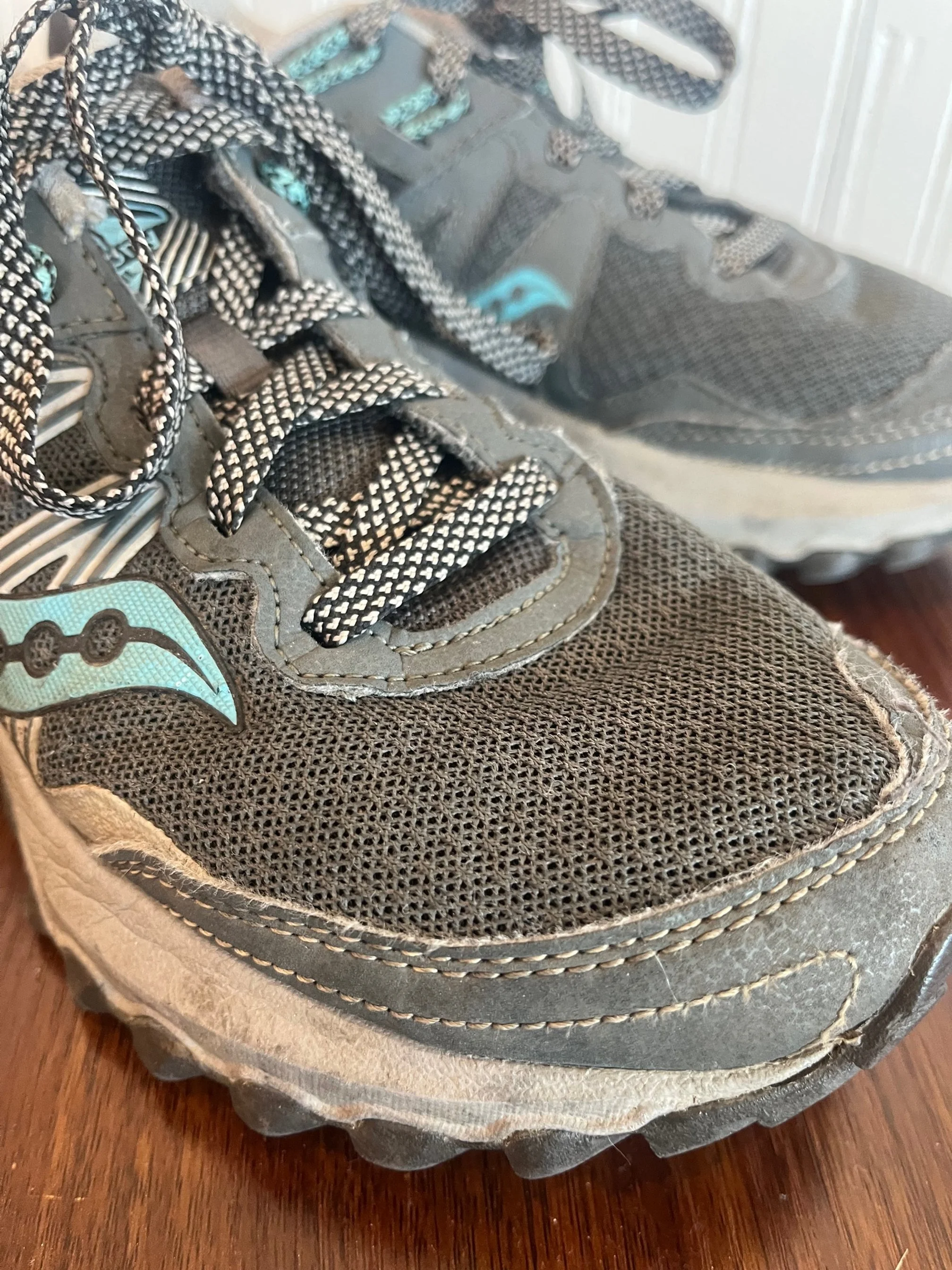
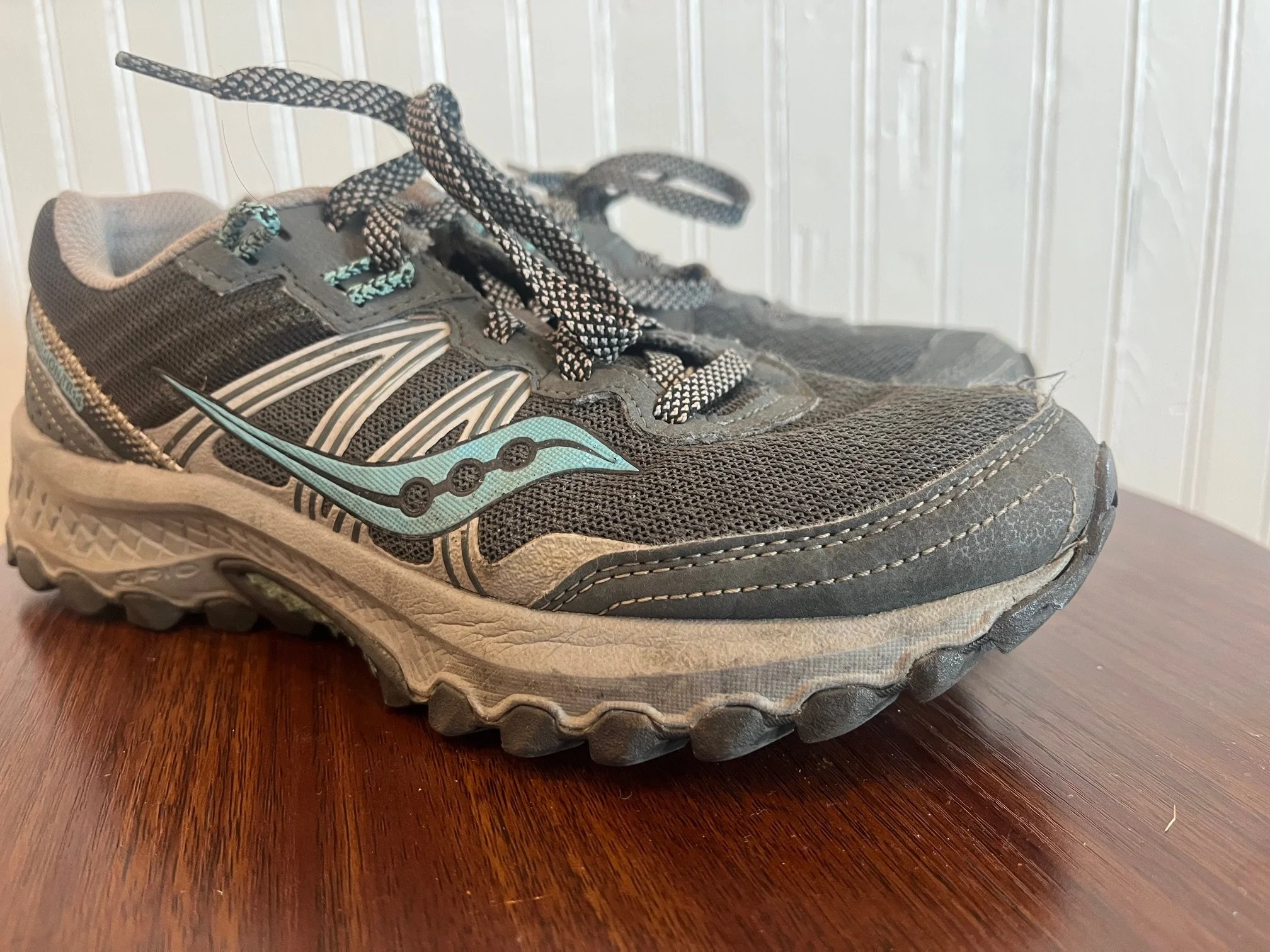
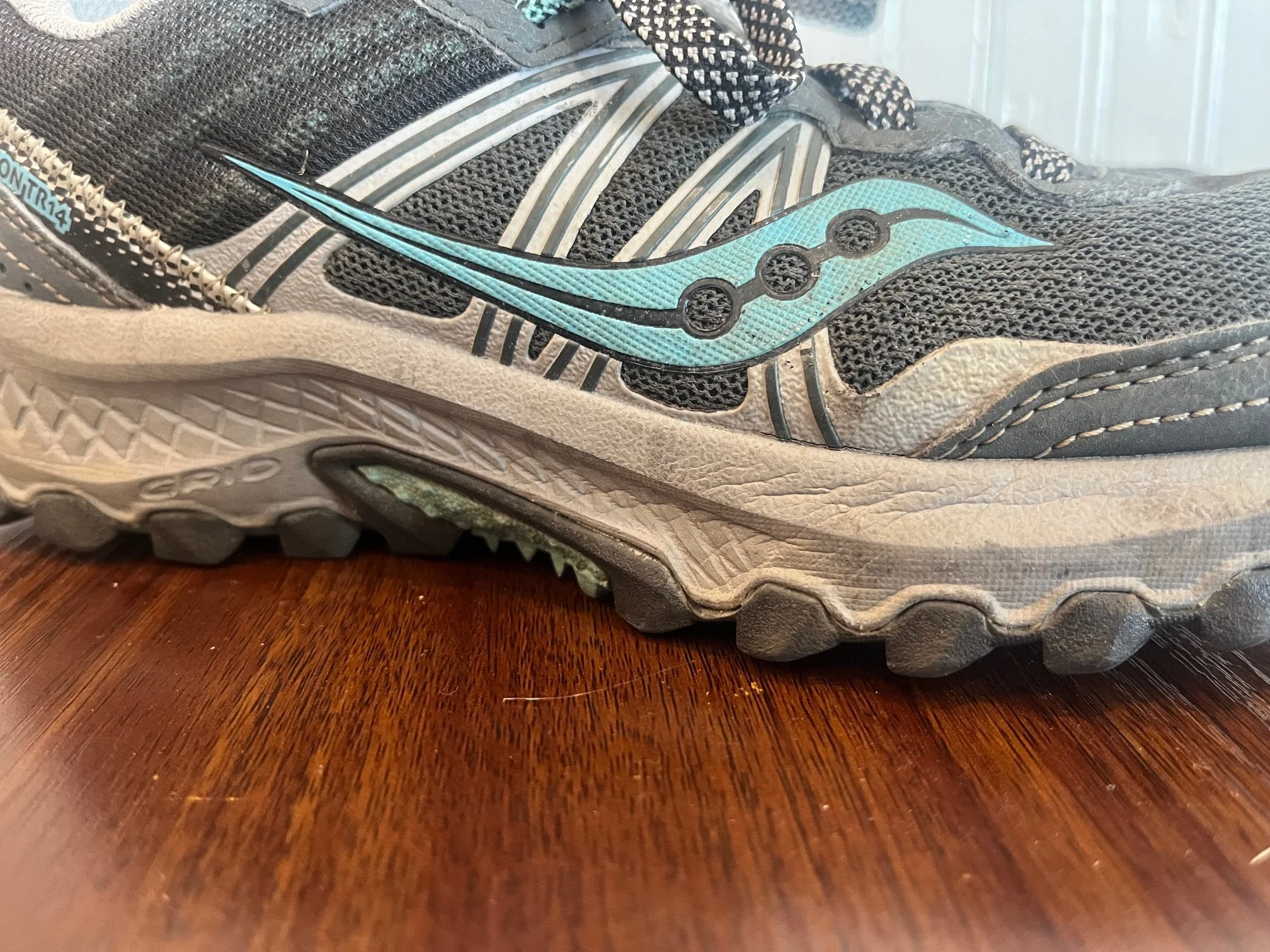
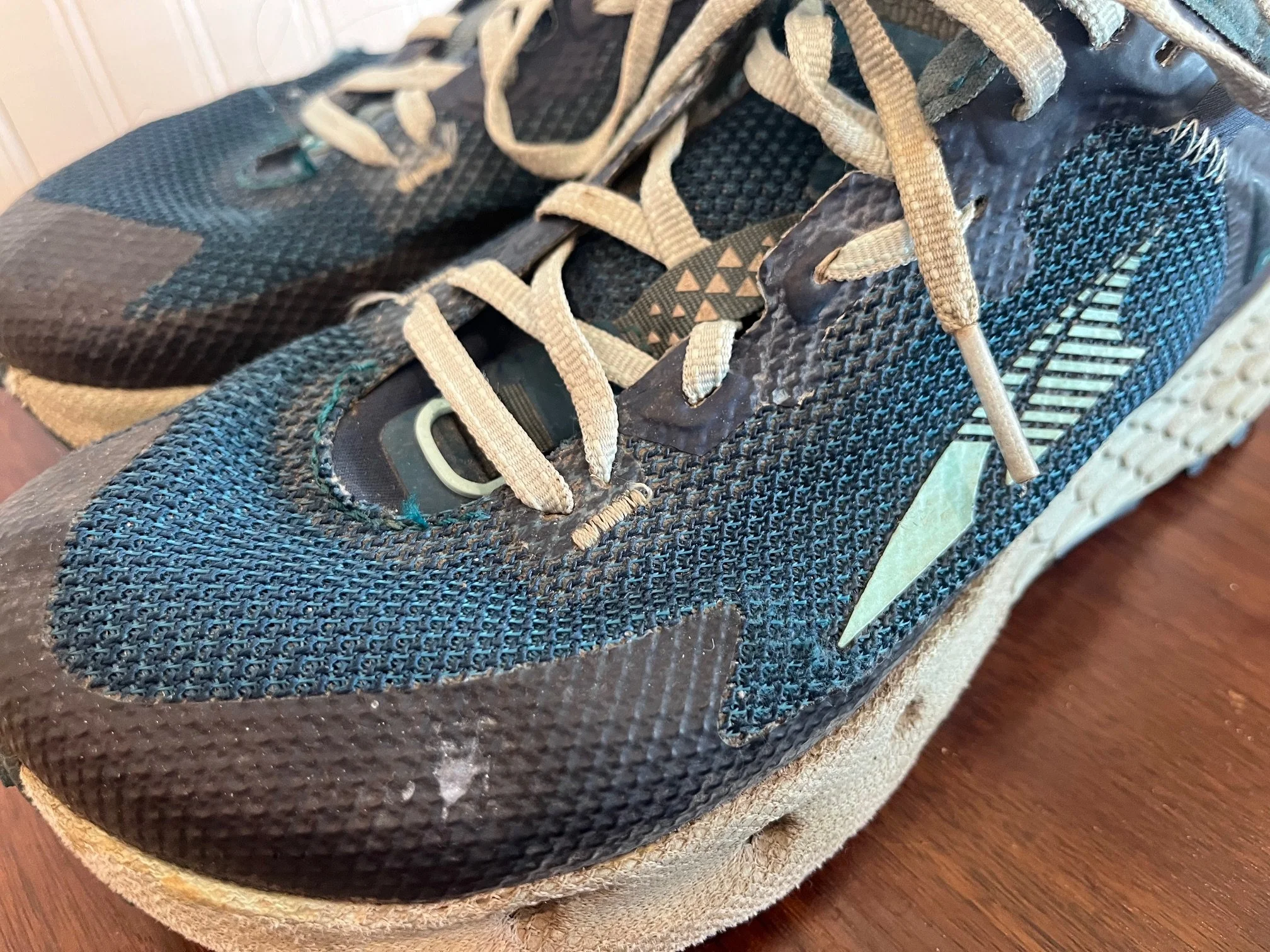
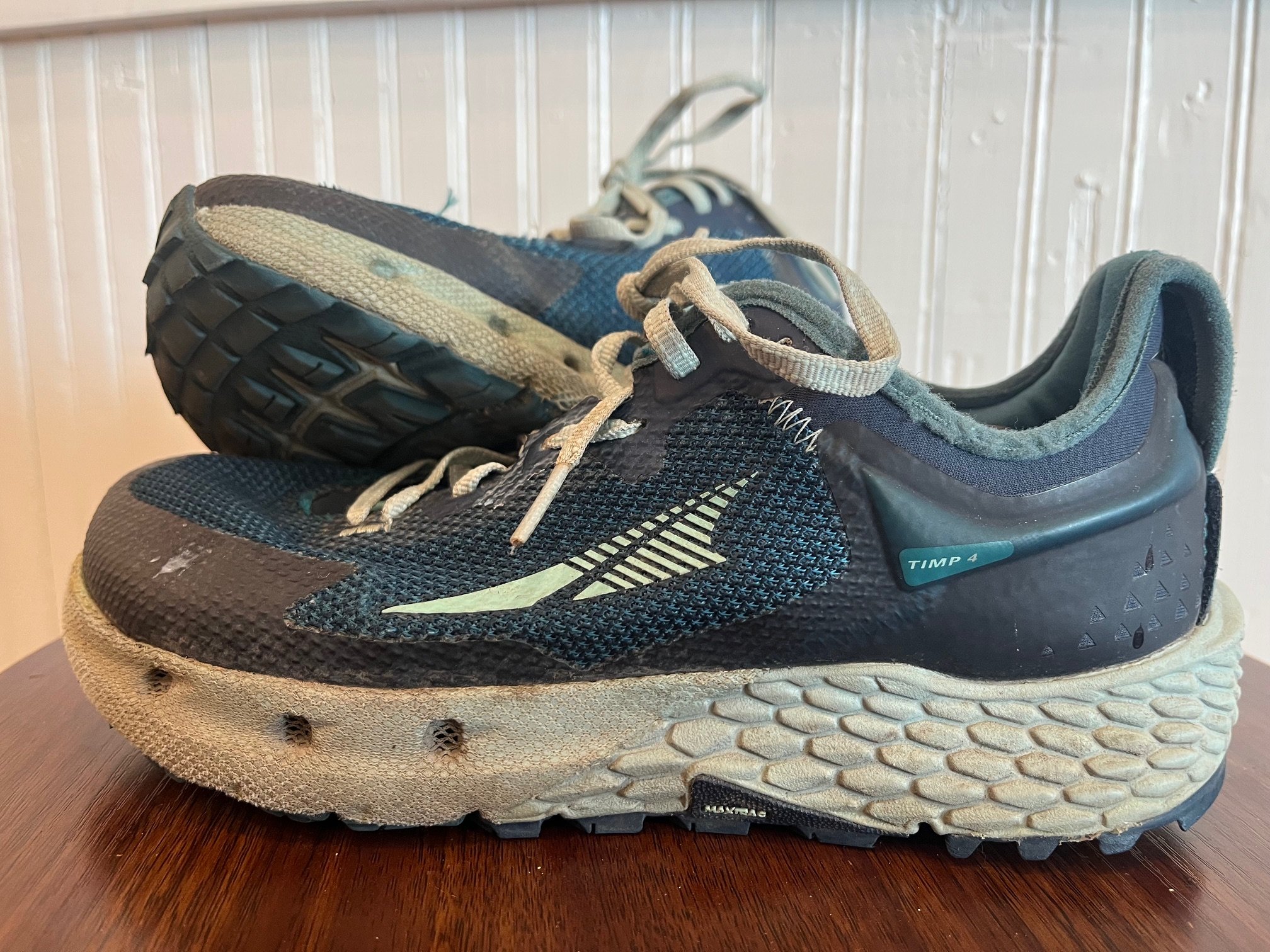
Top row: my backup pair of trail runners by Saucony
Bottom row: my favorite trail runners by Altra
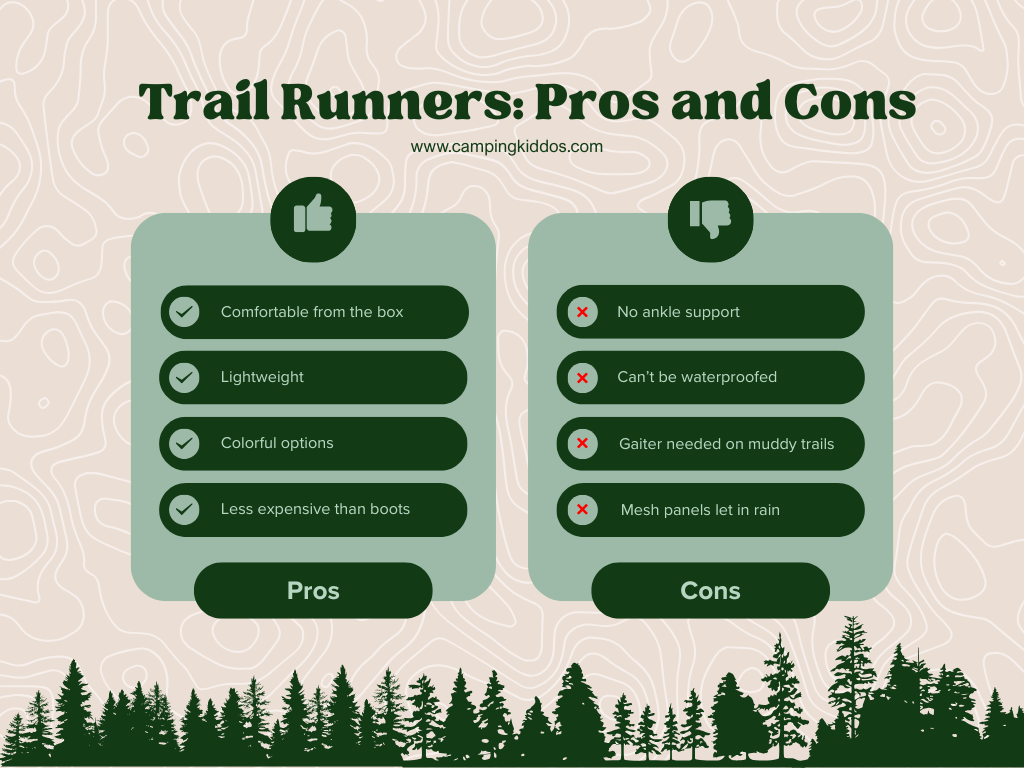
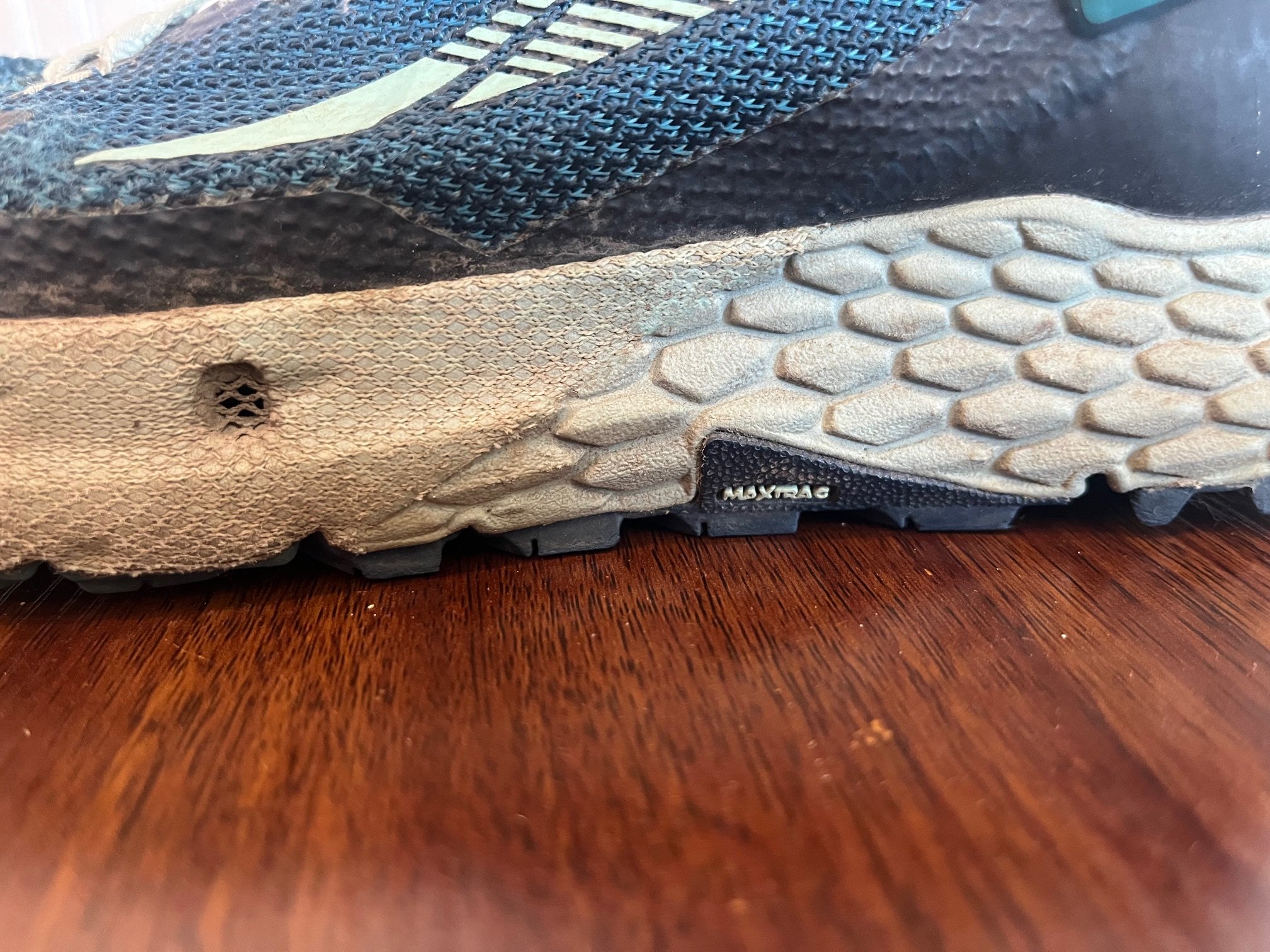
A downside of the trail runners is that they can’t be easily waterproofed like hiking boots can be.
You can wear gaiters on your trail runners to cut down on the water and mud on your ankles and lower legs, but these won’t help if you have to submerge your foot, even briefly, at a stream crossing.
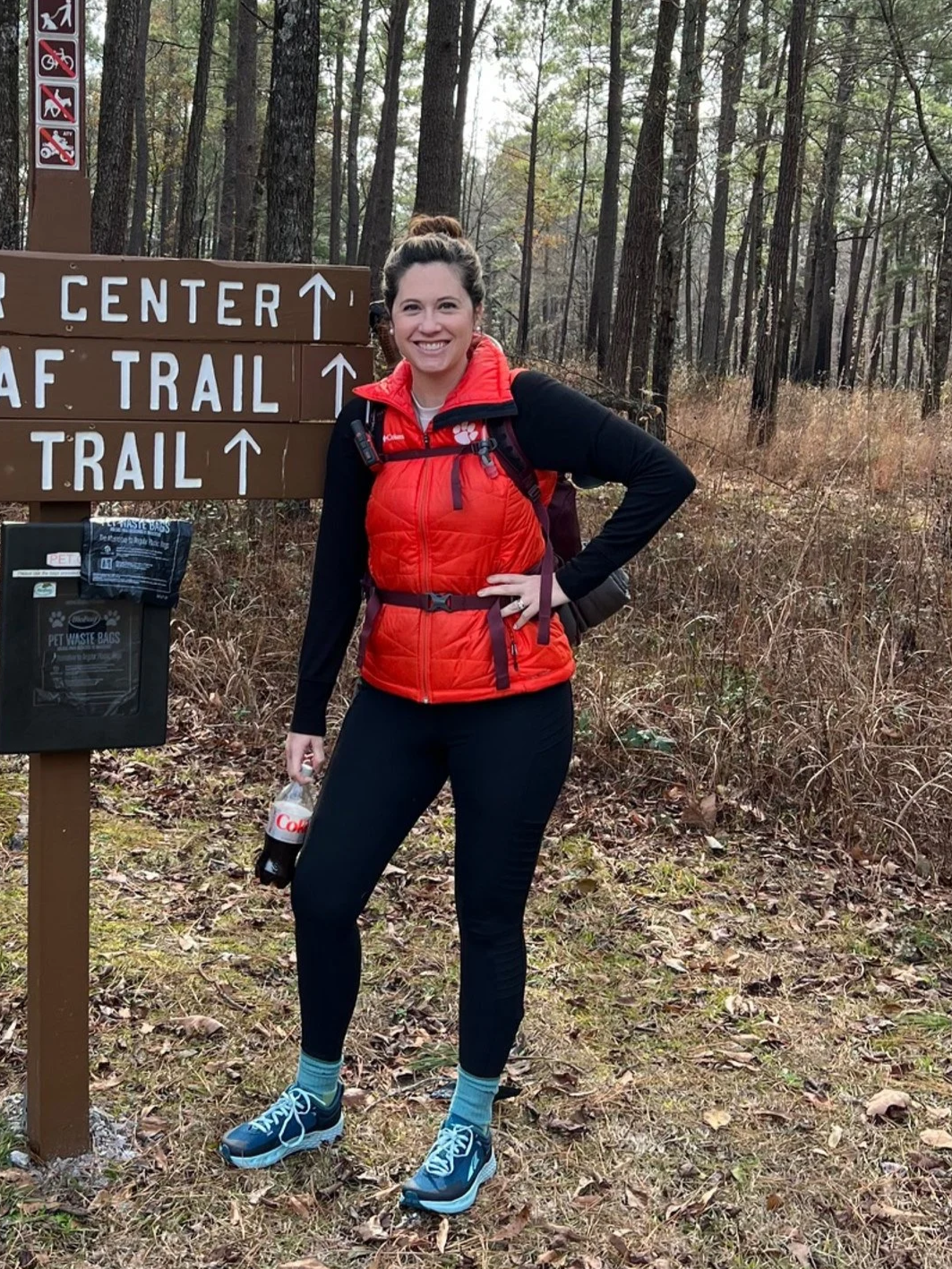
My favorite Altra trail runners at Congaree
The trail runners are light in part because they have mesh and fabric panels on the top, which are great for air flow.
However, they’re terrible at keeping out water, so expect to get your feet wet if you have to pass through any significant water.
The biggest thing that I’ve heard about my trail runners is the lack of ankle support.
While a hiking boot wraps around your foot and ankle, the trail runner gives you more flexibility.
Whether or not one really is better for your ankle still seems like it’s up for debate, but dedicated hikers can get very passionate about their opinions on the situation.
You could argue that having your ankles free of supports would then allow them to grow stronger, since they’re having to work harder, but again, studies on trail runners vs. hiking boots haven’t really come down definitively one way or the other.
Ultimately, if you’re someone prone to ankle sprains, trail runners might not be the best choice, but for everyone else, they can be a lightweight alternative to the traditional boot.
If you’re into aesthetics, trail runners definitely do not give you the cute “hey, I’m out hiking!” look that traditional boots do. Instead, your outfit will look almost exactly like it would if you were to put on tennis shoes. (I know that’s superficial, but sometimes, you’ve got to feel like a hiker.)
You’ll sometimes see trail runners referred to as “hiking shoes.” These terms both mean the same thing: a lightweight sneaker-style shoe with deep treads.
Another subgenre of the trail runner is the barefoot hiking shoe. These take minimalism to the max and provide an even lower profile for your hiking adventures.
The barefoot trail runner has a grippy, very thin sole, but a parsed down upper. These shoes are extremely lightweight with a highly flexible sole.
If you’re going the minimalist route with your hiking shoes, I recommend easing into them as the difference between a regular shoe and a barefoot shoe is startling.
Our favorite hiking footwear, at a glance
Best hiking boot: Merrell Men’s Moab 3 | Merrell Women’s Moab 2 | Merrell Child’s Moab 2
Best trail runner: Altra Men’s TIMP 5 | Altra Women’s TIMP 5 | Keen Child’s Zionic All Terrain
Hiking Sandals
Your final option is a great one for summers, and one that is my go-to when we’re hiking across streams and to lakes in the warmer months.
Hiking sandals come in many different varieties, but, at their core, they’re all made with comfortable, thick soles, and strappy uppers.
The uppers are typically made from neoprene or woven nylon or polyester fabric.
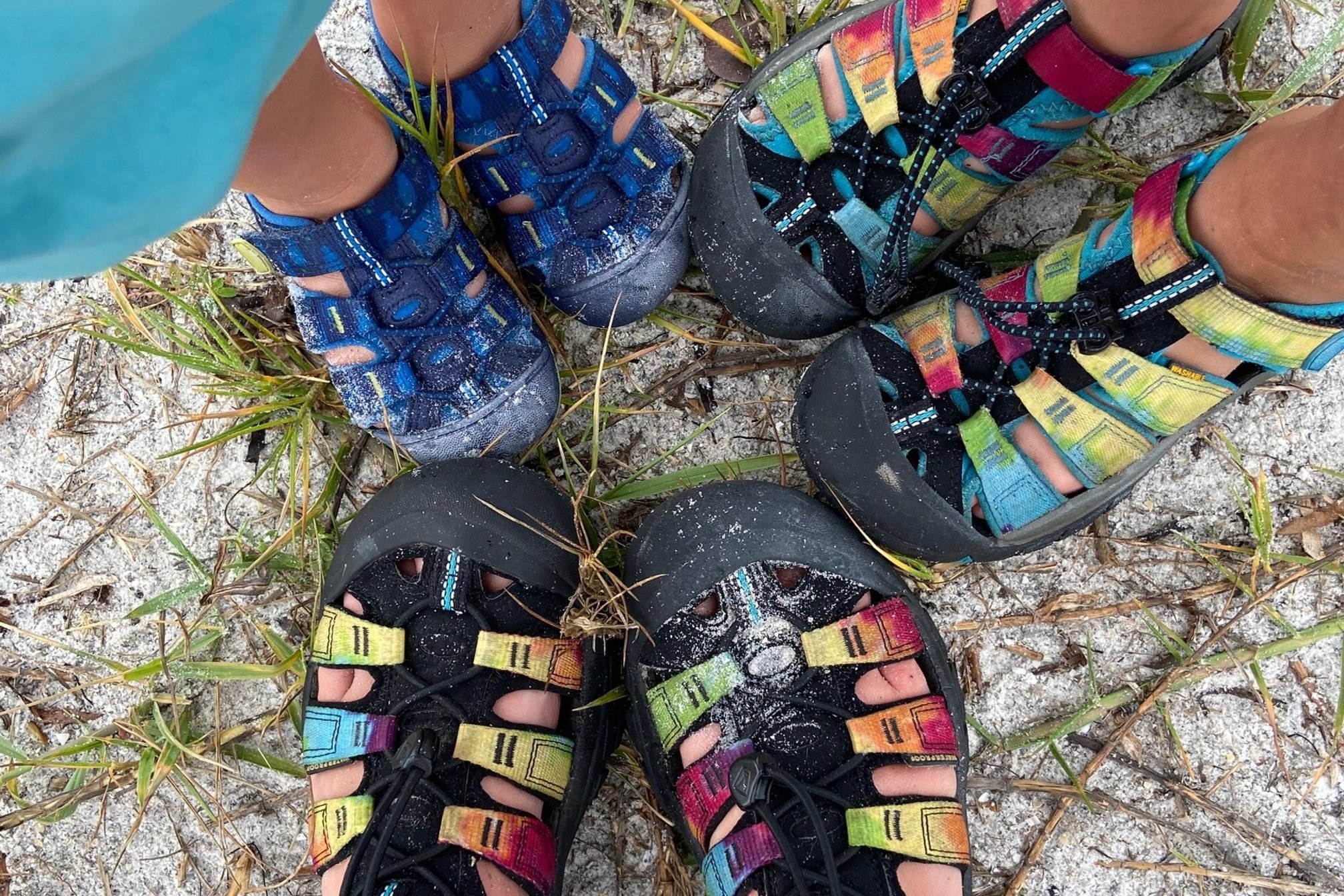
We’re all about some Keen hiking sandals here.
The hiking sandals run the gamut in terms of how much of your foot is exposed. The Keen Newport H2 hiking sandal is much closer to a trail runner thanks to its closed rubber toe section, but there is enough space between the individual sections of the upper for water to easily run out of.
The traditional Chaco Z Cloud and Teva XLT sandals look more like a typical flip flop, albeit ones with thick, durable soles, a back strap, and deep tread.
The benefits of a hiking sandal includes the ability to dash through water easily without worrying about your socks getting soaked or your shoe not drying out. The sandal materials are made to be quick dry, so you’ll be comfortable on the trail in no time.
We’ve used our hiking sandals on the Narrows in Zion National Park, at Egmont Key in Florida, and anywhere else where I want some foot protection but know that we’ll also be in and out of the water.
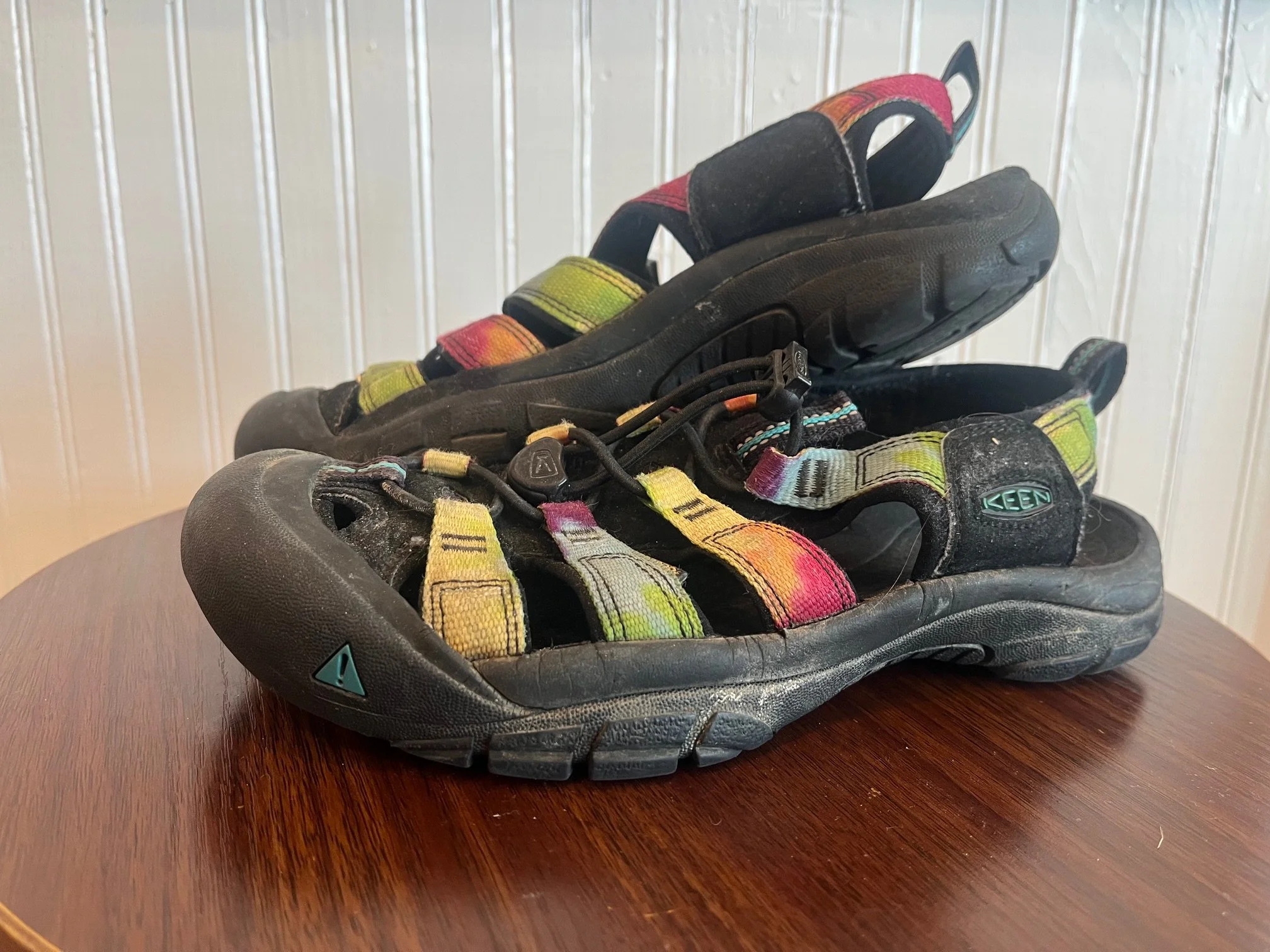
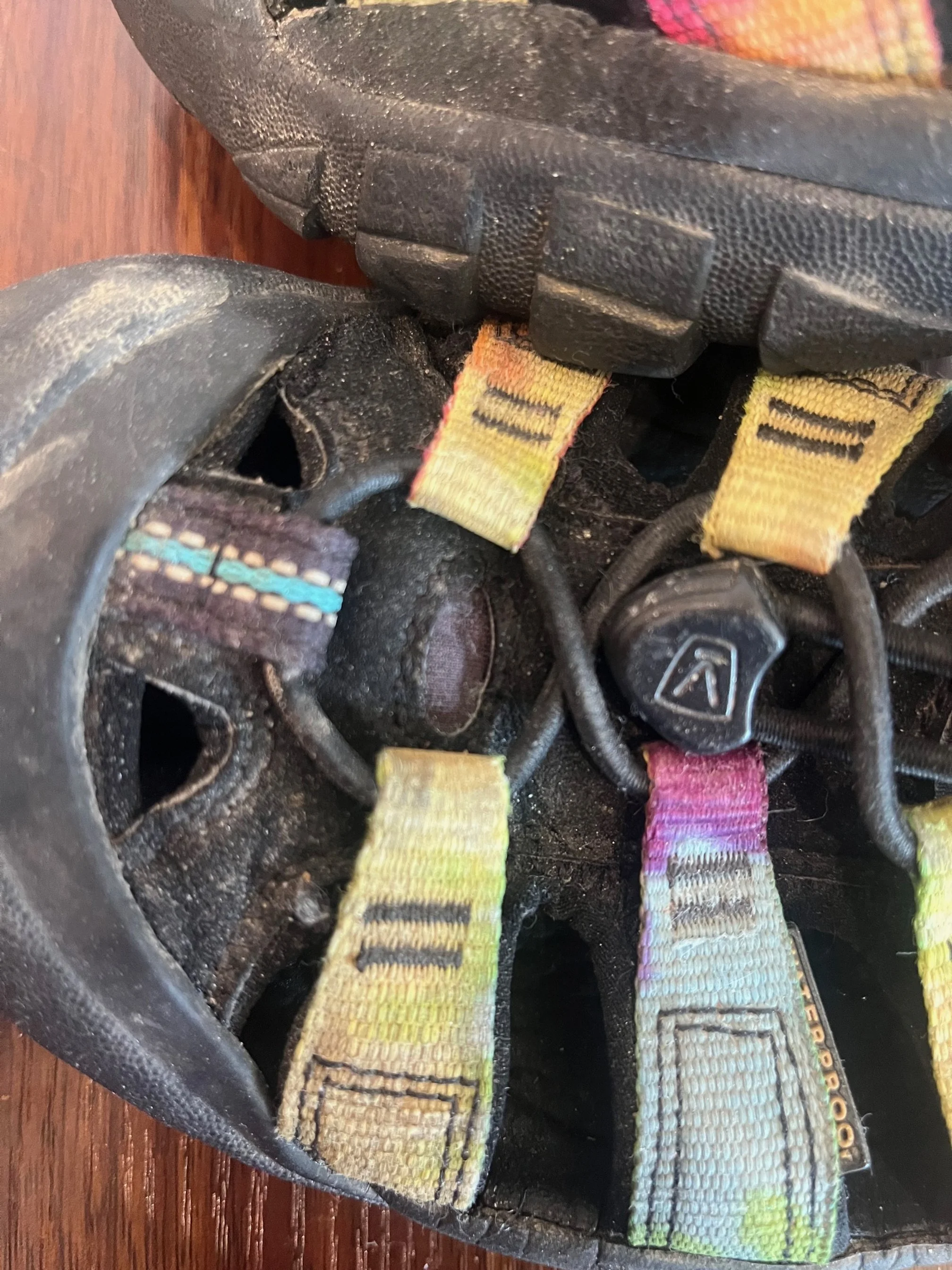
My very loved Keen Newport H2 sandals
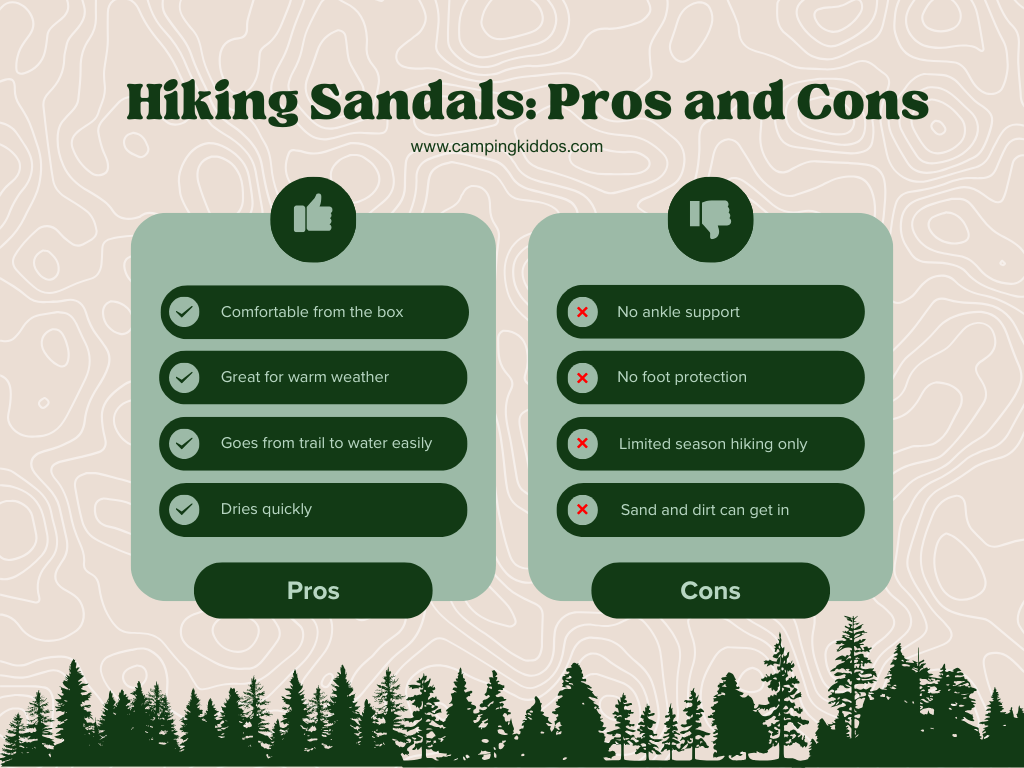
The biggest downside to this shoe is that it is not a year-round shoe if you don’t live somewhere with mild winters. Even here in South Carolina, where it rarely dips below freezing, I have to put away my Keen Newports for the late fall and winter.
The strappier sandals like those from Chaco and Teva also leave a lot of room on your foot to get scratched up. Those two brands don’t have a closed toe area, so your foot is nearly completely exposed.
Still, for a hot day sledding at White Sands National Park or a hike among the dunes at Great Sand Dunes National Park, you really can’t beat these.
More helpful camping and hiking gear reviews:
Choosing the Right Shoe for the Hiking Trail
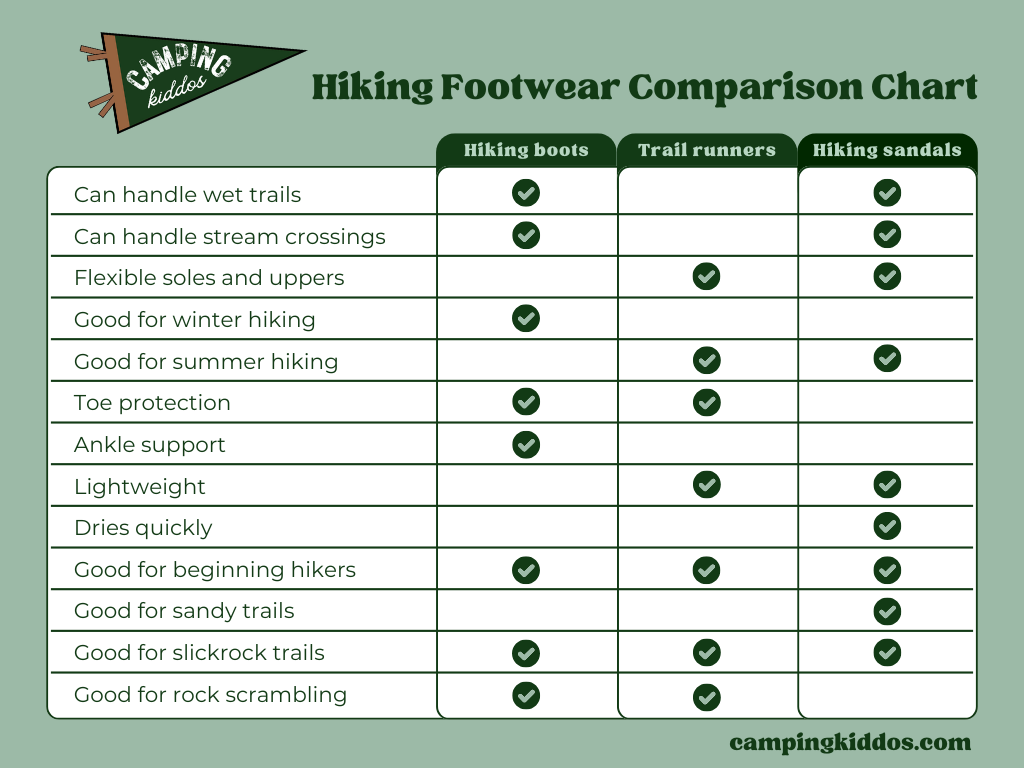
To determine which hiking shoe or boot will work best for you, think first about where and when you’ll be hiking.
If you live in the Mountain West, for example, you’re going to be dealing with a lot of elevation that requires careful footing on the trails. You’ll probably not be doing a lot of hiking in the winter months thanks to the colder weather and snowfall.
Given all of that, you might want to consider a hiking boot.
But if you live in the South and plan to do most of your hiking in the non-summer months when the weather isn’t scorching, you could try out hiking shoes.
If you know that you’ll only ever be hiking in the warmer months, you could get away with just a pair of hiking sandals.
I know that hiking footwear of any kind is expensive, and that you want to get the most bang for your buck.
That being said, if you hike a lot across the seasons and in various places in the U.S., you’ll end up needing more than one pair of shoes.
Personally, I found the perfect balance between a pair of Altra trail runners and a pair of Keen Newport H2s.
We travel a lot during the spring and summer, so I need to be prepared to hike in Georgia in February and Utah in late May. Between my two pairs of hiking shoes, I am ready for cooler weather and long summer days.
Don’t forget to consider your socks!
As an aside, the truly perfect combo for me is a comfortable pair of hiking shoes and really good socks. If you’re planning to go the boot or trail runner route, be sure to pick up some wool socks, preferably with a medium weight cushion on the bottom.
This will help your hiking experience be even more comfortable, and the wool is naturally odor resistant and sweat-wicking.
I love the Darn Tough micro crew with cushion, and wear them literally every day. They last forever and come in a bunch of cute colors and patterns.
Hiking Footwear FAQs
PIN ME!
Do beginning hikers need to buy specific footwear?
If you plan to do anything other than the most basic, easy stroll through the woods, you’re going to want to invest in proper hiking gear, including footwear.
One of the above shoe types isn’t going to automatically be better than the others, so you’ll want to go into an outdoor shop like REI or Dick’s Sporting Goods to try on all 3 types of hiking footwear.
You’ll settle on your favorite quickly, and then you can narrow down which brands you like and which features you don’t want to compromise on.
If you’re not fully committed to hiking, and are only trying it out to see if you like it, don’t automatically go for the most expensive shoe or boot out there.
After all, most expensive doesn’t always mean the best, especially when you’re starting out.
I would recommend trying out a trail runner first for a couple of reasons:
You can get into a basic pair of trail runners (like these) for much less than you can buy a decent pair of hiking boots, and
If you decide that you hate hiking after a few months, you can keep wearing the trail runners as sporty shoes. Those hiking boots are pretty one note, and I’d personally have a hard time finding another place for them in my wardrobe.
Do kids need special hiking shoes?
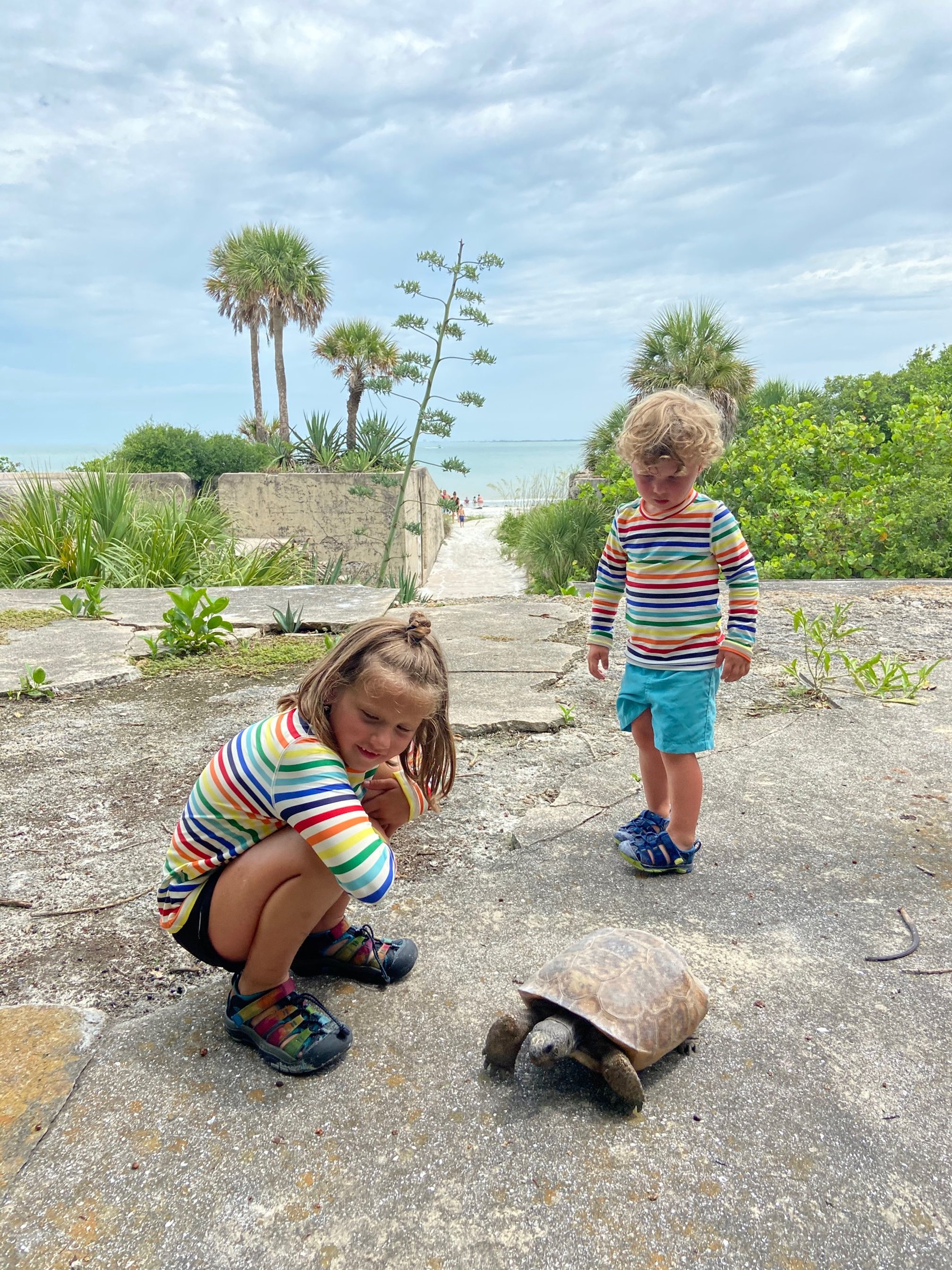
The Camping Kiddos on Egmont Key in Florida, where hiking sandals are a must
I think this largely depends on your budget and how much your family wants to commit to hiking as a new group hobby.
When we first got into hiking, it was slowly, and usually at our local parks. At this point in our lives, hiking was a very, very casual hobby, and my kids’ footwear reflected that.
I made sure they were always wearing comfortable, well fitting shoes with toe coverage. This was often just their favorite pair of sneakers at that moment, but it allowed them to get out and explore. It’s not like we were hiking great distances, just enjoying some fun moments in nature.
Then, we started doing longer and more dedicated adventures in the summer, so I invested in Keen Newports for us all each summer.
These were incredible shoes since we did so much around the beach and coastal areas here in South Carolina.
When we started going on our multi-week hiking and camping trips, that’s when I truly committed to official hiking gear for all of us. I knew that my kids would get enough use out of their Keen or Merrell boots to justify me dropping that kind of cash on kids’ shoes.
Read more about my recommendations for the best toddler hiking shoes here.
On these road trips across the U.S., we are either at camp or on a trail in a variety of ecosystems, and we need reliable, comfortable, protective, and sturdy shoes that are up for whatever the day brings us.
That being said, I know that not everyone needs or wants that level of hiking gear for their kids, so you’ll have to balance out your budget with what you plan to do outdoors with your family.
Where do I purchase hiking boots, shoes or sandals?
If you’re brand new to hiking shoes, I highly recommend that you go in person to try multiple pairs on first.
It might be tempting to order whatever’s on sale online, but your feet might not be as happy as your wallet is.
If you have an REI near you, that’s a great place to start. I’ve always had excellent experiences there with the sales staff, who have been extremely patient with my many questions and my kids’ indecisiveness.
Even if you don’t see the perfect pair of boots, shoes, or sandals there, you can get a feel for what style and brands you like best, and can then use that information to hone into the perfect pair.
Local outdoor outfitters or specialty shoe stores may also have hiking footwear, but the selection likely won’t be as wide as you’ll find in an REI, Dick’s Sporting Goods, Scheels, or the like.
Don’t be pressured to buy something at the first (or even second!) place that you visit. You’re making a larger purchase and one that’s important to get right for your own comfort.
If you’ve tried something on in store and KNOW you love it, then, and only then, should you try to order a pair of hiking shoes or boots online.
Final Thoughts on Picking the Best Hiking Footwear
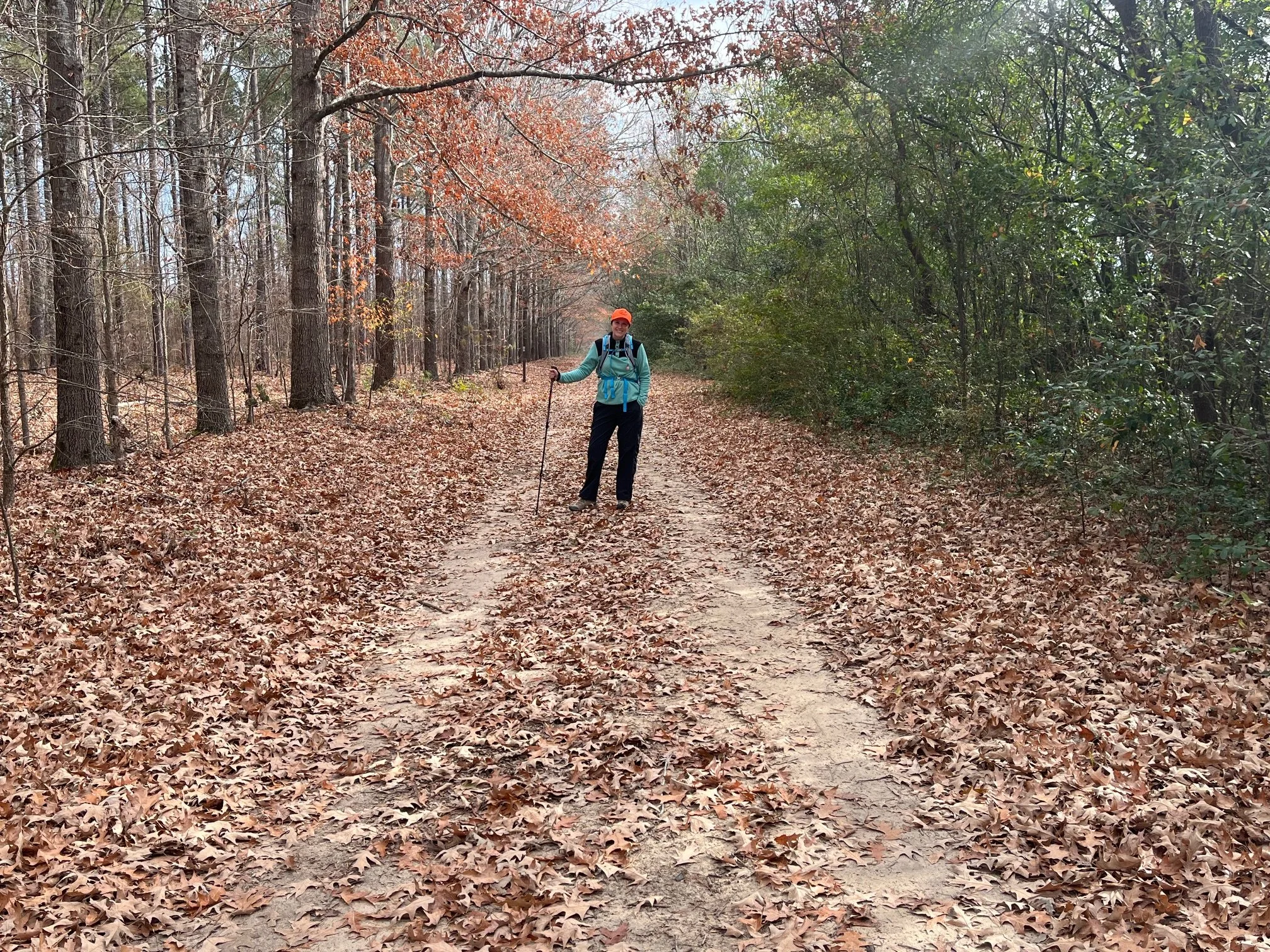
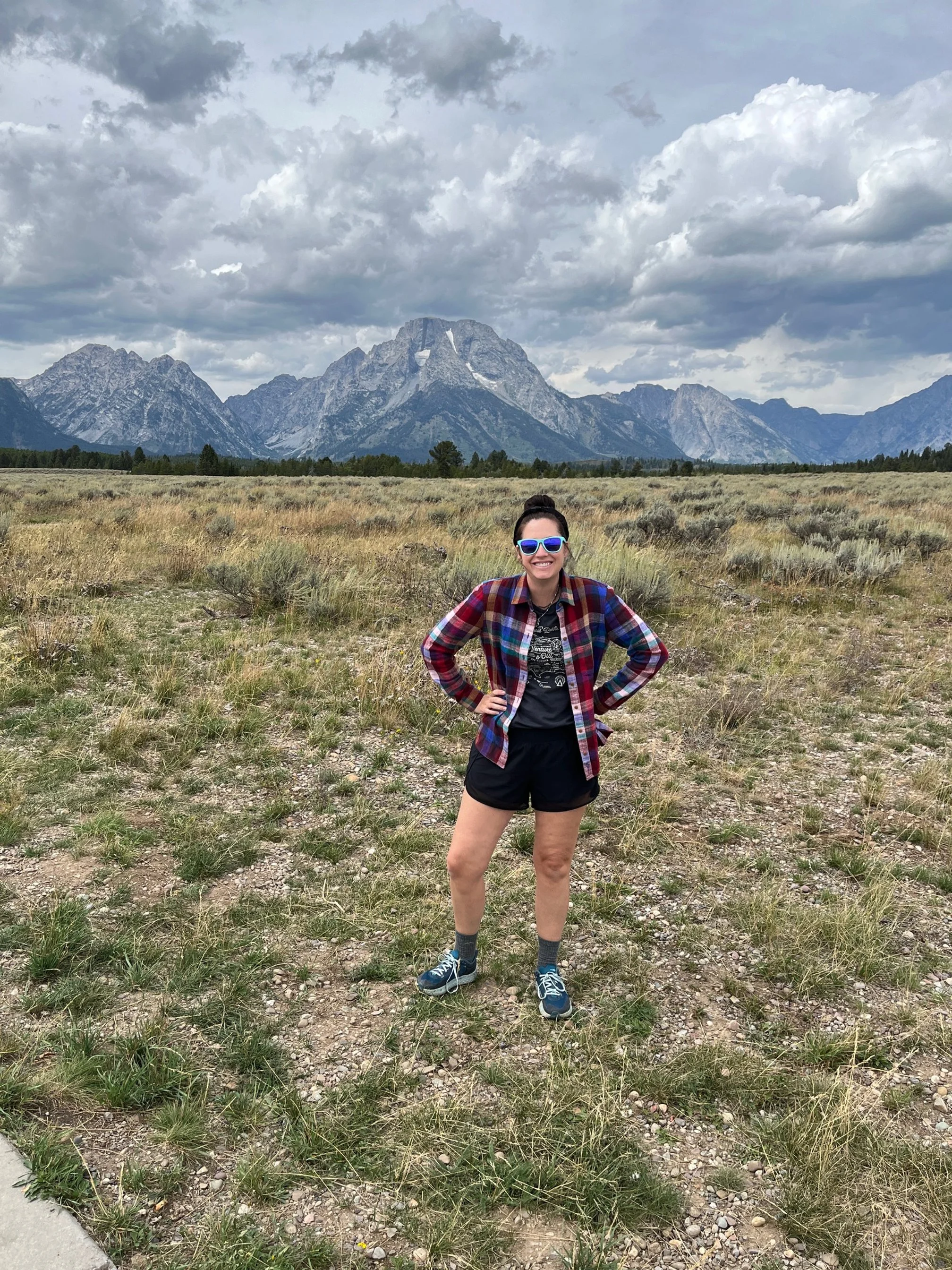
Ultimately, the right hiking footwear for you is what you’ll want to wear.
Whether that’s the chunkier, more substantial hiking boot with the army green laces, or the strappy pair of Chaco sandals with the funky colors, your hiking gear needs to fit your outdoor goals. And never the other way around!
Do your research by pricing out different brands. Systematically determine which style of footwear is right for you by considering where and when you’ll hike, the types of weather and terrain you’re likely to encounter, and how much you plan to go hiking.
Try on multiple brands in each style of footwear, and don’t commit to a purchase until you’ve walked around the store lots of times.
When you find a pair that’s just as comfortable as your favorite sneakers, that’s the one to take home!